#2575 - Sam Tallent
Episode
164 min
Read time
3 min
Topics
Career Growth, Productivity, Fundraising & VC
AI-Generated Summary
Key Takeaways
- ✓Creative diversification for comedians: Tallent argues that having outlets beyond stand-up — novels, podcasts, screenplays — allows comedians to channel philosophical or cultural commentary into appropriate formats rather than forcing it into live sets. Hicks lacked a podcast or book deal, so his stage time absorbed material that wasn't purely comedic. Separating creative outputs by format preserves the integrity of each one and keeps live performance focused on generating laughs every 12 seconds.
- ✓Attention as finite units: Rogan frames personal attention as 100 discrete units. Spending 30 units monitoring criticism or praise leaves only 70 for craft — and if 50 of those go to phone use, only 20 remain for actual creative work. The practical rule: treat compliments and criticism from strangers as equally worthless inputs, because valuing positive feedback obligates you to absorb negative feedback with equal weight.
- ✓Market building over viral growth: Rogan describes the pre-social-media model of building a comedy market city by city — starting at 40 tickets in Omaha, growing to 80, then 160, then adding shows over years. Tallent applies the same logic now: when new audiences arrive via Kill Tony or Shane Gillis's platform, the goal isn't the first show but converting half those attendees into repeat buyers who bring two more people next time.
- ✓Independence versus network deals: Rogan advises a podcaster friend against joining a content network despite the financial offer, framing independence as something you would pay for if you had to buy it back. Once advertisers can pressure hosts to avoid topics — Israel, specific language, controversial subjects — the editorial product degrades. The framework: if you are not currently poor, the cost of lost independence exceeds the revenue gain from a network deal.
- ✓Touring volume diminishes creative output: Both Rogan and Tallent identify excessive road schedules — 45-plus weekends annually — as the mechanism that drains comedic material. When life consists only of airports, hotel dinners, and shows, there is no new experience feeding the creative pipeline. Rogan notes that 1990s airplane-food material emerged because travel was the comedian's entire lived reality. The corrective is deliberately protecting non-performance time for experiences that generate new observational material.
What It Covers
Joe Rogan and comedian Sam Tallent discuss Tallent's second novel — a hitman thriller published by Random House — alongside the realities of building a comedy career, the toll of constant touring, the value of creative diversification, the decline of literary culture for male readers, and the chaos of a disastrous Kill Tony show at London's O2 Arena.
Key Questions Answered
- •Creative diversification for comedians: Tallent argues that having outlets beyond stand-up — novels, podcasts, screenplays — allows comedians to channel philosophical or cultural commentary into appropriate formats rather than forcing it into live sets. Hicks lacked a podcast or book deal, so his stage time absorbed material that wasn't purely comedic. Separating creative outputs by format preserves the integrity of each one and keeps live performance focused on generating laughs every 12 seconds.
- •Attention as finite units: Rogan frames personal attention as 100 discrete units. Spending 30 units monitoring criticism or praise leaves only 70 for craft — and if 50 of those go to phone use, only 20 remain for actual creative work. The practical rule: treat compliments and criticism from strangers as equally worthless inputs, because valuing positive feedback obligates you to absorb negative feedback with equal weight.
- •Market building over viral growth: Rogan describes the pre-social-media model of building a comedy market city by city — starting at 40 tickets in Omaha, growing to 80, then 160, then adding shows over years. Tallent applies the same logic now: when new audiences arrive via Kill Tony or Shane Gillis's platform, the goal isn't the first show but converting half those attendees into repeat buyers who bring two more people next time.
- •Independence versus network deals: Rogan advises a podcaster friend against joining a content network despite the financial offer, framing independence as something you would pay for if you had to buy it back. Once advertisers can pressure hosts to avoid topics — Israel, specific language, controversial subjects — the editorial product degrades. The framework: if you are not currently poor, the cost of lost independence exceeds the revenue gain from a network deal.
- •Touring volume diminishes creative output: Both Rogan and Tallent identify excessive road schedules — 45-plus weekends annually — as the mechanism that drains comedic material. When life consists only of airports, hotel dinners, and shows, there is no new experience feeding the creative pipeline. Rogan notes that 1990s airplane-food material emerged because travel was the comedian's entire lived reality. The corrective is deliberately protecting non-performance time for experiences that generate new observational material.
- •Male literary readership is an access problem, not an interest problem: Tallent contends that men do read fiction when they can find it — citing Jack Carr's Terminal List series, the Gray Man series by Mark Greaney, and Dennis Johnson's Angels as examples with proven audiences. The failure is distribution and cultural visibility, not male disinterest. American MFA-pipeline publishing produces books disconnected from working-class experience, while Japanese fiction continues publishing strange, visceral, plot-driven work that attracts readers outside academic circles.
- •Spite and envy as unsustainable fuel: Tallent describes memorizing the name of a writer who finished a novel at Hunter Thompson's Owl Farm in 2008 — purely out of envy — and later trying to claim the same residency. Rogan frames this as a vulnerability specific to the career-building phase, when external comparisons feel existential. The practical takeaway: spite produces short-term motivation but corrodes the person holding it, and success achieved through envy-driven effort rarely produces work the creator is proud of.
Notable Moment
Tallent recounts the Kill Tony O2 Arena show in London where audience members screamed ethnic slurs at bucket-pull comics, a pro-Israel opener nearly triggered a physical barrier breach from an Irish contingency, and Tallent ended the night gripping a green room sink, staring into a mirror, questioning whether arena-scale comedy was something he actually wanted to pursue.
Episode Transcript
This episode is presented by Searchlight Pictures' Wild Horse Nine. Shortly before Chile's nineteen seventy three coup, two CIA agents played by John Malkovich and Sam Rockwell find their mission on Easter Island spiraling into a web of conspiracies, unexpected alliances, and chaos. Wildhorse nine only in theaters Friday. Get tickets now. This episode is brought to you by ZipRecruiter. Hook up a better speaker to your TV, and your home theater experience is immediately 10 times better, or add a little extra treat to your dog's food. They get so happy at dinnertime. Sometimes it's worth it to go that extra step to find people who will do that for your business. Check out ZipRecruiter. Try it for free at ziprecruiter.com/rogan. ZipRecruiter has what you need to find great candidates fast, like powerful matching technology to help sort through thousands of resumes and a feature that puts people who are the most interested and most qualified first. Try ZipRecruiter and meet great candidates who go the extra step for your job. Four out of five employers who post on ZipRecruiter get a quality candidate within the first day. Try it for free today at ziprecruiter.com/rogan. That's ziprecruiter.com/rogan. ZipRecruiter. Meet your match on ZipRecruiter. This episode is brought to you by LifeLock. Scams have gotten smarter because criminals use AI to flood you with fake texts, emails, and phone calls that are designed to be more convincing than ever. One wrong click could put your personal information and your identity at risk, so protect yourself with LifeLock. LifeLock helps detect and alert you to threats. And if your identity is stolen, LifeLock will step in to fix it, guaranteed or your money back. Dedicated US based identity restoration specialists will work with you until your identity is restored, backed by the million dollar protection package with up to 3,000,000 in coverage for eligible losses and expenses. Visit lifelock.com and save up to 30% your first year with the promo code JRE. That's promo code JRE or go to lifelock.com/jre for 30% off. Terms apply. Joe Rogan podcast. Check it out. The Joe Rogan experience. Showing my day. Joe Rogan podcast. My night. All day. Here we go. Alright. We're up. Sam, your book is fucking great. Thank you, bro. Good. Thank you, Surprising. Yeah. Very interesting. It's... You're a great writer, man. Thank you, Joe. You really are. It's I'm very proud of it. It's really good, man. Thanks. It's, you know, it's... I mean, you're a very talented comedian, so I shouldn't be surprised. But it's always surprising when someone does something outside of comedy that they're really good at. I think you should be surprised. I think you're rightfully surprised that, like, a filthy nightclub comic who's very good at selling chicken tenders, like, wrote a book that's kinda beautiful. You know? So, yeah, I think that's the price. Book about an assassin, which is even more interesting. Isn't that fun? Yeah. It's so much fun to take …
Get the full transcript (33,870 words) + summary by email — free
One-time email with the complete transcript and AI summary of this episode. No account needed.
One email, no spam. We’ll also show you what SignalCast does.

You just read a 3-minute summary of a 161-minute episode.
Get The Joe Rogan Experience summarized like this every Monday — plus up to 2 more podcasts, free.
Pick Your Podcasts — FreeKeep Reading
More from The Joe Rogan Experience
#2574 - Francis Foster & Konstantin Kisin
Oct 31 · 160 min

The Daily (NYT)
What Makes a Killer Thriller?
Aug 16
More from The Joe Rogan Experience
#2573 - Legion of Skanks
Oct 30 · 164 min
The Daily (NYT)
Martin McDonagh Has a Vision for Hope. It's Not for the Faint of Heart.
Oct 31
Books, tools, and gear mentioned in this episode
SignalCast may earn commission on purchases via these links. As an Amazon Associate, SignalCast earns from qualifying purchases.
Books
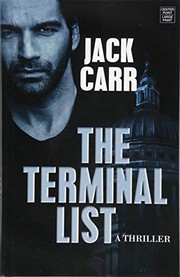 Terminal ListRecommended
by Jack Carr
“Tallent contends that men do read fiction when they can find it — citing Jack Carr's Terminal List series, the Gray Man series by Mark Greaney, and Dennis Johnson's Angels as examples with proven audiences.”
 Gray ManRecommended
by Mark Greaney
“Tallent contends that men do read fiction when they can find it — citing Jack Carr's Terminal List series, the Gray Man series by Mark Greaney, and Dennis Johnson's Angels as examples with proven audiences.”
 AngelsRecommended
by Dennis Johnson
“Tallent contends that men do read fiction when they can find it — citing Jack Carr's Terminal List series, the Gray Man series by Mark Greaney, and Dennis Johnson's Angels as examples with proven audiences.”
podcast
“the chaos of a disastrous Kill Tony show at London's O2 Arena. When new audiences arrive via Kill Tony or Shane Gillis's platform, the goal isn't the first show but converting half those attendees into repeat buyers.”
More from The Joe Rogan Experience
We summarize every new episode. Want them in your inbox?
Similar Episodes
Related episodes from other podcasts

The Daily (NYT)
Aug 16
What Makes a Killer Thriller?
The Daily (NYT)
Oct 31
Martin McDonagh Has a Vision for Hope. It's Not for the Faint of Heart.

10% Happier with Dan Harris
Sep 11
Neal Brennan On: Talking Back to Your Inner Critic, Why Chasing Validation Doesn't Work, and His Harrowing Psychedelic Journeys

Freakonomics Radio
Aug 26
“I Trust Almost Anyone More Than Myself” | Better in Person

Pivot
Aug 14
Trump's Catering Truck Escape, MAGA Media, and Chelsea Handler on Joe Rogan's $82M Payday
Explore Related Topics
You're clearly into The Joe Rogan Experience.
Every Monday, we deliver AI summaries of the latest episodes from The Joe Rogan Experience and 192+ other podcasts. Free for one show.
Start My Monday DigestNo credit card · Unsubscribe anytime