“I Trust Almost Anyone More Than Myself” | Better in Person
Episode
42 min
Read time
2 min
Topics
Remote Work, Product & Tech Trends, Psychology & Behavior
AI-Generated Summary
Key Takeaways
- ✓Feedback-first drafting: Egan treats external reader response as essential infrastructure, not optional polish. She reads work aloud to her writers group with no advance copies distributed, forcing listeners into real-time triage that naturally surfaces structural problems over minor details. She trusts almost any reader over herself because she considers her own judgment completely compromised by proximity to the material.
- ✓Working against your last success: After each completed book, Egan deliberately identifies her most recent aesthetic strategy and moves against it. Following the fragmented, lateral structure of *A Visit from the Goon Squad*, she attempted experimental narration in *Manhattan Beach*, then abandoned it entirely when her writers group reacted with anger — recognizing that shipwreck and survival narratives require direct storytelling, not irony.
- ✓Positive feedback as diagnostic roadmap: Egan's writers group leads every session with what is working before addressing problems. This sequencing is strategic: what succeeds in a draft functions as a map for repairing what fails. Hearing criticism after praise makes negative feedback processable; reversing that order makes writers unable to absorb any positive signal at all.
- ✓Separating reader reactions from reader solutions: When receiving feedback, Egan ignores suggested fixes and instead identifies the underlying problem the suggestion points toward. She then generates her own solution to that specific problem. This method preserves authorial voice while still using reader discomfort as accurate diagnostic data about where a narrative breaks down.
- ✓Character consciousness through deliberate distance: Egan defaults to male point-of-view characters specifically because it immediately removes her own experience from the equation. The goal is creating a consciousness so fully inhabited that even clearly bad decisions feel necessary and inevitable from inside that perspective — the measure of success being whether readers feel compelled rather than judged.
What It Covers
Pulitzer Prize-winning novelist Jennifer Egan discusses her creative process with Stephen Dubner, covering how she structures feedback loops through a writers group, works against her own established aesthetic patterns book by book, and approaches character psychology by writing protagonists whose fearlessness contrasts sharply with her own personality.
Key Questions Answered
- •Feedback-first drafting: Egan treats external reader response as essential infrastructure, not optional polish. She reads work aloud to her writers group with no advance copies distributed, forcing listeners into real-time triage that naturally surfaces structural problems over minor details. She trusts almost any reader over herself because she considers her own judgment completely compromised by proximity to the material.
- •Working against your last success: After each completed book, Egan deliberately identifies her most recent aesthetic strategy and moves against it. Following the fragmented, lateral structure of *A Visit from the Goon Squad*, she attempted experimental narration in *Manhattan Beach*, then abandoned it entirely when her writers group reacted with anger — recognizing that shipwreck and survival narratives require direct storytelling, not irony.
- •Positive feedback as diagnostic roadmap: Egan's writers group leads every session with what is working before addressing problems. This sequencing is strategic: what succeeds in a draft functions as a map for repairing what fails. Hearing criticism after praise makes negative feedback processable; reversing that order makes writers unable to absorb any positive signal at all.
- •Separating reader reactions from reader solutions: When receiving feedback, Egan ignores suggested fixes and instead identifies the underlying problem the suggestion points toward. She then generates her own solution to that specific problem. This method preserves authorial voice while still using reader discomfort as accurate diagnostic data about where a narrative breaks down.
- •Character consciousness through deliberate distance: Egan defaults to male point-of-view characters specifically because it immediately removes her own experience from the equation. The goal is creating a consciousness so fully inhabited that even clearly bad decisions feel necessary and inevitable from inside that perspective — the measure of success being whether readers feel compelled rather than judged.
Notable Moment
Egan revealed that *A Visit from the Goon Squad* began as deliberate procrastination — she thought she was avoiding work on *Manhattan Beach* by writing what she assumed were disconnected short stories, only realizing mid-process that recurring characters and time movement had organically produced a novel.
Episode Transcript
This episode of Better in Person is presented by ChatGPT. Put ChatGPT to work on your most ambitious ideas and projects. Download the new ChatGPT desktop app today. Hey there. It's Stephen Dubner, and this is a bonus episode from our new TV talk show, Better in Person. My guest is the Pulitzer Prize winning novelist, Jennifer Egan. And as good as a writer as she is, she is just as good at explaining her writing process. Better in person is meant to be watched, so check it out on the Freakonomics YouTube channel or look for Better in person on Apple Podcasts. But we're also putting out this audio version for anyone who prefers to just listen. As always, thanks. I think it's so easy to think, you know, everyone thinks the way I do. They're just doing all the wrong things. No. They don't think the way you do. They're doing things the way they think is right. This is Better In Person with Stephen Dubner and Jennifer Egan. I love to recommend great books to friends, but some great books are hard to recommend because they're hard to describe. And that's because they are the product of an original mind, like Jennifer Egan. She is a novelist who has received many awards, including a Pulitzer Prize for a visit from the Goon Squad, a kaleidoscope of a book about music and ambition and the nature of time and memory. Jennifer describes her brain as having one little corner that's always following her imagination. On the subway, she wears headphones that play nothing, and she writes characters that are nothing like her so that their consciousness is completely their own. Her work is admired by readers as well as other serious writers. Alright. So I think of you, and a lot of people think of you as a, quote, writer's writer. Does that drive you crazy, or do you like it? I mean, if writers like my stuff, that's a pretty high compliment. So I'm happy to please anyone. That's my basic disposition. So, okay, so I'm just gonna say I love your writing, which is why I wanted you to be here. I think you do a lot of things, a lot of hard things really well, and the experience of reading your books leaves me very full and also questioning for weeks after, which I love. That's great. So I just want to know if you feel your books are as rich and disorienting to write as they are to read? That's what I really want to know. -I don't know if I would say they're disorienting to write. One of the aesthetic principles that I find myself using is that once I've done something, I want to work against it. And so that happens book by book. Having just written, for example, Goon Squad, which is very it has a lot of lateral movement. It's fragmentary storytelling. A lot of the action is offstage. It …
Get the full transcript (7,413 words) + summary by email — free
One-time email with the complete transcript and AI summary of this episode. No account needed.
One email, no spam. We’ll also show you what SignalCast does.

You just read a 3-minute summary of a 39-minute episode.
Get Freakonomics Radio summarized like this every Monday — plus up to 2 more podcasts, free.
Pick Your Podcasts — FreeKeep Reading
More from Freakonomics Radio
What Now? with Trevor Noah | Michael Che: The Unspoken Rules of Comedy
Nov 4 · 10 min

Huberman Lab
What Makes Great Leaders & How to Live an Extraordinary Life | Dr. Jared Diamond
Oct 19
More from Freakonomics Radio
693. What’s Our Job as Humans Anymore?
Oct 30 · 57 min

The Peter Attia Drive
#412 ‒ The evolving science of cancer: emerging approaches to prevention and early detection, and the advances reshaping treatment | Siddhartha Mukherjee, M.D., Ph.D.
Oct 19
Books, tools, and gear mentioned in this episode
SignalCast may earn commission on purchases via these links. As an Amazon Associate, SignalCast earns from qualifying purchases.
Books
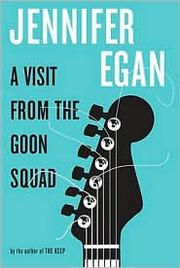 A Visit from the Goon SquadBy guest
by Jennifer Egan
“After each completed book, Egan deliberately identifies her most recent aesthetic strategy and moves against it. Following the fragmented, lateral structure of *A Visit from the Goon Squad*, she attempted experimental narration in *Manhattan Beach*.”
 Manhattan BeachBy guest
by Jennifer Egan
“Following the fragmented, lateral structure of *A Visit from the Goon Squad*, she attempted experimental narration in *Manhattan Beach*, then abandoned it entirely when her writers group reacted with anger.”
More from Freakonomics Radio
We summarize every new episode. Want them in your inbox?
What Now? with Trevor Noah | Michael Che: The Unspoken Rules of Comedy
693. What’s Our Job as Humans Anymore?
692. What Will A.I. Do to (and for) Human Creativity?
Are Private Equity Firms Plundering the U.S. Economy? (Update)
691. Is This What a “Good Billionaire” Looks Like?
Similar Episodes
Related episodes from other podcasts

Huberman Lab
Oct 19
What Makes Great Leaders & How to Live an Extraordinary Life | Dr. Jared Diamond

The Peter Attia Drive
Oct 19
#412 ‒ The evolving science of cancer: emerging approaches to prevention and early detection, and the advances reshaping treatment | Siddhartha Mukherjee, M.D., Ph.D.

The Joe Rogan Experience
Sep 3
#2549 - Jared Diamond

Masters of Scale
Aug 15
Pioneers of AI: Why AI conversations are always one-sided

The Prof G Pod
Jul 16
The New Playbook for Resisting Authoritarianism — with Julia Angwin & Ami Fields-Meyer
Explore Related Topics
This podcast is featured in Best Finance Podcasts (2026) — ranked and reviewed with AI summaries.
You're clearly into Freakonomics Radio.
Every Monday, we deliver AI summaries of the latest episodes from Freakonomics Radio and 192+ other podcasts. Free for one show.
Start My Monday DigestNo credit card · Unsubscribe anytime