#2549 - Jared Diamond
Episode
154 min
Read time
3 min
Topics
Design & UX, Software Development, Product & Tech Trends
AI-Generated Summary
Key Takeaways
- ✓Leader Emergence Formula: Four to five conditions determine whether a leader changes history: right time and place, personal capability, recognition of the moment, and organizational follow-through. Genghis Khan's rise correlates directly with tree-ring data showing the wettest decade on the Mongolian Steppe in 2,000 years occurring at his birth — without that rainfall producing surplus horses and food, his empire-building would have been impossible regardless of his strategic brilliance.
- ✓Religion Spreads Through Organization, Not Theology: Christianity grew from dozens of followers to the dominant Roman Empire religion not because of theological claims but because Christians outlived pagans statistically. Early Christians opposed abortion, elevated women's status, and cared for the sick — resulting in longer lifespans visible in tombstone data. When Constantine needed literate bureaucrats, Christians were disproportionately literate due to Judaism's writing tradition, giving them structural institutional advantages.
- ✓The Paul Problem in Religious Founding: Muhammad's teachings weren't written down for two centuries after his death; the Gospel of Mark, considered the earliest gospel, was composed roughly twenty years after Jesus died with no first-person accounts of Jesus existing. This means Islam's foundational record is even less verifiable than Christianity's. Religions requiring absolute doctrinal certainty are built on oral traditions filtered through decades before any written documentation occurred.
- ✓Writing Systems Collapse and Restart Independently: Greece lost its Linear B syllabic writing system entirely during the broader Bronze Age collapse around 1200 BCE — a civilization-wide literacy erasure lasting several centuries. When writing returned around 800 BCE, Greeks adopted a completely different Phoenician-derived alphabetic system and added vowels, since Greek requires vowel specification for comprehension unlike Afroasiatic languages. The Harappan civilization of the Indus Valley similarly lost writing for roughly 2,000 years before a new system emerged.
- ✓Pidgin Languages Become Full Languages Within One Decade: When German colonial administrators brought together New Guineans from different language groups, a stripped-down pidgin emerged for plantation communication. Within a single decade, the children of pidgin-speaking parents — needing to express the full range of human experience — spontaneously invented prepositions, future tense, and plurals without instruction. Hawaiian plantation newspaper records from 1890 to 1900 document this grammatical complexity emerging year by year in real time.
What It Covers
Joe Rogan speaks with Pulitzer Prize-winning author Jared Diamond across 154 minutes, covering Diamond's new book on world leaders, the role of circumstance versus individual genius in historical outcomes, the origins and spread of major religions, the development of writing systems across civilizations, language diversity in New Guinea, and cannibalism practices among the Fore people of Papua New Guinea.
Key Questions Answered
- •Leader Emergence Formula: Four to five conditions determine whether a leader changes history: right time and place, personal capability, recognition of the moment, and organizational follow-through. Genghis Khan's rise correlates directly with tree-ring data showing the wettest decade on the Mongolian Steppe in 2,000 years occurring at his birth — without that rainfall producing surplus horses and food, his empire-building would have been impossible regardless of his strategic brilliance.
- •Religion Spreads Through Organization, Not Theology: Christianity grew from dozens of followers to the dominant Roman Empire religion not because of theological claims but because Christians outlived pagans statistically. Early Christians opposed abortion, elevated women's status, and cared for the sick — resulting in longer lifespans visible in tombstone data. When Constantine needed literate bureaucrats, Christians were disproportionately literate due to Judaism's writing tradition, giving them structural institutional advantages.
- •The Paul Problem in Religious Founding: Muhammad's teachings weren't written down for two centuries after his death; the Gospel of Mark, considered the earliest gospel, was composed roughly twenty years after Jesus died with no first-person accounts of Jesus existing. This means Islam's foundational record is even less verifiable than Christianity's. Religions requiring absolute doctrinal certainty are built on oral traditions filtered through decades before any written documentation occurred.
- •Writing Systems Collapse and Restart Independently: Greece lost its Linear B syllabic writing system entirely during the broader Bronze Age collapse around 1200 BCE — a civilization-wide literacy erasure lasting several centuries. When writing returned around 800 BCE, Greeks adopted a completely different Phoenician-derived alphabetic system and added vowels, since Greek requires vowel specification for comprehension unlike Afroasiatic languages. The Harappan civilization of the Indus Valley similarly lost writing for roughly 2,000 years before a new system emerged.
- •Pidgin Languages Become Full Languages Within One Decade: When German colonial administrators brought together New Guineans from different language groups, a stripped-down pidgin emerged for plantation communication. Within a single decade, the children of pidgin-speaking parents — needing to express the full range of human experience — spontaneously invented prepositions, future tense, and plurals without instruction. Hawaiian plantation newspaper records from 1890 to 1900 document this grammatical complexity emerging year by year in real time.
- •Writing System Design Matters for Reading Speed: King Sejong of Korea invented Hangul around 1430 CE as a deliberate top-down design decision, replacing a Chinese-derived system incompatible with Korean phonology. Hangul groups individual letters into syllable blocks, enabling readers to process language by syllable rather than letter. This design choice means Koreans read faster than speakers of other writing systems — a measurable cognitive advantage engineered by a single leader's intentional linguistic intervention six centuries ago.
- •Handwriting Produces Denser Prose Than Typing: Diamond writes all book drafts by hand using a 0.7mm pencil, then dictates cleaned drafts into his iPhone for transcription. He observes that typed prose becomes wordier because typing speed outpaces deliberate word selection, while the slower physical act of handwriting forces real-time sentence architecture decisions. Songwriters and authors who draft longhand report similar effects — the friction of writing by hand functions as an editing mechanism built into the composition process itself.
Notable Moment
Diamond describes the Fore people of Papua New Guinea practicing endocannibalism — eating deceased relatives as a funeral obligation — and explains that a field worker once abruptly quit mid-expedition after learning his prospective son-in-law had died. Refusing to eat the forearm would have been culturally equivalent to abandoning a parent's body in a ditch. This practice directly caused the spread of kuru, a prion disease functionally identical to mad cow disease.
Episode Transcript
Joe Rogan podcast. Check it out. The Joe Rogan experience. Train my day. Joe Rogan podcast by night, all day. Very nice meeting you, sir. It's a pleasure. It'll be a great pleasure to meet you. I really enjoyed Guns, Germs, and Steel, and I just got into this yesterday. And today, I I started reading your new book. Awesome. Awesome so far. Fascinating. I have so many questions. But my first one is, have you done podcasts before? I've done podcasts quite a few podcasts at home in my wife's study on my wife's tell screen, and I've done face to face interviews like with you. Oh, okay. Cool. So what first of all, why did you write this book? Why did I write this book? A short answer is I was born in 1937, which means that I grew up in the 2nd World War under the shadow of of Hitler. Every day, there was something going on with the war. My father pasted up on the wall of my bedroom a map of the European theater and the Pacific Theater. And there was always the question, why did it happen? And if it hadn't been for Hitler, would there still have been that outcome? Then I moved to Europe. I lived in England. I lived in Germany. I love German music. I love the German language. Why? And then I moved to Chile. I lived in Chile, the most democratic country of South America. Before Pinochet, nobody saw what was coming with Pinochet. His own fellow generals didn't see it coming. And so there's been throughout my life this question, do bad as well as good people make a difference? Also, my wife was post the last of my family in Europe disappeared from the Holocaust. Marie's mother ended up in Auschwitz. She survived, but others of the family didn't survive. And so ever since I've known Marie, there's constantly been that question. And then leaders have made a difference in my life. There was the chairman of the Cambridge Physiology Department who, when a pump, water pump that I had been operating, blew overnight and it flooded my lab room, but it also flooded the lab room below me. And that was a poor choice of lab room to flood because it belonged to Lord Adrian, Nobel Prize winner, the father of father-in-law of my thesis supervisor and the master of my college at Cambridge. Not a good choice. Oh, no. The the chairman of the of the department called me in. I thought I'm gonna be thrown out. He he said, you know, that was sloppy. You have to be careful with water pumps and be more careful in the future. That permitted my scientific career to continue. Other people might have thrown me out. So leaders have made a difference in my life. Well, leaders most certainly make a difference in the world, and one of the things that really terrifies me is Nazi …
Get the full transcript (21,650 words) + summary by email — free
One-time email with the complete transcript and AI summary of this episode. No account needed.
One email, no spam. We’ll also show you what SignalCast does.

You just read a 3-minute summary of a 151-minute episode.
Get The Joe Rogan Experience summarized like this every Monday — plus up to 2 more podcasts, free.
Pick Your Podcasts — FreeKeep Reading
More from The Joe Rogan Experience
#2567 - Mariana van Zeller
Oct 16 · 150 min

The Prof G Pod
The New Playbook for Resisting Authoritarianism — with Julia Angwin & Ami Fields-Meyer
Jul 16
More from The Joe Rogan Experience
#2566 - Cody Tucker
Oct 15 · 171 min

The School of Greatness
The Secret Skill of People Who Never Feel Lonely | Charles Duhigg
Jun 19
Books, tools, and gear mentioned in this episode
SignalCast may earn commission on purchases via these links. As an Amazon Associate, SignalCast earns from qualifying purchases.
Books
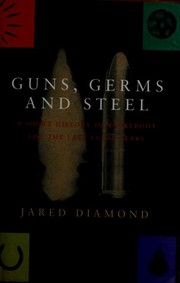 Guns, Germs, and SteelBy guest
by Jared Diamond
“Joe Rogan speaks with Pulitzer Prize-winning author Jared Diamond across 154 minutes, covering Diamond's new book on world leaders”
More from The Joe Rogan Experience
We summarize every new episode. Want them in your inbox?
Similar Episodes
Related episodes from other podcasts

The Prof G Pod
Jul 16
The New Playbook for Resisting Authoritarianism — with Julia Angwin & Ami Fields-Meyer

The School of Greatness
Jun 19
The Secret Skill of People Who Never Feel Lonely | Charles Duhigg

The Mel Robbins Podcast
Jul 3
How to Talk to Difficult People: Proven Strategies to Stop Arguments & Feel Connected Again

Masters of Scale
Aug 15
Pioneers of AI: Why AI conversations are always one-sided

In Good Company with Nicolai Tangen
Jul 24
वेंकी रामाकृष्णन: लंबी उम्र जीने का विज्ञान और उसका हाइप (Hindi version)
Explore Related Topics
Read this week's Software Engineering Podcast Insights — cross-podcast analysis updated weekly.
You're clearly into The Joe Rogan Experience.
Every Monday, we deliver AI summaries of the latest episodes from The Joe Rogan Experience and 192+ other podcasts. Free for one show.
Start My Monday DigestNo credit card · Unsubscribe anytime