#2564 - Chuck Lorre
Episode
128 min
Read time
3 min
Topics
Career Growth, Relationships, Fundraising & VC
AI-Generated Summary
Key Takeaways
- ✓Multicam Sitcom Decline: The multicam sitcom format dropped from roughly 40-50 shows airing weekly across networks to approximately two or three today — not because audience appetite disappeared, but due to industry mismanagement and the rise of reality television. Lorre argues one genuinely strong multicam show could reverse the trend entirely, pointing to his Netflix multicam with Leanne Morgan completing its second season as proof the format remains viable outside traditional broadcast.
- ✓Character Over Plot: Successful long-running sitcoms — Seinfeld, Cheers, Friends, The Big Bang Theory — are built on characters audiences want to spend time with, not memorable storylines. Viewers cannot recall specific episode plots but never miss an episode. Writers and showrunners should prioritize casting chemistry and character distinctiveness above narrative cleverness, because audiences return weekly to be with people they love, not to follow story arcs.
- ✓Fame Amplifies Damage: Sudden, large-scale fame does not heal pre-existing psychological wounds — it exposes and accelerates them. Lorre describes Brett Butler receiving a top-two-rated show in 1993, when only four broadcast channels existed and roughly 100 people qualified as truly famous, yet becoming destructive immediately. The smaller the pool of famous people, the more intense the pressure. Damaged individuals given that level of visibility without internal resolution tend toward self-sabotage rather than gratitude.
- ✓Scientology's Celebrity Strategy: L. Ron Hubbard explicitly designed the Celebrity Centre on Franklin Avenue in Los Angeles as a deliberate marketing mechanism, documented in his own writings. By attracting high-profile members like Tom Cruise and Kirstie Alley, Scientology used celebrity positioning — the same principle behind athlete endorsements — to draw in vulnerable, career-hungry newcomers. Lorre spent ten years inside before recognizing the promised personal transformation was not materializing for himself or anyone around him.
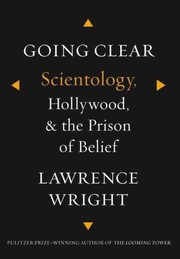
- ✓High Pricing as Perceived Value: Scientology's "Going Clear" ceremony, conducted at the Flag facility in Clearwater, Florida, cost approximately $50,000 in the mid-1990s. Lorre's neighbor, a construction business owner, delayed a real estate purchase to fund his wife's participation. The steep price tag was a deliberate marketing strategy — attaching a high monetary cost to a spiritual process signals exclusivity and importance, making participants more psychologically committed to believing the experience delivered results.
What It Covers
Joe Rogan speaks with television writer-producer Chuck Lorre, creator of The Big Bang Theory, Two and a Half Men, and Grace Under Fire, covering the decline of multicam sitcoms, the psychological toll of sudden fame on performers, a decade spent inside Scientology, achieving sobriety after 27 years of drinking, and how external success consistently fails to resolve internal emotional damage.
Key Questions Answered
- •Multicam Sitcom Decline: The multicam sitcom format dropped from roughly 40-50 shows airing weekly across networks to approximately two or three today — not because audience appetite disappeared, but due to industry mismanagement and the rise of reality television. Lorre argues one genuinely strong multicam show could reverse the trend entirely, pointing to his Netflix multicam with Leanne Morgan completing its second season as proof the format remains viable outside traditional broadcast.
- •Character Over Plot: Successful long-running sitcoms — Seinfeld, Cheers, Friends, The Big Bang Theory — are built on characters audiences want to spend time with, not memorable storylines. Viewers cannot recall specific episode plots but never miss an episode. Writers and showrunners should prioritize casting chemistry and character distinctiveness above narrative cleverness, because audiences return weekly to be with people they love, not to follow story arcs.
- •Fame Amplifies Damage: Sudden, large-scale fame does not heal pre-existing psychological wounds — it exposes and accelerates them. Lorre describes Brett Butler receiving a top-two-rated show in 1993, when only four broadcast channels existed and roughly 100 people qualified as truly famous, yet becoming destructive immediately. The smaller the pool of famous people, the more intense the pressure. Damaged individuals given that level of visibility without internal resolution tend toward self-sabotage rather than gratitude.
- •Scientology's Celebrity Strategy: L. Ron Hubbard explicitly designed the Celebrity Centre on Franklin Avenue in Los Angeles as a deliberate marketing mechanism, documented in his own writings. By attracting high-profile members like Tom Cruise and Kirstie Alley, Scientology used celebrity positioning — the same principle behind athlete endorsements — to draw in vulnerable, career-hungry newcomers. Lorre spent ten years inside before recognizing the promised personal transformation was not materializing for himself or anyone around him.
- •High Pricing as Perceived Value: Scientology's "Going Clear" ceremony, conducted at the Flag facility in Clearwater, Florida, cost approximately $50,000 in the mid-1990s. Lorre's neighbor, a construction business owner, delayed a real estate purchase to fund his wife's participation. The steep price tag was a deliberate marketing strategy — attaching a high monetary cost to a spiritual process signals exclusivity and importance, making participants more psychologically committed to believing the experience delivered results.
- •Sobriety Requires Internal Work: After 27 years of drinking, Lorre stopped through a process he declines to name specifically but describes as requiring recognition of a higher power defined entirely by the individual — not a prescribed religious figure. The critical shift was moving from a "give me more" orientation toward asking how to contribute. External accumulation — success, relationships, possessions — functions as a temporary bandage. Lasting change requires identifying something beyond the self, defined on personal terms, not institutional ones.
- •Pilot Do-Overs Are Rare: The Big Bang Theory's original pilot failed and was completely remade — an almost unheard-of second chance in network television. CBS granted Lorre this opportunity specifically because Two and a Half Men was performing at an exceptional level, giving him institutional credibility to absorb the cost of a failed first attempt. The lesson: sustained track record on existing projects creates negotiating leverage for future creative risks that would otherwise be unavailable to any writer regardless of talent.
Notable Moment
Lorre describes sitting in the audience at a Big Bang Theory Comic-Con autograph session when a young woman approached Jim Parsons with visibly shaking hands and tears streaming down her face — not from sadness but from pure joy at being physically near the actor. Lorre had worked on multiple hit shows before and never witnessed that level of emotional response, signaling the characters had connected at an unexpected depth.
Episode Transcript
Joe Rogan podcast. Check it out. The Joe Rogan experience. Showing my day. Joe Rogan podcast by night, all day. So explain that again. Explain the show that you saw. It was at the Singer Bowl in 1969. Jimi Hendrix was the headliner. The experience right after Monterey. And Janice Chaplin in the holding company, big brother in the holding company was the warm up act. Wow. Yeah. What was that like? Well, for starters, we bribed a a little security guard to get in, me and my friends. I think we gave him $2 apiece. And we walked right up to the stage. Wow. Yeah. And watched, like, right there. And then that was my first my first... I went, oh, I I guess I gotta start drinking Southern Comfort because she's making it look pretty good. When I worked with Phil Hartman on news radio, one of his favorite stories was he was, like, a stagehand at the whiskey, and Hendrix performed. And it was his job to stand with his hand on the speaker because he was worried that Hendrix would knock the speaker into the crowd. And so I guess it was just not very stable. So he said he was literally standing there with his hands on the speaker with Hendrix two feet away from him playing guitar. Early on, he he would destroy his equipment like the Who would do as well. They'd tear up the amps. He set the guitar on fire. You know? And, know, I'm I'm 15, 16 years old going, oh, man. Don't don't set the... Oh, give me the guitar. Don't set it on fire. Don't smash the guitar. There were no smashing guitars back then. Yeah. Yeah. It was it was an expensive way to to end the show, but that's what was happening. It just was a... I guess it was just a wild rock and roll thing. It was amazing. Rebellion thing. It was an amazing time to be a kid watching that stuff. Well, it's such a crazy time in human history. I mean, it was one... It's one of the weirdest times in all of culture. If you take the difference in the culture of the nineteen fifties to the culture of the late nineteen sixties Mhmm. It's like a... Just an insane shift. Yeah. Like, one of the most insane shifts ever so radical and so big. It happened so fast. I think was a response to the fifties. Yeah. It was that and the Vietnam War and drugs. Yep. All the above. All of them, psychedelic drugs, everything altogether. And the birth control pill. Yes. That changed everything. Yes. Yes. Very good point. Yeah. Very good point. Yeah. Gave women freedom. As well, it did the same for men. Oh, yeah. Yeah. Everybody could just do whatever the fuck they wanted, and and they're doing drugs at the same time. So everything just boom. Just all came together. Yep. Your story is …
Get the full transcript (22,257 words) + summary by email — free
One-time email with the complete transcript and AI summary of this episode. No account needed.
One email, no spam. We’ll also show you what SignalCast does.

You just read a 3-minute summary of a 125-minute episode.
Get The Joe Rogan Experience summarized like this every Monday — plus up to 2 more podcasts, free.
Pick Your Podcasts — FreeKeep Reading
More from The Joe Rogan Experience
#2563 - Dan Richards
Oct 8 · 174 min

The Pitch
#5 - TV, Research, and White Writers Writing Indigenous Characters
Mar 16
More from The Joe Rogan Experience
#2562 - Dan McClellan
Oct 7 · 161 min

The Diary of a CEO
Rick Rubin: What Jay-Z Did in 30 Minutes Left Me Speechless!
Sep 21
Books, tools, and gear mentioned in this episode
SignalCast may earn commission on purchases via these links. As an Amazon Associate, SignalCast earns from qualifying purchases.
Books
“Scientology's 'Going Clear' ceremony, conducted at the Flag facility in Clearwater, Florida, cost approximately $50,000 in the mid-1990s.”
More from The Joe Rogan Experience
We summarize every new episode. Want them in your inbox?
Similar Episodes
Related episodes from other podcasts

The Pitch
Mar 16
#5 - TV, Research, and White Writers Writing Indigenous Characters

The Diary of a CEO
Sep 21
Rick Rubin: What Jay-Z Did in 30 Minutes Left Me Speechless!

The Ezra Klein Show
Sep 1
Best Of: The Tao of Rick Rubin

10% Happier with Dan Harris
Aug 28
Sara Bareilles On: The Feelings You Fear Might Destroy You, What Antidepressants Actually Did to Her Creativity, and Why There's Nothing to Fix
The Ezra Klein Show
Jul 21
Best Of: A Breath of Fresh Air With Brian Eno
Explore Related Topics
You're clearly into The Joe Rogan Experience.
Every Monday, we deliver AI summaries of the latest episodes from The Joe Rogan Experience and 192+ other podcasts. Free for one show.
Start My Monday DigestNo credit card · Unsubscribe anytime