#399 How Elon Works
Episode
93 min
Read time
2 min
Topics
Fundraising & VC, Leadership, Design & UX
AI-Generated Summary
Key Takeaways
- ✓The Algorithm: Musk's five-step process starts with questioning every requirement by name, then deleting parts (add back 10% or you didn't delete enough), simplifying what remains, accelerating cycle time, and only then automating. This sequence prevents optimizing processes that shouldn't exist.
- ✓Idiot Index: Calculate the ratio between finished product cost and raw material cost. Rockets had a 50x idiot index, meaning massive cost reduction potential through better manufacturing. SpaceX reduced capacitor costs from $120,000 to $5,000 by questioning supplier quotes and making parts in-house.
- ✓Vertical Integration: Control manufacturing end-to-end rather than using suppliers. Tesla makes its own battery cells and body panels. SpaceX manufactures components in-house at 10x lower cost than aerospace suppliers. This enables daily iteration and immediate feedback between design and production teams.
- ✓Maniacal Urgency: Set impossible deadlines to force breakthrough thinking. During production hell, Musk demanded 5,000 Model 3s weekly or Tesla dies. He moved into factories, held daily meetings, and made 100 command decisions daily. Even with 20% wrong decisions, speed beats perfection.
- ✓Frontline Leadership: Technical managers must spend 20% time doing actual work—coding, installing roofs, welding. Musk interviews every engineer hire, walks assembly lines daily, and flies immediately to problem locations. Physical presence at bottlenecks enables instant problem-solving and demonstrates commitment to teams.
What It Covers
Walter Isaacson's biography reveals Elon Musk's systematic approach to building companies across three decades. The episode distills his core operating principles: questioning requirements, deleting unnecessary parts, maintaining urgency, vertical integration, and framing work as civilization-changing missions.
Key Questions Answered
- •The Algorithm: Musk's five-step process starts with questioning every requirement by name, then deleting parts (add back 10% or you didn't delete enough), simplifying what remains, accelerating cycle time, and only then automating. This sequence prevents optimizing processes that shouldn't exist.
- •Idiot Index: Calculate the ratio between finished product cost and raw material cost. Rockets had a 50x idiot index, meaning massive cost reduction potential through better manufacturing. SpaceX reduced capacitor costs from $120,000 to $5,000 by questioning supplier quotes and making parts in-house.
- •Vertical Integration: Control manufacturing end-to-end rather than using suppliers. Tesla makes its own battery cells and body panels. SpaceX manufactures components in-house at 10x lower cost than aerospace suppliers. This enables daily iteration and immediate feedback between design and production teams.
- •Maniacal Urgency: Set impossible deadlines to force breakthrough thinking. During production hell, Musk demanded 5,000 Model 3s weekly or Tesla dies. He moved into factories, held daily meetings, and made 100 command decisions daily. Even with 20% wrong decisions, speed beats perfection.
- •Frontline Leadership: Technical managers must spend 20% time doing actual work—coding, installing roofs, welding. Musk interviews every engineer hire, walks assembly lines daily, and flies immediately to problem locations. Physical presence at bottlenecks enables instant problem-solving and demonstrates commitment to teams.
Notable Moment
During the Daimler investment pitch, Tesla bought a Smart car over the weekend, installed a Roadster electric motor, and had executives test drive it instead of showing PowerPoint slides. The car hit 60 mph in four seconds, shocking the Germans who expected presentations, securing a $50 million investment that saved Tesla.
Episode Transcript
The biography of Elon Musk that was written by Walter Isaacson came out a few years ago. It's 615 pages long. And so I read the book for the first time when it came out, and I didn't think I can make a great episode about it. And I think I've now finally figured out what I really wanna talk to you about. It's it's gonna sound crazy because Elon is the richest person on the planet and the most famous entrepreneur alive. But I think that all of the other stuff, the politics, the tweets, the constant appearance in the news, or there's, like, you know, new controversies all the time. It just really distracts and takes away from the fact that Elon has a set of timeless and brilliant and insanely valuable principles on how to build companies, how to invent new technology, and how to make an impact on the world around you. And so this is what I did. I have spent at least at least sixty hours reading and rereading this book. This book is written in chronological order. So I would say it's more akin to reading a series of news reports over a few decades than the typical way a biography is written. And so as it turns out, that's gonna be a major asset for you and I because what you'll see and what I exclusively want to focus on is the enduring set of company building principles Elon has used over three decades and across at least seven companies. So it may be apocryphal, but there is a quote from Michelangelo when he was asked, like, how he created the statue of David. And he replied, I just chipped away everything that was not David. So what I've done is edited down my 40 pages of notes and highlights from the book into just the way that Elon works. I wanna focus on the ideas that he used to build his companies and to build what I think is a truly singular career. I don't think there's anyone else like him living or dead. And so I'm going to go through his ideas in chronological order so you can see how they appear, reappear, and how they are edited and iterated on over time. And so at the end of the episode or by the end of episode, I should say, it will be impossible for you not to understand how Elon works. And then what I think we both should do is we should sit with these ideas, write them down, and then think deeply about how we can apply some of them to our work. I think one of the superpowers of this project that has been going on for almost a decade where you and I get together every week and we talk about another one of History's greatest founders is that we see that somehow people that didn't know each other were alive at different points in …
Get the full transcript (18,834 words) + summary by email — free
One-time email with the complete transcript and AI summary of this episode. No account needed.
One email, no spam. We’ll also show you what SignalCast does.

You just read a 3-minute summary of a 90-minute episode.
Get The Founders Podcast summarized like this every Monday — plus up to 2 more podcasts, free.
Pick Your Podcasts — FreeKeep Reading


Books, tools, and gear mentioned in this episode
SignalCast may earn commission on purchases via these links. As an Amazon Associate, SignalCast earns from qualifying purchases.
Books
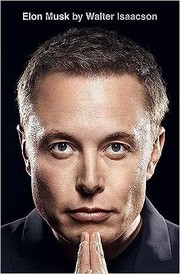 Elon MuskRecommended
by Walter Isaacson
“Walter Isaacson's biography reveals Elon Musk's systematic approach to building companies across three decades.”
More from The Founders Podcast
We summarize every new episode. Want them in your inbox?
Similar Episodes
Related episodes from other podcasts

David Senra
Mar 24
The Book of Elon with Eric Jorgenson

Morning Brew Daily
Feb 3
Elon’s SpaceX Buys Musk’s xAI & Will Bob Iger Actually Leave Disney This Time?

The Futur
Jan 1
Build Your Success Formula w/ Jodie Cook | Recast

The Daily (NYT)
Dec 23
The Origins of Jeffrey Epstein

Masters of Scale
Oct 30
When ‘genius’ becomes a trap, with author Ryan Holiday
Explore Related Topics
This podcast is featured in Best Business Podcasts (2026) — ranked and reviewed with AI summaries.
You're clearly into The Founders Podcast.
Every Monday, we deliver AI summaries of the latest episodes from The Founders Podcast and 192+ other podcasts. Free for one show.
Start My Monday DigestNo credit card · Unsubscribe anytime