#413 How To Run Down A Dream
Episode
31 min
Read time
2 min
Topics
Career Growth, Relationships, Investing
AI-Generated Summary
Key Takeaways
- ✓Find immense passion first: Choosing a career based on status or compensation leads to burnout because someone with genuine passion for that same field will consistently outperform you. Gurley argues passion is the single most important career decision, citing Knight, Dylan, Meyer, and Hinkie all choosing fields they loved before any financial reward existed.
- ✓Treat knowledge accumulation as an obligation: Becoming the most knowledgeable person in your field is achievable through deliberate information gathering, not raw intelligence. Bob Dylan spent eight to nine months consuming every folk album available before hitchhiking 1,200 miles to New York with $10. Danny Meyer road-tripped through Texas and North Carolina tasting 14 variations of barbecue before opening his restaurant.
- ✓Pursue mentors aggressively and document everything: Bobby Knight filled 74 index cards with Pete Newell's plays during a single session. Sam Hinkie sent physical letters and emails to every NFL franchise offering unpaid work. Gurley, in his twentieth year as an investor, still sought out Stan Druckenmiller and Howard Marks for multi-hour conversations that changed his current investment decisions.
- ✓Build peer relationships around shared craft, not social networking: Connecting with peers who share the same professional obsession creates mutual advancement, not zero-sum competition. Gurley recommends sharing best practices openly, arguing it is not proprietary knowledge but a net-positive trade. Bobby Knight developed a peer relationship with Indiana's swimming coach and applied those insights directly to basketball coaching.
- ✓Pay mentorship forward systematically: Bobby Knight mentored Coach K, who eventually surpassed Knight's all-time career wins record of 902 victories, then asked Knight to induct him into the Hall of Fame. Gurley recommends sending notes, gifts, and credit back to mentors after each career milestone, then becoming the mentor for the next generation climbing the same path.
What It Covers
Bill Gurley's 2018 talk-turned-book profiles Sam Hinkie, Bobby Knight, Bob Dylan, and Danny Meyer to extract five repeatable principles behind building a career driven by passion. Each subject reached the top of a different field by following the same overlapping pattern of obsessive preparation, mentorship, and peer learning.
Key Questions Answered
- •Find immense passion first: Choosing a career based on status or compensation leads to burnout because someone with genuine passion for that same field will consistently outperform you. Gurley argues passion is the single most important career decision, citing Knight, Dylan, Meyer, and Hinkie all choosing fields they loved before any financial reward existed.
- •Treat knowledge accumulation as an obligation: Becoming the most knowledgeable person in your field is achievable through deliberate information gathering, not raw intelligence. Bob Dylan spent eight to nine months consuming every folk album available before hitchhiking 1,200 miles to New York with $10. Danny Meyer road-tripped through Texas and North Carolina tasting 14 variations of barbecue before opening his restaurant.
- •Pursue mentors aggressively and document everything: Bobby Knight filled 74 index cards with Pete Newell's plays during a single session. Sam Hinkie sent physical letters and emails to every NFL franchise offering unpaid work. Gurley, in his twentieth year as an investor, still sought out Stan Druckenmiller and Howard Marks for multi-hour conversations that changed his current investment decisions.
- •Build peer relationships around shared craft, not social networking: Connecting with peers who share the same professional obsession creates mutual advancement, not zero-sum competition. Gurley recommends sharing best practices openly, arguing it is not proprietary knowledge but a net-positive trade. Bobby Knight developed a peer relationship with Indiana's swimming coach and applied those insights directly to basketball coaching.
- •Pay mentorship forward systematically: Bobby Knight mentored Coach K, who eventually surpassed Knight's all-time career wins record of 902 victories, then asked Knight to induct him into the Hall of Fame. Gurley recommends sending notes, gifts, and credit back to mentors after each career milestone, then becoming the mentor for the next generation climbing the same path.
Notable Moment
Sam Hinkie named his VC firm 87 Capital after a Robert Caro passage about a Senate race decided by 87 votes — framing the loser not as a failure but as someone who reclaimed his life's work, signaling that losing a dream job can redirect someone toward a better one.
Episode Transcript
Sam was born in The Netherlands where his father was working at the time, but he grew up mostly in Marlowe, Oklahoma, a town with a population just under 5,000. Sam's dad worked for an oil and gas company. Sam was gifted with intelligence and was his high school's valedictorian. From an early age, he loved numbers. He loved math. He was fascinated by the power of exponential growth. At the University of Oklahoma, he majored in finance. He loved sports. He briefly considered becoming a coach, but if you'd asked him at the time, Sam probably would have told you he wanted to become the CEO of an industrials company or something like that. After his freshman year, he applied for an internship at Conoco. He was invited in for an interview, and it was all going well until the interviewer asked Sam where he imagined he would be in five years. Sam was honest. He said he figured he would go to business school. The interviewer was like, what? You don't wanna work at Conoco in five years? And Sam said, no. Definitely not. I'm not interested in that. Instead, he interned in the accounting group of Ernst and Young, which happened to be the world leader in providing third party opinions on the purchase of professional sports teams, giving Sam some early exposure to the world of sports business. After he graduated, Sam was offered a job at Bain Capital. He was the first University of Oklahoma student ever hired by Bain. He enjoyed the work at Bain. It was long hours of rigorous analytical work. He liked to bring large amounts of data to important decisions. About eighteen months into his time at Bain, Sam was at lunch with some other young analysts and two men he considered mentors. The two older men went around the room asking the young analysts, if you could do anything, any job in the world, what would you do? Most of the answers are something along the lines of private equity or CEO. When they got to Sam, he just said sports GM. It was the first time he verbalized this idea, but it had been forming in his mind for a while. I remember they laughed at me. It made me so mad, Sam said. At the time Sam said this, almost nobody was bringing the tools of data analytics into the world of professional sports. Then in 2002, the Boston Red Sox hired Theo Epstein, an espoused fan of advanced data analytics as the team's general manager, making the 28 year old Epstein the youngest GM in baseball history. As Sam was thinking about all of this, the author Michael Lewis published the book Moneyball, which is a look inside the innovative approach of Oakland Athletics general manager Billy Bean to assemble a competitive baseball team on a small budget. Sam read Moneyball in two days. He loved everything about it. He could not stop thinking about it. …
Get the full transcript (6,941 words) + summary by email — free
One-time email with the complete transcript and AI summary of this episode. No account needed.
One email, no spam. We’ll also show you what SignalCast does.

You just read a 3-minute summary of a 28-minute episode.
Get The Founders Podcast summarized like this every Monday — plus up to 2 more podcasts, free.
Pick Your Podcasts — FreeKeep Reading


Books, tools, and gear mentioned in this episode
SignalCast may earn commission on purchases via these links. As an Amazon Associate, SignalCast earns from qualifying purchases.
Books
by Bill Gurley
“Bill Gurley's 2018 talk-turned-book profiles Sam Hinkie, Bobby Knight, Bob Dylan, and Danny Meyer to extract five repeatable principles behind building a career driven by passion.”
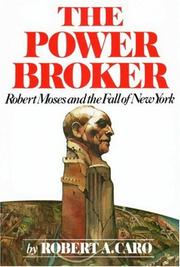
by Robert Caro
“Sam Hinkie named his VC firm 87 Capital after a Robert Caro passage about a Senate race decided by 87 votes — framing the loser not as a failure but as someone who reclaimed his life's work.”
More from The Founders Podcast
We summarize every new episode. Want them in your inbox?
Similar Episodes
Related episodes from other podcasts

Afford Anything
Mar 13
Bill Gurley: The Biggest Career Regret Most People Have

My First Million
Mar 9
Bill Gurley: 6 Out of 10 People Are Making This Mistake

Masters in Business
Mar 4
BONUS: Bill Gurley on Investing Early in Tech Disruptors & 'Runnin' Down a Dream'

BG2Pod with Brad Gerstner and Bill Gurley
Oct 14
AI Bubble, Stablecoin Boom, and Runnin' Down a Dream | BG2 w/ Bill Gurley and Brad Gerstner

Stuff You Should Know
Sep 1
Terry Fox: Greatest Canadian Hero
Explore Related Topics
This podcast is featured in Best Business Podcasts (2026) — ranked and reviewed with AI summaries.
Read this week's Investing & Markets Podcast Insights — cross-podcast analysis updated weekly.
You're clearly into The Founders Podcast.
Every Monday, we deliver AI summaries of the latest episodes from The Founders Podcast and 192+ other podcasts. Free for one show.
Start My Monday DigestNo credit card · Unsubscribe anytime