I Keep Telling People We’re Living in This Dystopian Novel
Episode
78 min
Read time
3 min
Topics
Productivity, Health & Wellness, Personal Finance
AI-Generated Summary
Key Takeaways
- ✓Ranking as survival mechanism: Shteyngart's novel depicts a society where young people die by suicide when ranking technology goes offline because they cannot locate their identity without external metrics. This mirrors current social media dependency — the compulsive need to know one's precise position relative to others has migrated from competitive high school averages to real-time follower counts, likes, and algorithmic scores that now substitute for self-knowledge.
- ✓Longevity optimization severs desire from purpose: Figures like Bryan Johnson pursue testosterone supplementation to appear attractive while simultaneously causing testicular atrophy that eliminates fertility. Shteyngart frames this as a broader cultural pattern: optimizing the biological signals of desire while eliminating the relational outcomes those signals evolved to produce. The pursuit of metrics replaces the experience the metrics were originally meant to measure.
- ✓Interiority as a skill that requires cultivation: Silicon Valley figures like Marc Andreessen publicly reject introspection, framing it as backward-looking inefficiency. Shteyngart argues this reflects a failure of development — people never given tools to look inward by parents or schools — not a rational productivity strategy. The absence of self-examination produces the same dysfunction as neurotic over-examination, just in the opposite direction.
- ✓Porn theory of content reshapes reading capacity: Internet writer Ryan Broderick's framework holds that all content now functions like pornography — engineered to produce an immediate sensation surge rather than sustained engagement. Shteyngart notices this in himself: posting on Instagram makes it impossible to read even a New Yorker article without checking for likes every few minutes. Roughly 47% of Americans read a complete book in the past year, a figure likely to keep declining.
- ✓Southern European quality of life outperforms GDP comparisons: Despite Mississippi having higher median income than most European nations by standard metrics, Shteyngart observes that residents of Andalusia — statistically Spain's poorest region — experience materially richer lives through strong communal bonds, affordable transit, universal healthcare, and lower positional competition. The absence of medical bankruptcy risk and the presence of walkable public space constitute wealth that income figures do not capture.
What It Covers
Ezra Klein interviews novelist Gary Shteyngart about his 2010 novel *Super Sad True Love Story*, which predicted today's ranking culture, longevity obsession, and screen addiction. They examine how constant metrics, the suppression of pleasure, and the erosion of interiority define modern life across politics, fertility, technology, and the search for beauty.
Key Questions Answered
- •Ranking as survival mechanism: Shteyngart's novel depicts a society where young people die by suicide when ranking technology goes offline because they cannot locate their identity without external metrics. This mirrors current social media dependency — the compulsive need to know one's precise position relative to others has migrated from competitive high school averages to real-time follower counts, likes, and algorithmic scores that now substitute for self-knowledge.
- •Longevity optimization severs desire from purpose: Figures like Bryan Johnson pursue testosterone supplementation to appear attractive while simultaneously causing testicular atrophy that eliminates fertility. Shteyngart frames this as a broader cultural pattern: optimizing the biological signals of desire while eliminating the relational outcomes those signals evolved to produce. The pursuit of metrics replaces the experience the metrics were originally meant to measure.
- •Interiority as a skill that requires cultivation: Silicon Valley figures like Marc Andreessen publicly reject introspection, framing it as backward-looking inefficiency. Shteyngart argues this reflects a failure of development — people never given tools to look inward by parents or schools — not a rational productivity strategy. The absence of self-examination produces the same dysfunction as neurotic over-examination, just in the opposite direction.
- •Porn theory of content reshapes reading capacity: Internet writer Ryan Broderick's framework holds that all content now functions like pornography — engineered to produce an immediate sensation surge rather than sustained engagement. Shteyngart notices this in himself: posting on Instagram makes it impossible to read even a New Yorker article without checking for likes every few minutes. Roughly 47% of Americans read a complete book in the past year, a figure likely to keep declining.
- •Southern European quality of life outperforms GDP comparisons: Despite Mississippi having higher median income than most European nations by standard metrics, Shteyngart observes that residents of Andalusia — statistically Spain's poorest region — experience materially richer lives through strong communal bonds, affordable transit, universal healthcare, and lower positional competition. The absence of medical bankruptcy risk and the presence of walkable public space constitute wealth that income figures do not capture.
- •Sensualism as a political and personal corrective: Shteyngart argues that deliberately seeking beauty — in craft, food, architecture, conversation — functions as resistance to metric culture. His watch collecting example illustrates this: men gathering around specific timepieces are actually seeking male friendship and shared attention. Present-moment engagement with physical craft, whether a hand-finished watch movement or a neighborhood food stall, builds the interiority and relational capacity that screen culture systematically erodes.
Notable Moment
Shteyngart describes watching a young content creator undergo rhinoplasty despite having no apparent need for it, then appearing visibly miserable in post-surgery photos while millions followed along. He argues this illustrates how public self-exposure at scale destroys the backstage mental space humans require to develop a coherent self.
Episode Transcript
You're great at protecting your data, but lots of places could still expose you to identity theft. I thought it was safe. If that happens, LifeLock gives you a US based restoration agent who will stick by your side from start to finish. Phone calls, filing documentation, preparing insurance claims, your agent handles it all. In fact, we're so confident restoration is guaranteed or your money back. Isn't it nice to have someone like that on your side? Save up to 30% your first year at lifelock.com/ special offer. Terms apply. Before we begin today's show, we're gonna be doing an ask me anything episode quite soon. So if you have any questions, email us at ezraclienshow@nytimes.com with the headline AMA. Over the past six months, I keep telling people, we are living in Super Sad True Love Story. And sometimes they'll say to me, what was Super Sad True Love Story? What do you mean? Super Sad True Love Story, if for some terrible reason you don't know, is a 2010 book by Gary Stinehart. And I think more than any other book, it predicted the strangeness of the world we live in today. And also, a lot of what it feels like to live in it. All of the constant staring at screens, the hyper visual nature of modern life, the obsession with wellness and longevity and looks maxing amidst the backdrop of a country that often feels like it's falling apart. Is that what you signed up for? We are living in a time of profound corruption. Inflation is hitting its highest point in three years. A world where everybody is upset, and they're grabbing at the wrong things to try to fix it. I wanted to understand how the author of this book, Gary Steingart, had predicted all this, how he had known what it was going to feel like well into the future of when he was writing. Gary Steingard, of course, has written a number of wonderful novels, including the Russian debutantes handbook, Absurdistan, and his most recent, Vera or Faith. He's also written all these amazing essays on travel and cruise ships and martinis and his love of suits and watches. Many of those essays will be collected in a new book coming out in November called The Centralist. That name, The Centralist, I think tells you something about what his project is, what he believes is necessary to live well in a moment like this one. But I wanted to talk to him about all of it. As always, my email is our clientshow@nytimes.com. Gary Steinger, welcome to the show. Great to be here. Long time listener. So I've said to many people in my life that when I look around right now, I feel like I'm living in the world of super sad true love story. So for those who haven't read it, can you just describe the world you create in that book? So everyone carries a device called the …
Get the full transcript (15,962 words) + summary by email — free
One-time email with the complete transcript and AI summary of this episode. No account needed.
One email, no spam. We’ll also show you what SignalCast does.

You just read a 3-minute summary of a 75-minute episode.
Get The Ezra Klein Show summarized like this every Monday — plus up to 2 more podcasts, free.
Pick Your Podcasts — FreeKeep Reading
More from The Ezra Klein Show
We Can't Lose Control of A.I.
Sep 20 · 31 min

Conversations with Coleman
Lionel Shriver on the Immigration Taboo
Feb 9
More from The Ezra Klein Show
The ‘But China!’ Dilemma Driving the A.I. Race
Sep 15 · 65 min

10% Happier with Dan Harris
George Saunders On: Getting Un-Stuck, Calming the Inner Critic, and Building Empathy Without Becoming a Chump
Jan 30
Books, tools, and gear mentioned in this episode
SignalCast may earn commission on purchases via these links. As an Amazon Associate, SignalCast earns from qualifying purchases.
Books
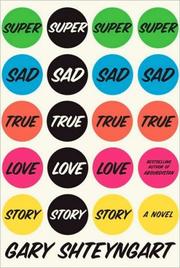
by Gary Shteyngart
“Ezra Klein interviews novelist Gary Shteyngart about his 2010 novel *Super Sad True Love Story*, which predicted today's ranking culture, longevity obsession, and screen addiction.”
More from The Ezra Klein Show
We summarize every new episode. Want them in your inbox?
We Can't Lose Control of A.I.
The ‘But China!’ Dilemma Driving the A.I. Race
Francis Fukuyama on Trump, China and the Legacy of 9/11
What ‘Hyperpolitics’ Explains About This Era
Best Of: The Tao of Rick Rubin
Similar Episodes
Related episodes from other podcasts

Conversations with Coleman
Feb 9
Lionel Shriver on the Immigration Taboo

10% Happier with Dan Harris
Jan 30
George Saunders On: Getting Un-Stuck, Calming the Inner Critic, and Building Empathy Without Becoming a Chump

The Daily (NYT)
Jul 12
What’s Epic About the ‘Odyssey’? Everything.

Modern Wisdom
Jun 22
Inside The Democratic Party Civil War - Ezra Klein - #1114

The AI Breakdown
May 8
The Week the AI Story Shifted
Explore Related Topics
This podcast is featured in Best Politics Podcasts (2026) — ranked and reviewed with AI summaries.
Read this week's Health & Longevity Podcast Insights — cross-podcast analysis updated weekly.
You're clearly into The Ezra Klein Show.
Every Monday, we deliver AI summaries of the latest episodes from The Ezra Klein Show and 192+ other podcasts. Free for one show.
Start My Monday DigestNo credit card · Unsubscribe anytime