Best Of: Barbara Kingsolver on ‘Urban-Rural Antipathy’
Episode
61 min
Read time
2 min
Topics
Health & Wellness, Relationships, Fundraising & VC
AI-Generated Summary
Key Takeaways
- ✓Opioid Orphan Crisis: Between 15-35% of children in some Appalachian counties are raised by non-parents due to addiction, incarceration, or death. Overloaded caseworkers earn less than teachers, creating a generation of orphans dependent on underfunded public schools for food, mental health care, and basic social services.
- ✓Media Geography Problem: Local and regional newspapers have nearly disappeared, leaving rural Americans consuming urban-produced media that represents roughly 2% of their lived experience. This information void creates identity erasure and fuels political alienation when communities feel chronologically unseen by national institutions.
- ✓Addiction as Disease Model: The war on drugs trained Americans to view addiction as moral failure requiring punishment rather than medical treatment. Effective intervention requires harm reduction strategies like clean needles and fentanyl test strips, meeting addicted people where they live instead of waiting for them to hit bottom before offering help.
- ✓Purdue Pharma Targeting Strategy: The company deliberately identified three regions with high rates of mining injuries, physically demanding labor, and stretched healthcare systems. They flooded counties with more than one to two pills per resident, exploiting limited physician follow-up capacity in rural areas for maximum profit.
- ✓Community Double Edge: Appalachian communities function through interconnected relationships where everyone knows your business, creating safety nets of shared resources and mutual aid. However, this same tight-knit structure means addiction epidemics spread rapidly through families, forcing communities to absorb damage beyond their capacity when multiple generations are simultaneously affected.
What It Covers
Barbara Kingsolver discusses her Pulitzer Prize-winning novel Demon Copperhead, exploring Appalachian identity, the opioid epidemic's impact on foster care systems, urban-rural cultural divides, and how extractive industries and media representation shape regional stereotypes.
Key Questions Answered
- •Opioid Orphan Crisis: Between 15-35% of children in some Appalachian counties are raised by non-parents due to addiction, incarceration, or death. Overloaded caseworkers earn less than teachers, creating a generation of orphans dependent on underfunded public schools for food, mental health care, and basic social services.
- •Media Geography Problem: Local and regional newspapers have nearly disappeared, leaving rural Americans consuming urban-produced media that represents roughly 2% of their lived experience. This information void creates identity erasure and fuels political alienation when communities feel chronologically unseen by national institutions.
- •Addiction as Disease Model: The war on drugs trained Americans to view addiction as moral failure requiring punishment rather than medical treatment. Effective intervention requires harm reduction strategies like clean needles and fentanyl test strips, meeting addicted people where they live instead of waiting for them to hit bottom before offering help.
- •Purdue Pharma Targeting Strategy: The company deliberately identified three regions with high rates of mining injuries, physically demanding labor, and stretched healthcare systems. They flooded counties with more than one to two pills per resident, exploiting limited physician follow-up capacity in rural areas for maximum profit.
- •Community Double Edge: Appalachian communities function through interconnected relationships where everyone knows your business, creating safety nets of shared resources and mutual aid. However, this same tight-knit structure means addiction epidemics spread rapidly through families, forcing communities to absorb damage beyond their capacity when multiple generations are simultaneously affected.
Notable Moment
Kingsolver describes attending college in Indiana and discovering she was considered a hillbilly. Strangers approached her in the dining hall asking her to pronounce words like syrup and mayonnaise for entertainment, leading her to systematically erase her Kentucky accent and identity.
Episode Transcript
Today, I wanna share one of my favorite conversations from our archives. This is from 2023. It's with Barbara Kingsolver about her amazing book, Demon Copperhead, which won the Pulitzer Prize for Fiction, and her work to write the great novel of Appalachia. I hope you enjoy. From New York Times opinion, this is the Ezra Klein Show. So in 2023, the Pulitzer Prize for Fiction was won by two novels, Trust by Hernan Diaz and Demon Copperhead by Barbara Kingsolver. And Kingsolver, I think, is a literary legend in her own time. I mean, she wrote the Bean Trees. She wrote the Poisonwood Bible. She has won all kinds of prizes, but I think it's fair to say Demon Top Red is a kind of masterpiece. And it's a kind of masterpiece she was trying to create. She set out to write, as she tells me in this conversation, she was setting out to write the great novel of Appalachia, and I think she did. And this is a novel that is following loosely in the structure of David Copperfield by Dickens. It's a novel set a little bit back in time. I think that so so much of our thinking now about this is political and places that go for Trump and places that don't go for Trump, but the novel is set in the nineties and in the February, so a little bit before some of the current economic and political cleavages attain, at least the form we know them in. And it's a beautiful book. It's a wrenching book. It's a book that I routinely had to stop reading because I was so fused with a character and so fused with a story that when I could see something bad coming, I just couldn't handle it before bed. I just couldn't go through that with the main character. So, I mean, that I think is about as much as you can say for fiction when it almost feels more real than the life you're living. So I was grateful she was willing to come on the show and talk a bit about her life, how she came to writing the novel, the sort of experiences she brought to it, and and the kind of argument she's trying to have through it. As always, my email is reclineshow@nytimes.com. Barbara Kingsolver, welcome to the show. Thank you for having me. So you've said that you're Appalachian through and through. What does that mean to you? I'm Appalachian. And it's a funny thing. It's a marker. Appalachian means you say, I live in Appalachia. It's a region that's a little hard to pin down on a map because it includes parts of a lot of states starting from North Georgia, Eastern Tennessee, Western North Carolina, and Virginia up into the coal country of Kentucky and West Virginia, and then up into sort of the ridge Country Of Pennsylvania. So that sounds complicated, but to us, it is a whole …
Get the full transcript (9,962 words) + summary by email — free
One-time email with the complete transcript and AI summary of this episode. No account needed.
One email, no spam. We’ll also show you what SignalCast does.

You just read a 3-minute summary of a 58-minute episode.
Get The Ezra Klein Show summarized like this every Monday — plus up to 2 more podcasts, free.
Pick Your Podcasts — FreeKeep Reading


Books, tools, and gear mentioned in this episode
SignalCast may earn commission on purchases via these links. As an Amazon Associate, SignalCast earns from qualifying purchases.
Books
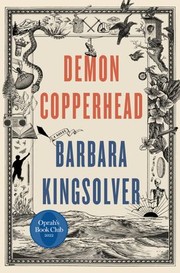
by Barbara Kingsolver
“Barbara Kingsolver discusses her Pulitzer Prize-winning novel Demon Copperhead, exploring Appalachian identity, the opioid epidemic's impact on foster care systems, urban-rural cultural divides, and how extractive industries and media representation shape regional stereotypes.”
More from The Ezra Klein Show
We summarize every new episode. Want them in your inbox?
Similar Episodes
Related episodes from other podcasts

Design Matters
Feb 16
Quiara Alegría Hudes

The Joe Rogan Experience
Sep 3
#2549 - Jared Diamond

Masters of Scale
Aug 15
Pioneers of AI: Why AI conversations are always one-sided

The Prof G Pod
Jul 16
The New Playbook for Resisting Authoritarianism — with Julia Angwin & Ami Fields-Meyer

The School of Greatness
Jun 19
The Secret Skill of People Who Never Feel Lonely | Charles Duhigg
Explore Related Topics
This podcast is featured in Best Politics Podcasts (2026) — ranked and reviewed with AI summaries.
Read this week's Health & Longevity Podcast Insights — cross-podcast analysis updated weekly.
You're clearly into The Ezra Klein Show.
Every Monday, we deliver AI summaries of the latest episodes from The Ezra Klein Show and 192+ other podcasts. Free for one show.
Start My Monday DigestNo credit card · Unsubscribe anytime