Most Replayed Moment: The Mid-Year Reset - Atomic Habits Author On How To Get Back On Track
Episode
28 min
Read time
2 min
Topics
Career Growth, Productivity, Health & Wellness
AI-Generated Summary
Key Takeaways
- ✓Upstream Anchor Habits: Rather than pursuing 30 habits simultaneously, identify the one or two behaviors that generate cascading positive effects. Clear uses exercise as his example — a single workout produces a post-exercise focus window of one to two hours, improves sleep quality, and naturally reduces poor eating, without ever directly targeting those outcomes.
- ✓Reflection as Meta-Habit: Scheduling dedicated time to review current systems functions as the highest-leverage habit because it enables course correction on everything else. Without stepping back from execution, high performers default to working harder rather than working differently — missing opportunities to hire, delegate, or restructure that could produce 100x returns versus marginal effort increases.
- ✓Seasonal Habit Evolution: Habits should be expected to change shape across life phases rather than maintained in fixed form indefinitely. Clear maintained a consistent writing habit across three distinct formats — twice-weekly 2,000-word articles for three years, then a book manuscript, then a weekly newsletter — treating each transition as adaptation rather than failure or quitting.
- ✓Four Burners Trade-Off Framework: Life divides into four domains — career, family, friends, and personal health. Running all four simultaneously produces mediocrity across each. Deliberately sequencing which burners receive full intensity across roughly ten-year life seasons, rather than attempting parallel optimization, produces better outcomes and reduces the psychological cost of perceived failure.
- ✓Identity Voting Over Outcome Targeting: Starting habit formation by asking "who do I want to become" rather than "what do I want to achieve" produces stronger long-term adherence. Each repeated behavior functions as a vote for a self-concept. Research on smoking cessation shows that saying "I am not a smoker" produces higher quit rates than saying "I am trying not to smoke."
What It Covers
Atomic Habits author James Clear joins The Diary of a CEO to break down habit formation strategy, covering upstream anchor habits, seasonal habit evolution, the Four Burners Theory, identity-based behavior change, and how physical and social environments either support or undermine long-term habit consistency.
Key Questions Answered
- •Upstream Anchor Habits: Rather than pursuing 30 habits simultaneously, identify the one or two behaviors that generate cascading positive effects. Clear uses exercise as his example — a single workout produces a post-exercise focus window of one to two hours, improves sleep quality, and naturally reduces poor eating, without ever directly targeting those outcomes.
- •Reflection as Meta-Habit: Scheduling dedicated time to review current systems functions as the highest-leverage habit because it enables course correction on everything else. Without stepping back from execution, high performers default to working harder rather than working differently — missing opportunities to hire, delegate, or restructure that could produce 100x returns versus marginal effort increases.
- •Seasonal Habit Evolution: Habits should be expected to change shape across life phases rather than maintained in fixed form indefinitely. Clear maintained a consistent writing habit across three distinct formats — twice-weekly 2,000-word articles for three years, then a book manuscript, then a weekly newsletter — treating each transition as adaptation rather than failure or quitting.
- •Four Burners Trade-Off Framework: Life divides into four domains — career, family, friends, and personal health. Running all four simultaneously produces mediocrity across each. Deliberately sequencing which burners receive full intensity across roughly ten-year life seasons, rather than attempting parallel optimization, produces better outcomes and reduces the psychological cost of perceived failure.
- •Identity Voting Over Outcome Targeting: Starting habit formation by asking "who do I want to become" rather than "what do I want to achieve" produces stronger long-term adherence. Each repeated behavior functions as a vote for a self-concept. Research on smoking cessation shows that saying "I am not a smoker" produces higher quit rates than saying "I am trying not to smoke."
Notable Moment
Clear reframes the common question of how long habits take to form — typically cited as 66 days — by pointing out the actual study range spans from two weeks for simple behaviors to nine months for complex ones, making the average figure practically meaningless for individual habit planning.
Episode Transcript
This episode sponsored by Maximus Tribe. You train, you track, you eat right. But if you're 40, you've felt it. The results don't match the effort anymore. That's not willpower, it's biology. Hormones drop. Metabolism slows. Your body stops responding the way it used to. Maximus is the online clinic that reverses your decline with prescription performance medicines, GLP ones, testosterone and peptides that reduce belly fat, restore energy and boost recovery. Over 50,000 high performers have already broken through their plateaus. If you're ready to turn your hard work into measurable results, go to maximustribe.com. That's maximustribe.com. I learned when you said that, you know, ambitious people, they have lots of aspirations, lots of habits they wanna start. I was thinking about myself and thinking, there's probably 30 habits that I would like to acquire. I'd wanna be better at writing. I wanna be a runner. I wanna be better at speaking. I wanna be a better friend and be more, attentive with my friends and make sure I text them on their birthdays and shit, you know. Mhmm. All of these new habits that I wanna pursue. How does one know which one to aim for first? Is there a framework for knowing? Yeah. There there's some things that you can do. I don't think, to your point earlier about, sometimes the riskiest things just take a long time making the decision. You know, if you maybe you should just pick one and work on it, and then you can get on to the next one. But I do think there's some level of strategy, which is a good place to start is by asking yourself which habits are upstream from other good things happening. So, for example, I know that if you were maybe the maybe the question to start with is when you live a good day, when you feel dialed in, when things are, like, rolling along well for you, what tends to be part of that day? Sleep. You know? Sleep. Okay. Great. So that's, you know, I would say for me, sleep sleep is definitely one. I would say, getting my workout in. And usually, reading and writing are part of it, but I think I could just boil it down to reading. If I just read, like, 10 pages, that often sparks the writing. So, like, to me, reading is, like, the fuel for writing for me. So so I could say, get a workout in and read for five minutes or ten minutes. Those are the two things that are part of a good day. And what happens is they're upstream from a lot of other good things happening. For example, if I get the workout in, yeah, I feel good. I get the benefits of the workout. But I also have a post workout high for, like, an hour or two, so I my focus and concentration is better. I sleep better at night because I got the workout in, …
Get the full transcript (6,760 words) + summary by email — free
One-time email with the complete transcript and AI summary of this episode. No account needed.
One email, no spam. We’ll also show you what SignalCast does.

You just read a 3-minute summary of a 25-minute episode.
Get The Diary of a CEO summarized like this every Monday — plus up to 2 more podcasts, free.
Pick Your Podcasts — FreeKeep Reading
More from The Diary of a CEO
Most Replayed Moment: I Met An Uncontacted Tribe! The Secret World Hidden In The Amazon Rainforest - Paul Rosolie
Oct 2 · 40 min

My First Million
#1 Habit Expert: Here's how you become dramatically better
Apr 16
More from The Diary of a CEO
Shawn Ryan: There's A Battle For Your Soul, It's Happening Right Now
Oct 1 · 99 min

The Mel Robbins Podcast
How to Become 37.78 Times Better at Anything: An Easy & Proven Way to Build Habits
Jan 8
Books, tools, and gear mentioned in this episode
SignalCast may earn commission on purchases via these links. As an Amazon Associate, SignalCast earns from qualifying purchases.
Books
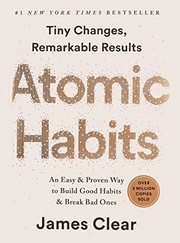 Atomic HabitsBy guest
by James Clear
“Atomic Habits author James Clear joins The Diary of a CEO to break down habit formation strategy, covering upstream anchor habits, seasonal habit evolution, the Four Burners Theory, identity-based behavior change, and how physical and social environments either support or undermine long-term habit consistency.”
More from The Diary of a CEO
We summarize every new episode. Want them in your inbox?
Most Replayed Moment: I Met An Uncontacted Tribe! The Secret World Hidden In The Amazon Rainforest - Paul Rosolie
Shawn Ryan: There's A Battle For Your Soul, It's Happening Right Now
Adam Neumann: The Real Story Behind WeWork, A $4 Billion Cab Ride, And Surviving A $460 Million Debt
Most Replayed Moment: A Guilt-Free Way to Handle Work and Life
Druski: They Held A Gun To My Head, I Was Going To Make It Or Die Trying!
Similar Episodes
Related episodes from other podcasts

My First Million
Apr 16
#1 Habit Expert: Here's how you become dramatically better

The Mel Robbins Podcast
Jan 8
How to Become 37.78 Times Better at Anything: An Easy & Proven Way to Build Habits

The Peter Attia Drive
Dec 29
Building & Changing Habits | James Clear (#183 rebroadcast)

Dare to Lead with Brené Brown
Nov 22
Brené with James Clear on Atomic Habits, Part 2 of 2
Dare to Lead with Brené Brown
Nov 15
Brené with James Clear on Atomic Habits, Part 1 of 2
Explore Related Topics
This podcast is featured in Best Startup Podcasts (2026) — ranked and reviewed with AI summaries.
Read this week's Health & Longevity Podcast Insights — cross-podcast analysis updated weekly.
You're clearly into The Diary of a CEO.
Every Monday, we deliver AI summaries of the latest episodes from The Diary of a CEO and 192+ other podcasts. Free for one show.
Start My Monday DigestNo credit card · Unsubscribe anytime