JC

James Clear

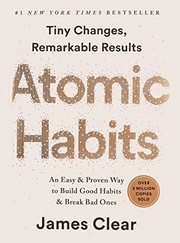
James Clear is a behavioral science expert and bestselling author of "Atomic Habits," who has pioneered groundbreaking frameworks for understanding how tiny changes create remarkable results in personal and professional transformation. Through his research and writing, Clear decodes the complex science of habit formation into practical strategies that help individuals redesign their environments, reshape their identities, and create sustainable behavior change. His four-laws habit framework and concepts like the two-minute rule have influenced millions worldwide, offering actionable insights into how small, consistent actions can compound into significant life improvements across personal development, productivity, and organizational performance.

6episodes
5podcasts

Featured On 5 Podcasts

All Appearances

6 episodes

AI Summary

→ WHAT IT COVERS James Clear explains how getting 1% better daily compounds to 37.78 times improvement annually through atomic habits. He shares the four laws of behavior change, identity-based habits, and systems over goals for sustainable transformation. → KEY INSIGHTS - **The 1% Compound Effect:** Improving 1% daily for one year (1.01 to the 365th power) results in being 37.78 times better by year end, while declining 1% daily drops performance to nearly zero. Focus on trajectory over position to build momentum through small consistent actions. - **Identity Over Outcomes:** Ask who do I want to become rather than what do I want to achieve. Every action casts a vote for your identity. Doing 10 pushups proves you're someone who doesn't miss workouts. Habits provide evidence of who you are, making change stick through identity reinforcement rather than willpower alone. - **Four Laws of Behavior Change:** Make habits obvious through environmental cues, attractive by asking what would make this fun, easy by scaling to worst-day capacity, and satisfying through immediate rewards. Apply these levers systematically. Example: lay out gym clothes, choose enjoyable classes, commit to 10 minutes minimum, reward with coffee afterward. - **Systems Beat Goals:** Goals set direction but systems deliver results. Winners and losers often share identical goals. The difference lies in daily habits and processes. Your bank account, fitness, and knowledge are lagging measures of financial, training, and reading habits practiced six to twelve months prior. Fix inputs and outputs fix themselves. - **Never Miss Twice Rule:** Top performers bounce back quickly from setbacks. Missing one workout matters little if you return immediately. The reclaiming speed determines success, not perfection. Reduce scope but stick to schedule on difficult days. Five good minutes of exercise, writing, or conversation can reset momentum and restore progress toward becoming your desired identity. → NOTABLE MOMENT Clear shares how a severe baseball bat injury at age 16 that shattered his face and put him in a medically induced coma forced him to start impossibly small with basic motor patterns. This five-year recovery arc from barely walking straight to becoming academic all-American taught him that progress takes longer than expected but small daily improvements compound into maximum potential. 💼 SPONSORS None detected 🏷️ Habit Formation, Behavior Change, Identity-Based Habits, Systems Thinking, Compound Growth, Self-Improvement

AI Summary

→ WHAT IT COVERS James Clear explains habit formation science with Andrew Huberman, covering the four laws of behavior change, identity-based habits, mastering the art of starting, and how consistency enlarges ability over time. → KEY INSIGHTS - **The Art of Starting:** Mastering the first five to thirty seconds of beginning a habit determines success more than any other factor. One reader went to the gym for only five minutes initially, building the identity of someone who shows up four days weekly before extending workout duration after six weeks of consistency. - **Four Laws of Behavior Change:** Make habits obvious through environmental design like placing guitar on a stand instead of closet, attractive through positive associations, easy by reducing steps and friction points, and satisfying by linking actions to desired identity reinforcement rather than waiting for distant outcomes to materialize. - **Consistency Enlarges Ability:** Showing up on suboptimal days when energy and time are limited builds greater capacity than perfect performance on ideal days. Bad workouts count more than good ones because maintaining the pattern during difficulty creates separation from those who only perform when conditions are favorable and expands future capability. - **Identity Over Outcomes:** Start habit formation by asking who you wish to become rather than what you wish to achieve. Every action casts a vote for a type of person - studying twenty minutes votes for being studious. After three to six months of consistent votes, identity shifts from trying to do something to naturally being that kind of person. - **Seasonal Habit Adaptation:** Habits require different forms across life seasons rather than permanent rigid routines. Clear wrote two 2000-word articles weekly for three years to build audience, shifted to book writing for three years, then transitioned to a two-hour weekly newsletter reaching three million people - each season demanded different writing habits aligned with current capacity and goals. → NOTABLE MOMENT Clear describes how his trainer reported only two of eight people attended a workout class on a rainy day, illustrating that success often requires tolerating just five to ten minutes of discomfort during preparation while the actual activity remains unchanged, revealing how minimal friction points determine who gains competitive advantage. 💼 SPONSORS [{"name": "Lingo", "url": "https://hellolingo.com/huberman"}, {"name": "Wealthfront", "url": "https://wealthfront.com/huberman"}, {"name": "AG1", "url": "https://drinkag1.com/huberman"}, {"name": "Joovv", "url": "https://joovv.com/huberman"}, {"name": "Eight Sleep", "url": "https://eightsleep.com/huberman"}] 🏷️ Habit Formation, Behavioral Change, Identity Development, Neuroplasticity, Performance Optimization, Productivity Systems

AI Summary

→ WHAT IT COVERS James Clear explains his framework for building lasting habits through environmental design, identity-based change, and the two-minute rule. He shares strategies for positioning work for long-term success, maintaining focus amid opportunities, and sequencing life decisions across decades. → KEY INSIGHTS - **Two-Minute Rule:** Scale any new habit down to something taking two minutes or less to establish the behavior pattern first. One reader lost over 100 pounds by limiting initial gym visits to five minutes maximum, mastering the art of showing up before optimizing the workout itself. Standardize before you optimize. - **Identity Voting System:** Every action casts a vote for the type of person you wish to become. Writing one sentence votes for being a writer, making one sales call votes for being a salesperson. Small actions accumulate into identity proof over time, making habit maintenance self-reinforcing when you take pride in that identity. - **Phase Transition Patience:** Habits work like heating an ice cube one degree at a time with no visible change until reaching the melting point. The San Antonio Spurs quote captures this: the 101st hammer blow cracks the stone, but only because of the 100 that came before. Results are stored, not wasted, before becoming visible. - **Try-Try-Try Differently:** Success requires 10,000 iterations, not just 10,000 attempts. When something works well, it typically shows promise from the beginning—results come easier than other approaches tried. Experiment until finding what comes easy for you, then work extremely hard on that natural strength to become difficult to compete with. - **Four Laws Framework:** Make desired habits obvious (visible cues), attractive (enjoyable process), easy (minimal friction), and satisfying (immediate reward). Bad habits already possess all four qualities—social media is obvious on your phone, attractive through algorithms, easy to scroll, and satisfying with dopamine hits. Reverse these laws to break unwanted patterns. → NOTABLE MOMENT Clear describes positioning his first book for traditional publishing specifically to hit bestseller lists early in his career, enabling him to carry the status marker for fifty years rather than self-publishing initially. He views this sequencing decision as critical leverage, choosing the right order of moves to accumulate maximum long-term advantage. 💼 SPONSORS None detected 🏷️ Habit Formation, Identity Change, Environmental Design, Life Strategy, Content Creation, Decision Making

AI Summary

→ WHAT IT COVERS James Clear explains his four-stage habit formation framework (cue, craving, response, reward) and how to build good habits through making them obvious, attractive, easy, and satisfying, while breaking bad habits by inverting these principles. → KEY INSIGHTS - **Four Laws Framework:** Build habits by making them obvious (visible cues), attractive (appealing anticipation), easy (low friction), and satisfying (immediate reward). Invert these laws to break bad habits: make cues invisible, behaviors unattractive, difficult to perform, and unsatisfying. This framework addresses both motivation before action and reinforcement after. - **Identity-Based Change:** Focus on who you want to become rather than what you want to achieve. Ask "what would a healthy person do?" in each situation instead of fixating on outcomes like losing 40 pounds. Each action casts a vote for your identity. Accumulate enough votes through small behaviors to genuinely believe the new story about yourself. - **Systems Over Goals:** Winners and losers share identical goals, so goals cannot be the distinguishing factor in success. Your current habits are perfectly designed for your current results. Build systems of daily behaviors that inevitably carry you toward desired outcomes. Goals are for winning once; systems are for winning repeatedly over time. - **Environment Design:** Environment functions as invisible gravity pulling behavior in specific directions. Make dozens of small changes to physical spaces so good choices become the path of least resistance. Move healthy food to eye level, place books where you sit, relocate apps on phone screens. Collective environmental changes stack odds dramatically in your favor. - **Variable Reinforcement:** Behaviors rewarded approximately 50% of the time on unpredictable schedules become most addictive. Slot machine players press buttons 800 times per hour because the reward timing remains uncertain. Dopamine spikes occur before the behavior (anticipation) rather than after (satisfaction), driving the compulsion to repeat actions even when outcomes prove unfavorable. → NOTABLE MOMENT Clear describes how a reader lost 110 pounds and maintained the loss for over a decade by consistently asking herself one question in every situation: what would a healthy person do? This identity-focused approach proved more sustainable than tracking specific metrics or following rigid meal plans. 💼 SPONSORS None detected 🏷️ Habit Formation, Behavior Change, Identity Development, Environment Design, Dopamine Response, Systems Thinking

AI Summary

→ WHAT IT COVERS Brené Brown interviews James Clear on implementing his Atomic Habits framework, covering the four laws of behavior change, identity-based habits, systems versus goals, and practical strategies for building sustainable habits in personal and organizational contexts. → KEY INSIGHTS - **Four Laws Framework:** Make habits obvious through environment design, attractive via commitment devices like workout partners, easy by scaling down to two-minute versions, and satisfying through identity reinforcement rather than external rewards alone for long-term sustainability. - **Identity Over Outcomes:** Cast votes for the person you want to become through small actions. Writing one sentence proves you're a writer; doing one pushup proves you don't miss workouts. Habits must be established before they can be improved or optimized. - **Motion Versus Action:** Planning and preparation become procrastination when you spend time researching workout programs, designing logos, or buying equipment without taking behaviors that deliver actual results. Competence requires doing, not just preparing to do. - **Systems Beat Goals:** You fall to the level of your systems, not rise to your goals. Organizations need ritualized courage-building processes during failures, not aspirational values. Narrow focus, increase quality on fewer priorities, then increase speed of execution. → NOTABLE MOMENT Clear reveals he submitted his book manuscript eighteen months late after telling his wife he just needed two good weeks to finish, illustrating how even habits experts struggle with realistic planning and the healthy delusion required to attempt ambitious projects. 💼 SPONSORS [{"name": "Odoo", "url": "https://odoo.com"}] 🏷️ Habit Formation, Behavioral Psychology, Leadership Systems, Organizational Change

AI Summary

→ WHAT IT COVERS James Clear discusses his book Atomic Habits with Brené Brown, explaining identity-based habit formation, the power of systems over goals, and how small consistent actions compound into meaningful life changes over time. → KEY INSIGHTS - **Identity-Based Habits:** Start by defining who you want to become rather than what you want to achieve. Ask "what would a healthy person do?" in each situation, then let every action cast a vote for that identity through consistent behavior. - **Systems Over Goals:** You don't rise to the level of your goals, you fall to the level of your systems. Current habits are perfectly designed to deliver current results. Focus 95% of effort on building daily processes, not achieving distant outcomes. - **Consistency Over Intensity:** Most people need consistency, not intensity. Running a marathon once matters less than being a runner who shows up daily. Small changes seem insignificant day-to-day but compound dramatically over years through continuous refinement and improvement. - **Evidence-Based Identity:** Reject "fake it till you make it" approaches that ask you to believe without evidence. Instead, take one small action—one pushup, one sentence written—to create undeniable proof you are becoming that type of person today. → NOTABLE MOMENT Clear shares how a baseball bat accident at age fifteen left him with brain swelling, seizures, and months of recovery. The injury forced him to focus only on what he could do each day, teaching him that small gains compound into remarkable results. 💼 SPONSORS [{"name": "Thumbtack", "url": "thumbtack.com"}, {"name": "Odoo", "url": "odoo.com"}, {"name": "Stitch Fix", "url": "stitchfix.com"}] 🏷️ Habit Formation, Identity-Based Change, Systems Thinking, Personal Development

Never miss James Clear's insights

Subscribe to get AI-powered summaries of James Clear's podcast appearances delivered to your inbox weekly.

Start Free Today

No credit card required • Free tier available