Best Ways to Build Better Habits & Break Bad Ones | James Clear
Episode
155 min
Read time
2 min
Topics
Productivity, Design & UX, Psychology & Behavior
AI-Generated Summary
Key Takeaways
- ✓The Art of Starting: Mastering the first five to thirty seconds of beginning a habit determines success more than any other factor. One reader went to the gym for only five minutes initially, building the identity of someone who shows up four days weekly before extending workout duration after six weeks of consistency.
- ✓Four Laws of Behavior Change: Make habits obvious through environmental design like placing guitar on a stand instead of closet, attractive through positive associations, easy by reducing steps and friction points, and satisfying by linking actions to desired identity reinforcement rather than waiting for distant outcomes to materialize.
- ✓Consistency Enlarges Ability: Showing up on suboptimal days when energy and time are limited builds greater capacity than perfect performance on ideal days. Bad workouts count more than good ones because maintaining the pattern during difficulty creates separation from those who only perform when conditions are favorable and expands future capability.
- ✓Identity Over Outcomes: Start habit formation by asking who you wish to become rather than what you wish to achieve. Every action casts a vote for a type of person - studying twenty minutes votes for being studious. After three to six months of consistent votes, identity shifts from trying to do something to naturally being that kind of person.
- ✓Seasonal Habit Adaptation: Habits require different forms across life seasons rather than permanent rigid routines. Clear wrote two 2000-word articles weekly for three years to build audience, shifted to book writing for three years, then transitioned to a two-hour weekly newsletter reaching three million people - each season demanded different writing habits aligned with current capacity and goals.
What It Covers
James Clear explains habit formation science with Andrew Huberman, covering the four laws of behavior change, identity-based habits, mastering the art of starting, and how consistency enlarges ability over time.
Key Questions Answered
- •The Art of Starting: Mastering the first five to thirty seconds of beginning a habit determines success more than any other factor. One reader went to the gym for only five minutes initially, building the identity of someone who shows up four days weekly before extending workout duration after six weeks of consistency.
- •Four Laws of Behavior Change: Make habits obvious through environmental design like placing guitar on a stand instead of closet, attractive through positive associations, easy by reducing steps and friction points, and satisfying by linking actions to desired identity reinforcement rather than waiting for distant outcomes to materialize.
- •Consistency Enlarges Ability: Showing up on suboptimal days when energy and time are limited builds greater capacity than perfect performance on ideal days. Bad workouts count more than good ones because maintaining the pattern during difficulty creates separation from those who only perform when conditions are favorable and expands future capability.
- •Identity Over Outcomes: Start habit formation by asking who you wish to become rather than what you wish to achieve. Every action casts a vote for a type of person - studying twenty minutes votes for being studious. After three to six months of consistent votes, identity shifts from trying to do something to naturally being that kind of person.
- •Seasonal Habit Adaptation: Habits require different forms across life seasons rather than permanent rigid routines. Clear wrote two 2000-word articles weekly for three years to build audience, shifted to book writing for three years, then transitioned to a two-hour weekly newsletter reaching three million people - each season demanded different writing habits aligned with current capacity and goals.
Notable Moment
Clear describes how his trainer reported only two of eight people attended a workout class on a rainy day, illustrating that success often requires tolerating just five to ten minutes of discomfort during preparation while the actual activity remains unchanged, revealing how minimal friction points determine who gains competitive advantage.
Episode Transcript
Habits are solutions to the recurring problems in our environment. Let's say you get done with a long day of work. You come back, you're kind of exhausted. That happens, you know, frequently. It's a recurring problem that you face. How do you solve that problem? One person might solve it by going for a run for thirty minutes, another person might solve it by playing video games for thirty minutes, another person might solve it by smoking a cigarette. They all are trying to solve that same core problem. What you find is that, you know, you get to be 20 or 25 or 28, and a lot of the solutions that you have to these recurring problems that you face are solutions that you inherited or that you saw modeled by your parents or your friends or just, you know, whatever you have interfaced with with throughout your short life so far. As soon as you realize that your solutions may not be the best solution, it's now your responsibility to try to figure out a different way to do it. Welcome to the Huberman Lab Podcast, where we discuss science and science based tools for everyday life. I'm Andrew Huberman, and I'm a professor of neurobiology and ophthalmology at Stanford School of Medicine. My guest today is James Clear. James Clear is the author of Atomic Habits, and one of the world's foremost experts on how to build rock solid habits that better your physical and mental health, work, and relationships. Today, we discuss how to build a habit, and how to break bad habits as fast and durably as possible. You'll notice that today's conversation is a very realistic one, and it's largely devoid of cliche acronyms such as make it specific, measurable, achievable, relevant, and time bound. There is some of that discussion and acronyms are useful. But as you'll learn today from James, the real world examples of how to make and break habits are what really stick with you and that you can apply. No one has spent more time on the data related to habit formation and bad habit breaking than James Clear. Today, you also get to know him as a person and how he implemented what he has learned so effectively, even as the backdrop of his life has shifted to include more, not fewer work and family responsibilities. And we all have things that we know we can and should do more of, and things that we should do less of. And we all know that behavioral change starts with a desire to change. But as James Clear explains, it requires a system, one that works for you and that you design in order for it to really stick. Thanks to James's incredible depth of knowledge, generosity, and clarity of communication. Today's conversation about habit formation is filled with useful tools that you can apply to improve your life. So if you have a habit or perhaps many habits …
Get the full transcript (34,138 words) + summary by email — free
One-time email with the complete transcript and AI summary of this episode. No account needed.
One email, no spam. We’ll also show you what SignalCast does.

You just read a 3-minute summary of a 152-minute episode.
Get Huberman Lab summarized like this every Monday — plus up to 2 more podcasts, free.
Pick Your Podcasts — FreeKeep Reading
More from Huberman Lab
Essentials: Developing a Rational Approach to Supplementation for Health & Performance
Oct 22 · 38 min

Modern Wisdom
#1042 - Dr Andrew Huberman - How to Reclaim Your Brain in 2026
Jan 5
More from Huberman Lab
What Makes Great Leaders & How to Live an Extraordinary Life | Dr. Jared Diamond
Oct 19 · 113 min

The Mel Robbins Podcast
How to Become 37.78 Times Better at Anything: An Easy & Proven Way to Build Habits
Jan 8
Books, tools, and gear mentioned in this episode
SignalCast may earn commission on purchases via these links. As an Amazon Associate, SignalCast earns from qualifying purchases.
Books
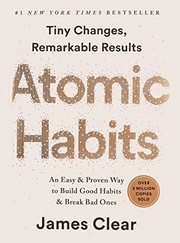
by James Clear
“James Clear explains habit formation science with Andrew Huberman, covering the four laws of behavior change, identity-based habits, mastering the art of starting, and how consistency enlarges ability over time. [Inferred from episode title and guest expertise - Clear's foundational work on this topic]”
More from Huberman Lab
We summarize every new episode. Want them in your inbox?
Essentials: Developing a Rational Approach to Supplementation for Health & Performance
What Makes Great Leaders & How to Live an Extraordinary Life | Dr. Jared Diamond
Essentials: Neuralink & Technologies to Enhance Human Brains | Dr. Matt MacDougall
How Food Choices Shape Memory, Cognition & Cravings | Dr. Scott Kanoski
Essentials: Manage Stress & Build Resilience | Dr. Elissa Epel
Similar Episodes
Related episodes from other podcasts

Modern Wisdom
Jan 5
#1042 - Dr Andrew Huberman - How to Reclaim Your Brain in 2026

The Mel Robbins Podcast
Jan 8
How to Become 37.78 Times Better at Anything: An Easy & Proven Way to Build Habits

The Peter Attia Drive
Dec 29
Building & Changing Habits | James Clear (#183 rebroadcast)

The Diary of a CEO
Jul 3
Most Replayed Moment: The Mid-Year Reset - Atomic Habits Author On How To Get Back On Track

The Knowledge Project
Jan 1
James Clear: How to Build Good Habits & Break Bad Ones
Explore Related Topics
This podcast is featured in Best Health Podcasts (2026) — ranked and reviewed with AI summaries.
You're clearly into Huberman Lab.
Every Monday, we deliver AI summaries of the latest episodes from Huberman Lab and 192+ other podcasts. Free for one show.
Start My Monday DigestNo credit card · Unsubscribe anytime