Discipline Expert: The Habit That Will Make Or Break Your Entire 2026! James Clear
Episode
131 min
Read time
2 min
Topics
Productivity, Health & Wellness, Design & UX
AI-Generated Summary
Key Takeaways
- ✓Two Minute Rule: Scale habits down to two minutes or less to master showing up. One reader went to the gym for only five minutes daily for six weeks, never staying longer, which established the identity of being someone who goes to the gym four times weekly before optimizing the actual workout routine.
- ✓Habit Stacking Formula: Attach new habits to existing ones using the pattern "After I [current habit], I will [new habit]." For example, after making morning coffee, meditate for sixty seconds. This leverages established neural pathways and removes the friction of deciding when to perform the new behavior throughout your day.
- ✓Environment Design Strategy: Prime physical spaces to make desired actions obvious and easy. Write the first sentence of tomorrow's work before leaving, place running clothes beside the bed, or designate a specific chair for journaling only. Habits thrive when the environment naturally pulls you toward the right behavior with minimal activation energy required.
- ✓Identity-Based Approach: Focus on becoming a type of person rather than achieving outcomes. Each action casts a vote for your identity - one pushup votes for being someone who exercises, one sales call votes for being a salesperson. Accumulate enough votes and the identity becomes self-reinforcing, making habits stick long-term.
- ✓Reduce Scope, Stick to Schedule: On difficult days when full workouts or writing sessions feel impossible, do a scaled-down version instead of skipping entirely. Complete two squat sets instead of the full hour, write one paragraph instead of thirty minutes. Maintaining the habit matters more than the volume because consistency builds the identity and prevents momentum loss.
What It Covers
James Clear explains how to build lasting habits through his four-stage framework (cue, craving, response, reward), why systems beat goals, and how small 1% improvements compound over time to create meaningful life changes.
Key Questions Answered
- •Two Minute Rule: Scale habits down to two minutes or less to master showing up. One reader went to the gym for only five minutes daily for six weeks, never staying longer, which established the identity of being someone who goes to the gym four times weekly before optimizing the actual workout routine.
- •Habit Stacking Formula: Attach new habits to existing ones using the pattern "After I [current habit], I will [new habit]." For example, after making morning coffee, meditate for sixty seconds. This leverages established neural pathways and removes the friction of deciding when to perform the new behavior throughout your day.
- •Environment Design Strategy: Prime physical spaces to make desired actions obvious and easy. Write the first sentence of tomorrow's work before leaving, place running clothes beside the bed, or designate a specific chair for journaling only. Habits thrive when the environment naturally pulls you toward the right behavior with minimal activation energy required.
- •Identity-Based Approach: Focus on becoming a type of person rather than achieving outcomes. Each action casts a vote for your identity - one pushup votes for being someone who exercises, one sales call votes for being a salesperson. Accumulate enough votes and the identity becomes self-reinforcing, making habits stick long-term.
- •Reduce Scope, Stick to Schedule: On difficult days when full workouts or writing sessions feel impossible, do a scaled-down version instead of skipping entirely. Complete two squat sets instead of the full hour, write one paragraph instead of thirty minutes. Maintaining the habit matters more than the volume because consistency builds the identity and prevents momentum loss.
Notable Moment
Clear reveals that if he could add one thing to Atomic Habits, it would be asking "What would this look like if it was fun?" for every habit. He argues the person having fun is dangerous to compete against because they persevere when difficulty arrives, while those treating habits as obligations quit immediately when challenges emerge.
No transcript yet — request it by email, free
We'll transcribe this episode on request and email you the full transcript and AI summary — usually within a day. No account needed.
One email, no spam. We’ll also show you what SignalCast does.

You just read a 3-minute summary of a 128-minute episode.
Get The Diary of a CEO summarized like this every Monday — plus up to 2 more podcasts, free.
Pick Your Podcasts — FreeKeep Reading
More from The Diary of a CEO
Most Replayed Moment: Brain Rot Experts - How To Use AI In A Healthy Way!
Sep 11 · 34 min

The Peter Attia Drive
Building & Changing Habits | James Clear (#183 rebroadcast)
Dec 29
More from The Diary of a CEO
Likeability Expert: Stop Doing This, It’s Why People Quietly Avoid You! | Vanessa Van Edwards
Sep 10 · 146 min

The Knowledge Project
James Clear: How to Build Good Habits & Break Bad Ones
Jan 1
Books, tools, and gear mentioned in this episode
SignalCast may earn commission on purchases via these links. As an Amazon Associate, SignalCast earns from qualifying purchases.
Books
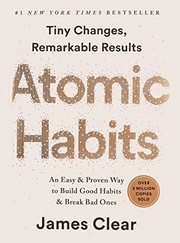 Atomic HabitsBy guest
by James Clear
“Clear reveals that if he could add one thing to Atomic Habits, it would be asking 'What would this look like if it was fun?' for every habit.”
More from The Diary of a CEO
We summarize every new episode. Want them in your inbox?
Most Replayed Moment: Brain Rot Experts - How To Use AI In A Healthy Way!
Likeability Expert: Stop Doing This, It’s Why People Quietly Avoid You! | Vanessa Van Edwards
Human Lie Detector: The #1 Sign They’re Lying To You, Catch Liars Instantly! | Dr Leanne Ten Brinke
Most Replayed Moment: The First Warning Signs Of Insulin Resistance! Check Your Skin For This
Andrew Huberman: My Exact Routine To Optimize Brain & Body, I Do All Of These Every Day!
Similar Episodes
Related episodes from other podcasts

The Peter Attia Drive
Dec 29
Building & Changing Habits | James Clear (#183 rebroadcast)

The Knowledge Project
Jan 1
James Clear: How to Build Good Habits & Break Bad Ones

The Mel Robbins Podcast
Jan 8
How to Become 37.78 Times Better at Anything: An Easy & Proven Way to Build Habits

Huberman Lab
Jan 5
Best Ways to Build Better Habits & Break Bad Ones | James Clear

Dare to Lead with Brené Brown
Nov 22
Brené with James Clear on Atomic Habits, Part 2 of 2
Explore Related Topics
This podcast is featured in Best Startup Podcasts (2026) — ranked and reviewed with AI summaries.
Read this week's Health & Longevity Podcast Insights — cross-podcast analysis updated weekly.
You're clearly into The Diary of a CEO.
Every Monday, we deliver AI summaries of the latest episodes from The Diary of a CEO and 192+ other podcasts. Free for one show.
Start My Monday DigestNo credit card · Unsubscribe anytime