Christian Apologist: The Truth About Christianity (And Why Atheism Is Fading)
Episode
85 min
Read time
3 min
Topics
Relationships, Leadership, Artificial Intelligence
AI-Generated Summary
Key Takeaways
- ✓AI as Idolatry: Current AI systems already display qualities historically attributed to God — apparent omniscience via search, omnipresence via the internet — and active worship groups have formed around AI. Lennox argues this mirrors ancient patterns of self-deification seen in Babylonian and Roman emperors, and that Yuval Noah Harari's transhumanist agenda to "solve death" and engineer happiness replicates those same drives in secular technological form.
- ✓Consciousness vs. Simulated Intelligence: AI researchers at leading labs explicitly state they are not building conscious machines — they have no scientific framework for what consciousness even is. AI simulates intelligence through pattern recognition but has zero qualia: no awareness of redness, no emotional experience, no sensory understanding. Conflating simulation with genuine cognition leads to dangerous anthropomorphization of machines that are, structurally, sophisticated tools.
- ✓Atheism's Rationality Problem: Lennox's core philosophical challenge to atheism: if the human brain is the end product of a mindless, unguided evolutionary process, there is no rational basis for trusting its outputs. He applies this consistently — asking scientists whether they would trust a computer known to be produced by a random process. Every scientist he has posed this to answered no, revealing an internal contradiction in atheist epistemology.
- ✓Christianity vs. Merit-Based Religion: Lennox draws a sharp distinction between Christianity and all other religious frameworks. Most religions operate on a merit scale — good deeds outweighing bad earns entry to heaven. Christianity inverts this entirely: the relationship with God begins with unconditional acceptance, not earned status. This distinction, he argues, is what most self-described Christians misunderstand, and it is the structural reason Christianity produces psychological peace rather than performance anxiety.
- ✓Hell as Chosen Absence: Lennox reframes hell not as divine punishment but as God honoring a person's sustained rejection of relationship. Drawing on C.S. Lewis, he argues God does not force entry into anyone's life — Jesus consistently withdrew when told to leave. The one New Testament figure described as ending in hell showed no desire to leave it. This reframing shifts hell from a cruel lottery to a logical consequence of sustained, conscious choice.
What It Covers
Oxford mathematician and Christian apologist John Lennox, 82, debates AI's existential threat to human identity with Steven Bartlett. Lennox argues that AGI development mirrors historical human drives toward self-deification, that consciousness cannot be replicated by machines, and that Christianity offers a rational, evidence-based framework for meaning that atheism structurally cannot provide.
Key Questions Answered
- •AI as Idolatry: Current AI systems already display qualities historically attributed to God — apparent omniscience via search, omnipresence via the internet — and active worship groups have formed around AI. Lennox argues this mirrors ancient patterns of self-deification seen in Babylonian and Roman emperors, and that Yuval Noah Harari's transhumanist agenda to "solve death" and engineer happiness replicates those same drives in secular technological form.
- •Consciousness vs. Simulated Intelligence: AI researchers at leading labs explicitly state they are not building conscious machines — they have no scientific framework for what consciousness even is. AI simulates intelligence through pattern recognition but has zero qualia: no awareness of redness, no emotional experience, no sensory understanding. Conflating simulation with genuine cognition leads to dangerous anthropomorphization of machines that are, structurally, sophisticated tools.
- •Atheism's Rationality Problem: Lennox's core philosophical challenge to atheism: if the human brain is the end product of a mindless, unguided evolutionary process, there is no rational basis for trusting its outputs. He applies this consistently — asking scientists whether they would trust a computer known to be produced by a random process. Every scientist he has posed this to answered no, revealing an internal contradiction in atheist epistemology.
- •Christianity vs. Merit-Based Religion: Lennox draws a sharp distinction between Christianity and all other religious frameworks. Most religions operate on a merit scale — good deeds outweighing bad earns entry to heaven. Christianity inverts this entirely: the relationship with God begins with unconditional acceptance, not earned status. This distinction, he argues, is what most self-described Christians misunderstand, and it is the structural reason Christianity produces psychological peace rather than performance anxiety.
- •Hell as Chosen Absence: Lennox reframes hell not as divine punishment but as God honoring a person's sustained rejection of relationship. Drawing on C.S. Lewis, he argues God does not force entry into anyone's life — Jesus consistently withdrew when told to leave. The one New Testament figure described as ending in hell showed no desire to leave it. This reframing shifts hell from a cruel lottery to a logical consequence of sustained, conscious choice.
- •AI's Totalitarianism Risk: Lennox warns that narrow AI already enables two contradictory applications simultaneously: identifying terrorists in crowds and suppressing ethnic minorities via social credit systems. The technology is identical; the actor determines the outcome. He cites a Chinese analyst's warning that the West possesses all the same surveillance infrastructure as China — the only missing variable is a centralized government willing to deploy it, and that variable is not permanently absent.
Notable Moment
Lennox recounts visiting a Russian death row facility, where a man convicted of killing twelve women told him, through a locked door, that he deserved his sentence — then described encountering Jesus in his cell and receiving forgiveness. Lennox uses this to illustrate Christianity's claim that forgiveness operates outside human moral accounting systems entirely.
Episode Transcript
You guys, if you listen to this podcast, know how important I think sleep is. We've had so many conversations on the show about it, including the sleep doctor we had on recently and Matthew Walker twice. And as a result, it's become my top priority. But it's not just how long you sleep, it's how well you sleep too. And a big part of that comes down to your mattress. Helix, our sponsor, makes quality tailored mattresses and bedding customized to fit. They have 20 different mattresses and a range of mattress toppers that you can choose from. If you're not sure what your body needs to rest deeply, Helix has this sleep quiz that guides you towards the best mattress for your body and sleeping preferences. And if you change your mind, you're still covered by their one hundred and twenty night sleep trial and can swap it out for another or return it all. And they also offer a limited lifetime warranty. And clearly, whatever they're doing is working because a study they ran showed that eighty two percent of people who slept on a Helix mattress had an increase in their deep sleep cycle. So if you wanna give them a try, head to helixsleep.com/diary for a limited time offer. There are worship groups that worship AI because it's got some of the qualities we normally associate with God. And some people welcome this and say this is the way we should go. But the danger is we treat these humanoid robots as if they're conscious beings. This is a seriously important thing. And I do feel that the Christian faith has a great deal to say about this. And it's fascinating to me that you are very religious. You believe in God because typically I think that mathematicians lean more towards atheism. The great pioneers of modern science were all believers in God. And I've interrogated my self about this truth for over seventy years. I've made myself totally vulnerable, and I found that Christ offers me something nobody else offers me. Peace in my heart. The peace of knowing that I have real forgiveness. Things like, for example, God has met people even in death row. And I never forget looking through the door for Russian security death row. I went up to the door, and a chap came over and looked at me. He killed 12 women, and he said, I deserve to be here. And then his face just burst into what I can only describe as a ghastly smile. And he said, I met Jesus here, and he forgave me. So on this point of forgiveness, would the serial killer be forgiven and allowed into heaven? And then how how do you know that this thing you've committed yourself to is true? So I have had several experiences, enough to tell me, look, this stuff is real. Okay. So Guys, I've got a favor to ask before this episode begins. The …
Get the full transcript (14,528 words) + summary by email — free
One-time email with the complete transcript and AI summary of this episode. No account needed.
One email, no spam. We’ll also show you what SignalCast does.

You just read a 3-minute summary of a 82-minute episode.
Get The Diary of a CEO summarized like this every Monday — plus up to 2 more podcasts, free.
Pick Your Podcasts — FreeKeep Reading
More from The Diary of a CEO
Top White House Advisor: The US Empire Is DYING And Socialism Is Coming Next! | David Friedberg
Aug 31 · 124 min

This Week in Startups
Are AI Agents forming "civilizations" or is this just a psy op? | 2332
Aug 31
More from The Diary of a CEO
Most Replayed Moment: Tony Robbins Reveals The Key To A Meaningful Life
Aug 28 · 30 min

Modern Wisdom
Ex-Gang Member: What Makes A Violent Man Change? - Johnny Chang - #1140
Aug 22
Books, tools, and gear mentioned in this episode
SignalCast may earn commission on purchases via these links. As an Amazon Associate, SignalCast earns from qualifying purchases.
Books
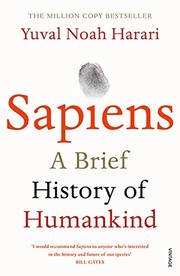
by Yuval Noah Harari
“Lennox argues this mirrors ancient patterns of self-deification seen in Babylonian and Roman emperors, and that Yuval Noah Harari's transhumanist agenda to 'solve death' and engineer happiness replicates those same drives in secular technological form.”
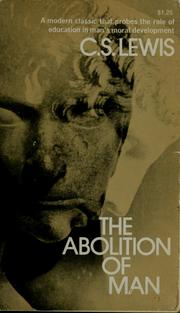
by C.S. Lewis
“Drawing on C.S. Lewis, he argues God does not force entry into anyone's life — Jesus consistently withdrew when told to leave.”
More from The Diary of a CEO
We summarize every new episode. Want them in your inbox?
Top White House Advisor: The US Empire Is DYING And Socialism Is Coming Next! | David Friedberg
Most Replayed Moment: Tony Robbins Reveals The Key To A Meaningful Life
The Man Who Calls BS On AI: AI Is The World’s Greatest SCAM, And They All Know It! | Ed Zitron
The Scientist Who Scans Fathers' Brains: Parenthood Shrinks Your Brain, And Drops Testosterone 25%!
Most Replayed Moment: Better Sleep Doesn't Always Mean Longer Sleep! Fix These Habits Today
Similar Episodes
Related episodes from other podcasts

This Week in Startups
Aug 31
Are AI Agents forming "civilizations" or is this just a psy op? | 2332

Modern Wisdom
Aug 22
Ex-Gang Member: What Makes A Violent Man Change? - Johnny Chang - #1140

Practical AI
May 14
U.S. Congressman Beyer on AI challenges facing America and the World

Conversations with Coleman
Jan 26
Why Liberal Religion is Losing Ground

The Knowledge Project
Aug 26
Small Town Billionaire: How John Bragg Built 3 Empires [Outliers]
Explore Related Topics
This podcast is featured in Best Startup Podcasts (2026) — ranked and reviewed with AI summaries.
Read this week's AI & Machine Learning Podcast Insights — cross-podcast analysis updated weekly.
You're clearly into The Diary of a CEO.
Every Monday, we deliver AI summaries of the latest episodes from The Diary of a CEO and 192+ other podcasts. Free for one show.
Start My Monday DigestNo credit card · Unsubscribe anytime