Why Liberal Religion is Losing Ground
Episode
64 min
Read time
3 min
Topics
Productivity, Relationships, Leadership
AI-Generated Summary
Key Takeaways
- ✓New Atheist Critique Limitations: The New Atheists correctly identified modernity's challenge to religious faith, particularly through social science revealing historical parallels between religions and diverse moral traditions. However, they falsely reduced belief to either literal old-man-in-sky theology or complete materialism, ignoring the vast middle ground where sophisticated believers and mystics throughout history have operated without literalism or pure atheism.
- ✓Judaism's Pre-Western Category: Judaism functions as tribe, religion, ethnicity, and culture simultaneously, enabling strong Jewish identity without religious belief. This explains worldwide Jewish mobilization to save Soviet Jews while no equivalent Christian movement existed, because Christians lack the same familial connection across cultures. This tribal cohesion provides advantages in group solidarity but disadvantages in limiting conversion and growth compared to Christianity.
- ✓Desert Origins Shape Religious Law: Islam and Judaism both developed in desert environments where creating society and religious order were identical tasks, merging civil, criminal, and religious law into unified legal traditions. Christianity emerged within the Roman Empire where civil law already existed, allowing focus on personal conduct rather than societal governance. This structural difference enabled Christianity to later provide separation of church and state.
- ✓Liberal Religion's Decline Mechanism: Non-literalist religious movements engage more with broader society, making them vulnerable to assimilation into attractive secular culture. When someone asks why observe Sabbath restrictions, saying God commanded it proves more effective than explaining personal benefits. Literalist movements can invoke divine authority while non-literalist traditions must provide rational arguments that remain debatable and less compelling for maintaining religious practice across generations.
- ✓Antisemitism's Unique Characteristics: Antisemitism differs from other prejudices through its simultaneous subhuman-superhuman characterization, portraying Jews as vermin who control the world. This hatred inevitably leads to conspiracy theories in ways other ethnic prejudices do not. The phenomenon manifests in Israel being the sole established nation whose right to exist remains debated, unlike Germany post-World Wars or China despite Uyghur persecution.
What It Covers
Rabbi David Wolpe discusses the decline of liberal religion worldwide, debates with New Atheists like Christopher Hitchens, and antisemitism on college campuses post-October 7. He examines why Judaism differs from Christianity and Islam, the relationship between enlightenment and religious values, and controversies around his Atlantic article calling Trump and Musk pagans.
Key Questions Answered
- •New Atheist Critique Limitations: The New Atheists correctly identified modernity's challenge to religious faith, particularly through social science revealing historical parallels between religions and diverse moral traditions. However, they falsely reduced belief to either literal old-man-in-sky theology or complete materialism, ignoring the vast middle ground where sophisticated believers and mystics throughout history have operated without literalism or pure atheism.
- •Judaism's Pre-Western Category: Judaism functions as tribe, religion, ethnicity, and culture simultaneously, enabling strong Jewish identity without religious belief. This explains worldwide Jewish mobilization to save Soviet Jews while no equivalent Christian movement existed, because Christians lack the same familial connection across cultures. This tribal cohesion provides advantages in group solidarity but disadvantages in limiting conversion and growth compared to Christianity.
- •Desert Origins Shape Religious Law: Islam and Judaism both developed in desert environments where creating society and religious order were identical tasks, merging civil, criminal, and religious law into unified legal traditions. Christianity emerged within the Roman Empire where civil law already existed, allowing focus on personal conduct rather than societal governance. This structural difference enabled Christianity to later provide separation of church and state.
- •Liberal Religion's Decline Mechanism: Non-literalist religious movements engage more with broader society, making them vulnerable to assimilation into attractive secular culture. When someone asks why observe Sabbath restrictions, saying God commanded it proves more effective than explaining personal benefits. Literalist movements can invoke divine authority while non-literalist traditions must provide rational arguments that remain debatable and less compelling for maintaining religious practice across generations.
- •Antisemitism's Unique Characteristics: Antisemitism differs from other prejudices through its simultaneous subhuman-superhuman characterization, portraying Jews as vermin who control the world. This hatred inevitably leads to conspiracy theories in ways other ethnic prejudices do not. The phenomenon manifests in Israel being the sole established nation whose right to exist remains debated, unlike Germany post-World Wars or China despite Uyghur persecution.
- •DEI Logic Creates Antisemitic Conclusions: Intersectionality assumes equal group outcomes, with only two explanations for disparities: historical discrimination or current structural rigging. Jews experienced clear historical discrimination yet achieve disproportionately, leaving only one explanation within this framework: Jews rigged the system. This logic parallels right-wing systemic racism theories, both ignoring how multicultural societies naturally produce different outcomes when groups specialize differently and hold varying cultural values.
Notable Moment
Wolpe describes meeting with self-identified pagans at Harvard Divinity School who worship Norse gods and nature deities after his Atlantic article sparked controversy. Despite initial resistance and Wikipedia attacks, the dialogue revealed these theologians worship peace. Wolpe explained a rabbi naturally considers monotheism superior to biblical-era paganism, leading to productive conversation about religious representation and historical context versus contemporary practice.
Episode Transcript
If you love epic stories of myth and legend, listen up. Before Camelot and before the crown, the Pendragon cycle, Rise of the Merlin tells the origin story of the legend that shaped Britain in a seven episode cinematic epic years in the making. This is not a retelling of the King Arthur story. It's the rise of the world that made Arthur possible. The Pendragon Cycle, Rise of the Merlin, is available now on Daily Wire plus. Shot across multiple international locations, this series brings myth to life with serious production value, full scale battles, and a sweeping original orchestral score. At its core, this is a return to classic epic storytelling, where faith, prophecy, and sacrifice truly matter. Stream the Pendragon Cycle, Rise of the Merlin only on Daily Wire plus. Welcome to another episode of Conversations with Coleman. My guest today is rabbi David Wolpe. Rabbi Wolpe is an American conservative rabbi, author, and a scholar in residence at the Maimonides Fund. He was named the most influential rabbi in America by Newsweek and one of the 50 most influential Jews in the world by the Jerusalem Post. In this episode, we talk about rabbi Wolpe's old debates with Christopher Hitchens, Sam Harris, and the other new atheists. We talk about why liberal religion is in decline all over the world. We talk about antisemitism in America and, in particular, how it's similar to and different from other forms of bigotry. We talk about what the word Zionism means and whether that word is still necessary. We talk about the rabbi's controversial Atlantic article in which he called Donald Trump and Elon Musk pagans. We talk about the relationship between enlightenment values and Christianity and much more. So without further ado, Rabbi David Wolpe. Hey. Coleman here. If you're enjoying your show, then you probably care about how political decisions really get made. If that's you, I wanna tell you about the new podcast On Notice, produced by the nonpartisan newsroom, Notice. Each week, journalist, Reese Gorman, sits down with lawmakers for candid conversations, not just about the headlines, but about what makes them tick and what brought them to Washington in the first place. On Notice gives you an insider's view of the people shaping policy in The US. Reese's approachable style has earned him trust on both sides of the aisle, unlocking unguarded conversations that you won't hear in traditional interviews. So tune in to On Notice. That's Notice spelled n o t u s. It's available every Monday wherever you get your podcast or on YouTube. Rabbi David Wolpe, thanks so much for doing my show. I'm delighted to be here. So, I think, I think we met when I came to Israel years ago, and, we've since seen each other. I used to watch your debates with all the new atheists when I was in high school probably. And, you know, you were one of the few people willing to debate the the …
Get the full transcript (9,934 words) + summary by email — free
One-time email with the complete transcript and AI summary of this episode. No account needed.
One email, no spam. We’ll also show you what SignalCast does.

You just read a 3-minute summary of a 61-minute episode.
Get Conversations with Coleman summarized like this every Monday — plus up to 2 more podcasts, free.
Pick Your Podcasts — FreeKeep Reading
More from Conversations with Coleman
Konstantin Kisin: France’s Chaos Is Coming for Britain
Oct 23 · 59 min

The Diary of a CEO
Death of the Middle Class: Billionaire vs Entrepreneur DEBATE - Daniel Priestley v Nick Hanauer
Jun 8
More from Conversations with Coleman
Do Great Men Actually Matter? With Jared Diamond
Oct 19 · 45 min

The Prof G Pod
America Has a Moral Problem, Not a Political One — with David Brooks
Apr 23
Books, tools, and gear mentioned in this episode
SignalCast may earn commission on purchases via these links. As an Amazon Associate, SignalCast earns from qualifying purchases.
Books
by David Wolpe
“controversies around his Atlantic article calling Trump and Musk pagans”
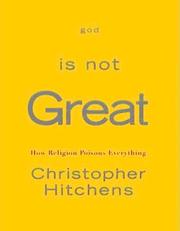
by Christopher Hitchens
“debates with New Atheists like Christopher Hitchens”
More from Conversations with Coleman
We summarize every new episode. Want them in your inbox?
Konstantin Kisin: France’s Chaos Is Coming for Britain
Do Great Men Actually Matter? With Jared Diamond
The Bible Story Every Atheist Should Read, with Megan Phelps-Roper
Inside Israel’s War Room: What Really Happened After October 7
The Real Reason the Black Family Fell Apart
Similar Episodes
Related episodes from other podcasts

The Diary of a CEO
Jun 8
Death of the Middle Class: Billionaire vs Entrepreneur DEBATE - Daniel Priestley v Nick Hanauer

The Prof G Pod
Apr 23
America Has a Moral Problem, Not a Political One — with David Brooks

The Joe Rogan Experience
Apr 2
#2478 - Theo Von

All-In with Chamath, Jason, Sacks & Friedberg
Mar 27
Anthropic's Generational Run, OpenAI Panics, AI Moats, Meta Loses Lawsuits

The Breakdown
Mar 5
Introducing: Inflection Point | The Crypto-TradFi Convergence
Explore Related Topics
This podcast is featured in Best Philosophy Podcasts (2026) — ranked and reviewed with AI summaries.
You're clearly into Conversations with Coleman.
Every Monday, we deliver AI summaries of the latest episodes from Conversations with Coleman and 192+ other podcasts. Free for one show.
Start My Monday DigestNo credit card · Unsubscribe anytime