The hidden forces shaping your choices
Episode
49 min
Read time
2 min
Topics
Leadership, Design & UX, Sales & Revenue
AI-Generated Summary
Key Takeaways
- ✓Food System Design: What people eat is determined more by what's offered than by personal choice. When European supermarket chain Lidl placed plant-based meat directly beside conventional meat at equal pricing, plant-based product sales rose 30% within six months — demonstrating that placement and price parity, not consumer preference, drive purchasing behavior.
- ✓Default Menu Strategy: Food system expert Sara Lake argues that shifting to plant-rich diets requires making plants the institutional default. Schools and hospitals should serve plant-based options automatically, with meat available only on request — mirroring the exact government-and-industry playbook used after World War II to make meat ubiquitous across American meals.
- ✓Infrastructure Decarbonization Window: Engineering professor Deb Chhotra identifies that solar and wind technology now operates at fossil-fuel-equivalent scale — a threshold unreachable 20 years ago. The UK targets 95% renewable electricity by 2030. Rebuilding infrastructure now costs significantly less than absorbing future climate-damage expenses, according to multiple independent economic analyses.
- ✓Tight-Loose Cultural Framework: Cross-cultural psychologist Michelle Gelfand's 30-country Science journal study shows cultures with higher historical threat — natural disasters, invasions — develop tighter norms and lower crime but less openness. Loose cultures show more creativity and tolerance but weaker self-regulation. Individuals can self-assess using Gelfand's tight-loose quiz to identify personal default settings.
- ✓Four-Condition Walkability Formula: Urban planner Jeff Speck identifies four criteria every walkable city must satisfy: useful (mixed residential and commercial uses within walking distance), safe (narrow lanes and two-way traffic that physically slow drivers), comfortable (spatial definition from buildings flanking narrow streets), and interesting (active storefronts with windows, doors, and visible human activity).
What It Covers
TED Radio Hour examines four hidden systems shaping daily behavior: the meat industry's deliberate construction of American dietary norms since the 1940s, aging fossil-fuel-dependent infrastructure facing climate disruption, tight-versus-loose cultural norm frameworks across 30+ countries, and urban design principles that determine whether people walk or drive.
Key Questions Answered
- •Food System Design: What people eat is determined more by what's offered than by personal choice. When European supermarket chain Lidl placed plant-based meat directly beside conventional meat at equal pricing, plant-based product sales rose 30% within six months — demonstrating that placement and price parity, not consumer preference, drive purchasing behavior.
- •Default Menu Strategy: Food system expert Sara Lake argues that shifting to plant-rich diets requires making plants the institutional default. Schools and hospitals should serve plant-based options automatically, with meat available only on request — mirroring the exact government-and-industry playbook used after World War II to make meat ubiquitous across American meals.
- •Infrastructure Decarbonization Window: Engineering professor Deb Chhotra identifies that solar and wind technology now operates at fossil-fuel-equivalent scale — a threshold unreachable 20 years ago. The UK targets 95% renewable electricity by 2030. Rebuilding infrastructure now costs significantly less than absorbing future climate-damage expenses, according to multiple independent economic analyses.
- •Tight-Loose Cultural Framework: Cross-cultural psychologist Michelle Gelfand's 30-country Science journal study shows cultures with higher historical threat — natural disasters, invasions — develop tighter norms and lower crime but less openness. Loose cultures show more creativity and tolerance but weaker self-regulation. Individuals can self-assess using Gelfand's tight-loose quiz to identify personal default settings.
- •Four-Condition Walkability Formula: Urban planner Jeff Speck identifies four criteria every walkable city must satisfy: useful (mixed residential and commercial uses within walking distance), safe (narrow lanes and two-way traffic that physically slow drivers), comfortable (spatial definition from buildings flanking narrow streets), and interesting (active storefronts with windows, doors, and visible human activity).
Notable Moment
Sara Lake describes sitting in a hospital McDonald's eating greasy food with her siblings while her father underwent six-way bypass heart surgery one floor above — a moment that crystallized how the same food system causing the illness was the only option available during the crisis.
Episode Transcript
This is the TED Radio Hour. Each week groundbreaking TED Talks. Our job now is to dream big. Delivered at TED conferences. To bring about the future we want to see. Around the world. To understand who we are. From those talks, we bring you speakers and ideas that will surprise you. You just don't know what you're gonna find. Challenge you. We truly have to ask ourselves, like, why is it noteworthy? And even change you. I literally feel like I'm a different person. Yes. Do you feel that way? Ideas worth spreading. From TED and NPR, I'm Manoush Zomorodi. Today on the show, Hidden Forces. My grandma Toots was a big meat eater. She was a classic 1950s style housewife in The U. S. And grew up in a time when meat was everywhere. Eighty or so years ago, when Sara Lake's grandma was running her household and feeding her family, meat was served at pretty much every meal. You would have breakfast with maybe perhaps sausage offered. You'd have lunch where it would be deli meat sandwiches, and you'd have dinner that would center over a large cut of meat. And so my grandma was a product of her time. Time now to tell you ladies how to keep father happy. Sarah says it wasn't like grandma Toots was a meat obsessed carnivore. Real man type steak sandwich. In mid century America, there was a strategy to make meat the norm starting after the second World War. As savory beef stew when it's armored. It was impossible to avoid, and it was advertised heavily and pushed on consumers. Or Mel Bacon stays fresh longer when Saran ran. This is when they first started creating national ad campaigns and when you see these ads that meat is essential for your amino acids. It's essential for a well balanced diet. Found that man must have food which furnishes energy, food to build muscle and other And this is where we started getting this idea that meat was normal to eat every day in multiple meals when in reality, even ten years prior to that, it was an exception to have meat at a meal rather than the norm. But three factors completely flipped what was for dinner. First, the US government increased its meat subsidies. Second, new technology led to larger farms that could raise and slaughter more animals faster. Plus, people could refrigerate and store more meat. Finally, the National School Lunch Program launched Lunches are designed to be nutritious. With a mandate to serve protein. Meats and other foods rich in protein We saw the fastest and largest shift in our diets that has ever really happened. I mean, I guess that's when it became, like, the American thing to do. You have meat and potatoes at dinner. You grill a hamburger in the summertime. Half an hour. For me, I just remember when I was growing up Beef. It's what's for dinner. The ad that, like, …
Get the full transcript (8,489 words) + summary by email — free
One-time email with the complete transcript and AI summary of this episode. No account needed.
One email, no spam. We’ll also show you what SignalCast does.

You just read a 3-minute summary of a 46-minute episode.
Get TED Radio Hour summarized like this every Monday — plus up to 2 more podcasts, free.
Pick Your Podcasts — FreeKeep Reading
More from TED Radio Hour
The women missing from music
Oct 2 · 49 min

The Mel Robbins Podcast
How to Become 37.78 Times Better at Anything: An Easy & Proven Way to Build Habits
Jan 8
More from TED Radio Hour
Life can be so awkward. Here's how to embrace the embarrassing
Sep 25 · 49 min

Modern Wisdom
The Brutal Reality For Most Men Today (& how to fix it) - Dr K HealthyGamer - #1151
Sep 17
Books, tools, and gear mentioned in this episode
SignalCast may earn commission on purchases via these links. As an Amazon Associate, SignalCast earns from qualifying purchases.
Books
by Michelle Gelfand
“Cross-cultural psychologist Michelle Gelfand's 30-country Science journal study shows cultures with higher historical threat — natural disasters, invasions — develop tighter norms and lower crime but less openness.”
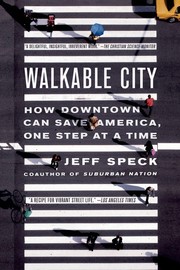
by Jeff Speck
“Urban planner Jeff Speck identifies four criteria every walkable city must satisfy: useful (mixed residential and commercial uses within walking distance), safe (narrow lanes and two-way traffic that physically slow drivers), comfortable (spatial definition from buildings flanking narrow streets), and interesting (active storefronts with windows, doors, and visible human activity).”
Tools
- Tight-Loose QuizBy guest
by Michelle Gelfand
“Individuals can self-assess using Gelfand's tight-loose quiz to identify personal default settings.”
More from TED Radio Hour
We summarize every new episode. Want them in your inbox?
The women missing from music
Life can be so awkward. Here's how to embrace the embarrassing
Big mysteries explained through your senses
What this musician’s identity crisis teaches us about navigating change
Less guilt, more joy: A new chapter for climate action
Similar Episodes
Related episodes from other podcasts

The Mel Robbins Podcast
Jan 8
How to Become 37.78 Times Better at Anything: An Easy & Proven Way to Build Habits

Modern Wisdom
Sep 17
The Brutal Reality For Most Men Today (& how to fix it) - Dr K HealthyGamer - #1151

Huberman Lab
Aug 6
Essentials: Control Your Brain Chemistry for Focus, Motivation & Well-Being

All-In with Chamath, Jason, Sacks & Friedberg
Jun 12
All-In's Best Ideas Pitch Competition: 4 Investors Present Their Top Trades Live

The Tim Ferriss Show
May 20
#866: Sami Inkinen of Virta Health — Reversing Type 2 Diabetes, Rowing 2,750 Miles, and Lessons from Fixing Metabolic Health in 100,000+ People
Explore Related Topics
This podcast is featured in Best Science Podcasts (2026) — ranked and reviewed with AI summaries.
You're clearly into TED Radio Hour.
Every Monday, we deliver AI summaries of the latest episodes from TED Radio Hour and 192+ other podcasts. Free for one show.
Start My Monday DigestNo credit card · Unsubscribe anytime