Three Mile Island
Episode
45 min
Read time
2 min
Topics
Health & Wellness, Design & UX, Sales & Revenue
AI-Generated Summary
Key Takeaways
- ✓Cascading failure design: The TMI-2 accident exemplifies sociologist Charles Perrow's "normal accident" theory — complex systems with tightly coupled components will inevitably produce catastrophic failures regardless of operator competence. Understanding this framework helps engineers and regulators design systems where single-point failures cannot trigger irreversible chains of consequences across multiple interdependent subsystems.
- ✓Indicator vs. confirmation problem: A critical design flaw at TMI-2 was that the relief valve indicator light confirmed the valve received a close command, not that it actually closed. Engineers should distinguish between command-confirmation and state-confirmation signals in safety-critical systems — a lesson directly applicable to any control interface where assumed states drive high-stakes decisions.
- ✓Operator training gap: NRC post-accident investigations found operators were trained to run normal plant operations but received no meaningful emergency scenario training. The Kemeny Commission concluded the NRC's own lax training requirements — not just operator error — caused the delayed response. Regulatory bodies must mandate scenario-based emergency drills, not just procedural competency certifications.
- ✓Institutional optimism bias: Nuclear industry regulators, operators, and companies shared a collective overconfidence in reactor safety that caused them to dismiss early warning signs, falsify leak test results for weeks, and minimize the accident publicly in real time. Organizations managing high-risk systems should institutionalize adversarial review processes specifically designed to counter optimism bias in safety assessments.
- ✓Radiation exposure context: Multiple independent studies — EPA, NRC, Union of Concerned Scientists — found peak radiation exposure during the 1979 accident and subsequent cleanup reached approximately 0.98 rem on-site, roughly one-tenth of a standard chest X-ray. While disputed by some community members reporting symptoms, no study established statistically significant causal links between TMI-2 radiation release and measurable population health outcomes.
What It Covers
On March 28, 1979, a cascade of mechanical failures, operator errors, and regulatory shortcomings at Pennsylvania's Three Mile Island Unit 2 reactor nearly caused a full-scale nuclear meltdown. The episode traces the accident's timeline, the hydrogen bubble crisis, the contested health impacts, and how the event permanently reshaped U.S. nuclear energy policy.
Key Questions Answered
- •Cascading failure design: The TMI-2 accident exemplifies sociologist Charles Perrow's "normal accident" theory — complex systems with tightly coupled components will inevitably produce catastrophic failures regardless of operator competence. Understanding this framework helps engineers and regulators design systems where single-point failures cannot trigger irreversible chains of consequences across multiple interdependent subsystems.
- •Indicator vs. confirmation problem: A critical design flaw at TMI-2 was that the relief valve indicator light confirmed the valve received a close command, not that it actually closed. Engineers should distinguish between command-confirmation and state-confirmation signals in safety-critical systems — a lesson directly applicable to any control interface where assumed states drive high-stakes decisions.
- •Operator training gap: NRC post-accident investigations found operators were trained to run normal plant operations but received no meaningful emergency scenario training. The Kemeny Commission concluded the NRC's own lax training requirements — not just operator error — caused the delayed response. Regulatory bodies must mandate scenario-based emergency drills, not just procedural competency certifications.
- •Institutional optimism bias: Nuclear industry regulators, operators, and companies shared a collective overconfidence in reactor safety that caused them to dismiss early warning signs, falsify leak test results for weeks, and minimize the accident publicly in real time. Organizations managing high-risk systems should institutionalize adversarial review processes specifically designed to counter optimism bias in safety assessments.
- •Radiation exposure context: Multiple independent studies — EPA, NRC, Union of Concerned Scientists — found peak radiation exposure during the 1979 accident and subsequent cleanup reached approximately 0.98 rem on-site, roughly one-tenth of a standard chest X-ray. While disputed by some community members reporting symptoms, no study established statistically significant causal links between TMI-2 radiation release and measurable population health outcomes.
Notable Moment
President Jimmy Carter, a trained nuclear engineer, toured the still-unstable TMI-2 reactor on April 1, 1979 — while two mathematicians held conflicting calculations on whether the hydrogen bubble could explode during his visit. Carter and his wife wore protective rubber boots over radioactive water on the floor.
Episode Transcript
This is an iHeart podcast. Guaranteed human. Grainger knows when you're a procurement manager for an office park, you're not managing one building. You're managing all of them. And to stay ahead, you need to see through walls and around corners. Lights about to fail, filters ready to clog, HVAC on its last leg. If you wait until something breaks, you're already behind. Count on Grainger. For quality products, easy reordering, and 247 support, call 1800, click grainger.com, or just stop by. Granger, for the ones who get it done. On eBay, every find has a story. Like, if you're looking for a vintage band tee, not just a tee, the band tee. You wore it everywhere until your ex boyfriend stole it. Now you're on eBay, and there it is. Same tee from the same tour. The things you love have a way of finding their way back to you, especially on eBay. Where else can you find that mint trading card you search for everywhere that's out of print? Or your first car, the one you wish you'd never sold? It has to be eBay. Shop eBay for millions of finds, each with a story. EBay, things people love. With no fees or minimums on checking accounts, it's no wonder the Capital One bank guy is so passionate about banking with Capital One. If you were here, he wouldn't just tell you about no fees or minimums. He'd also tell you about how Capital One cafes are open seven days a week to assist with your banking needs. Yep. Even on weekends. It's pretty much all he talks about in a good way. What's in your wallet? Terms apply. See capital1.com/bankguy. Capital1na member f d I c. Welcome to Stuff You Should Know, a production of iHeartRadio. Hey, and welcome to the podcast. I'm Josh, and there's Chuck, and Jerry's here too. And this is Stuff You Should Know, the Whoops Edition. That's right. You know what's not at Whoops, though. Oh, I can guess what where this is going. Stuff at Sea Voyage. That's right. It's the most deliberate voyage ever created. That's completely unaccidental That's right. Five night adults only sailing trip, it says. Mhmm. And we're gonna be doing our live podcast, from New York City to Bermuda, not the whole way, just, like, one time. Right. Yeah. There's gonna be other stuff too. We're gonna be meeting and greeting, and I'm guessing there'll be other opportunities to hang out with us maybe rather than Yeah. Just the one meet and greet. Yeah. For sure. This all goes down October second through seventh Mhmm. Of this year aboard the Valiant Lady, and you can go check everything out at virginvoyages.com/stuff. Very nice, Chuck. Let's see. So you wanna start talking about 3 Mile Island? Yeah. The, the nuclear I guess, it's it's still the worst nuclear disaster in American history. Right? Yeah. I can't think of anything worse. I mean, as far as actual disasters …
Get the full transcript (9,327 words) + summary by email — free
One-time email with the complete transcript and AI summary of this episode. No account needed.
One email, no spam. We’ll also show you what SignalCast does.

You just read a 3-minute summary of a 42-minute episode.
Get Stuff You Should Know summarized like this every Monday — plus up to 2 more podcasts, free.
Pick Your Podcasts — FreeKeep Reading
More from Stuff You Should Know
The Twilight Zone Episode
Oct 22 · 46 min

a16z Podcast
Aaron Levie, Steven Sinofsky & Martin Casado: How Do You Secure a World of AI Agents?
Sep 26
More from Stuff You Should Know
Short Stuff: Spooky Recommendations
Oct 21 · 15 min

The Vergecast
It's time to panic about AI safety
Jul 31
Books, tools, and gear mentioned in this episode
SignalCast may earn commission on purchases via these links. As an Amazon Associate, SignalCast earns from qualifying purchases.
Books
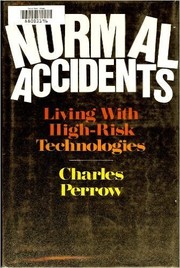 Normal AccidentBy guest
by Charles Perrow
“The TMI-2 accident exemplifies sociologist Charles Perrow's "normal accident" theory — complex systems with tightly coupled components will inevitably produce catastrophic failures regardless of operator competence.”
More from Stuff You Should Know
We summarize every new episode. Want them in your inbox?
Similar Episodes
Related episodes from other podcasts

a16z Podcast
Sep 26
Aaron Levie, Steven Sinofsky & Martin Casado: How Do You Secure a World of AI Agents?

The Vergecast
Jul 31
It's time to panic about AI safety

The Proof
May 26
What the Headlines Get Wrong About the Future of Meat | Bruce Friedrich

Biotech Hangout
Mar 27
Episode 177 - March 27, 2026

99% Invisible
Mar 17
Service Request #1: What Happens When I Call 311?
Explore Related Topics
This podcast is featured in Best Science Podcasts (2026) — ranked and reviewed with AI summaries.
Read this week's Health & Longevity Podcast Insights — cross-podcast analysis updated weekly.
You're clearly into Stuff You Should Know.
Every Monday, we deliver AI summaries of the latest episodes from Stuff You Should Know and 192+ other podcasts. Free for one show.
Start My Monday DigestNo credit card · Unsubscribe anytime