Isn't It Ironic, Dontcha Think?
Episode
49 min
Read time
2 min
Topics
Software Development, Crypto & Web3, Philosophy & Wisdom
AI-Generated Summary
Key Takeaways
- ✓Irony's origin as character, not concept: The word irony derives from "eiron," a stock Greek dramatic character who feigned ignorance to expose others as frauds or fools. Socrates used this technique systematically — performing flattery and deference to gradually dismantle an opponent's entire intellectual identity. Plato documented this method extensively, and Roman orator Quintilian later codified it as "saying the contrary of what you mean."
- ✓Situational irony vs. verbal irony distinction: Situational irony — where fate or circumstance produces an outcome contradicting expectations without human contrivance — carries more weight than verbal irony because it lacks deliberate setup. A lifeguard drowning or a fire station burning down produces a response distinct from crafted wordplay. The Renaissance first identified this category, separating cosmic consequence from rhetorical one-liners.
- ✓Dramatic irony as audience-character knowledge gap: Connop Thirlwall's 1833 essay formalized dramatic irony by identifying that tension arises when audiences possess information characters lack. Hitchcock demonstrated this practically: a bomb under a restaurant table creates sustained dread only when viewers know it exists. Thirlwall retroactively applied this framework to Oedipus Rex, where Oedipus mocks a blind man while unknowingly heading toward self-blinding.
- ✓Satire functions as a societal pressure valve: Effective sociopolitical satire — from Jonathan Swift's 1729 "A Modest Proposal" to modern media — may inadvertently preserve the status quo by converting genuine anger into laughter. Swift's essay on Irish famine drew attention that his straightforward essays never achieved, yet measurable policy change remained unclear. The argument: widespread satire releases social pressure that might otherwise drive structural reform.
- ✓Gen Z meta-irony collapses irony into absurdism: Where Gen X irony maintained a clear inside/outside distinction — singling out hypocrisy with detectable intent — Gen Z meta-irony deliberately removes that legibility. Memes and cultural references layer meanings until outsiders cannot determine whether sincerity or mockery is intended. David Foster Wallace predicted this trajectory, warning in essays that overused irony would eventually make sincere communication unreadable to audiences primed for detachment.
What It Covers
Josh and Chuck trace irony from its origins as a Greek dramatic character type called the "eiron" through Renaissance situational irony, German Romantic philosophical debates, nineteenth-century literary devices, and into Gen Z meta-irony, examining how the concept resists universal definition across 2,500 years of human communication.
Key Questions Answered
- •Irony's origin as character, not concept: The word irony derives from "eiron," a stock Greek dramatic character who feigned ignorance to expose others as frauds or fools. Socrates used this technique systematically — performing flattery and deference to gradually dismantle an opponent's entire intellectual identity. Plato documented this method extensively, and Roman orator Quintilian later codified it as "saying the contrary of what you mean."
- •Situational irony vs. verbal irony distinction: Situational irony — where fate or circumstance produces an outcome contradicting expectations without human contrivance — carries more weight than verbal irony because it lacks deliberate setup. A lifeguard drowning or a fire station burning down produces a response distinct from crafted wordplay. The Renaissance first identified this category, separating cosmic consequence from rhetorical one-liners.
- •Dramatic irony as audience-character knowledge gap: Connop Thirlwall's 1833 essay formalized dramatic irony by identifying that tension arises when audiences possess information characters lack. Hitchcock demonstrated this practically: a bomb under a restaurant table creates sustained dread only when viewers know it exists. Thirlwall retroactively applied this framework to Oedipus Rex, where Oedipus mocks a blind man while unknowingly heading toward self-blinding.
- •Satire functions as a societal pressure valve: Effective sociopolitical satire — from Jonathan Swift's 1729 "A Modest Proposal" to modern media — may inadvertently preserve the status quo by converting genuine anger into laughter. Swift's essay on Irish famine drew attention that his straightforward essays never achieved, yet measurable policy change remained unclear. The argument: widespread satire releases social pressure that might otherwise drive structural reform.
- •Gen Z meta-irony collapses irony into absurdism: Where Gen X irony maintained a clear inside/outside distinction — singling out hypocrisy with detectable intent — Gen Z meta-irony deliberately removes that legibility. Memes and cultural references layer meanings until outsiders cannot determine whether sincerity or mockery is intended. David Foster Wallace predicted this trajectory, warning in essays that overused irony would eventually make sincere communication unreadable to audiences primed for detachment.
Notable Moment
George Carlin's distinction between poetic coincidence and true irony reframes how to evaluate ironic situations: a diabetic struck by a sugar delivery truck is merely unlucky, but if the truck carries insulin, the outcome qualifies as genuinely ironic — the very remedy becomes the instrument of harm.
Episode Transcript
This is an iHeart podcast. Guaranteed human. Hey, everybody. Back to school starts now. So get long lasting battery life on the Dell XPS laptop powered by series three Intel Core so you can work from anywhere. Now, starting at $699 with exclusive student pricing starting at just $599. Complete your setup with savings on select monitors and must have electronics and accessories. Limited time deals and free shipping on PCs and more await you at dell.com/deals. That's dell.com/deals. Guys, we gotta talk about your secret late night Internet searches. You know, the ones, bumpy leg rash, hair loss, itchy bum, trying to figure out your body by endlessly searching for answers. We all do it, and it never works. Thankfully, there's Amazon Health AI. It can connect your symptoms with your medical history to offer personalized care twenty four seven. So call off the search. Amazon Health AI is here. Health care just got less painful. I'm Martha Stewart from the Martha Stewart podcast. When you want to make your best, it's got to be McCormick. From everyday meals to hosting dinner parties, turn to McCormick. Their convenient, versatile flavors elevate every dish. McCormick has been and is an essential in the kitchen. Now they have a new line of signature seasonings crafted by flavor experts with everyday favorites like garlic and olive oil, globally inspired ones like chimichurri, and more. McCormick signature seasonings make it easier to add bold flavors that make each bite of your meal more delicious. Try the chimichurri blend at Elevate Grilled Meats. Explore the full array of blends and find your favorite at mccormick.com. Welcome to Stuff You Should Know, a production of iHeartRadio. Hey, and welcome to the podcast. I'm Josh, and there's Chuck and Jer Bears here too. And this is Stuff You Should Know, the irony edition. It's a little on the nose, isn't it? I think so. Oh, sorry. Let me try again. The isn't it ironic, don't you think edition. Yeah. Well, I mean, if if you are our age or above, maybe a few below. Or a weird younger person. Yeah. You might have made fun of Alanis Morissette for that whole thing because I remember at the time, like, people dissing on that song because they were like, basically none of what she mentions is ironic. No. Rain on your wedding day? I mean, yes. It's not expected, but it can be you know, it's a pretty it's very possible. It's just bad luck in that situation. That's one good example. Yeah. What else? A free ride when you're already there? No. Not really. No. Basically nothing that she said was technically ironic, but the fact that Alanis Morissette, Canada's greatest hero, felt, okay with basically saying this is all irony and ironic, so much so that I'm gonna name my song ironic Yeah. That just kind of goes to show, like, how wide open everyone's interpretation of what irony is is. Yeah. I mean, it's …
Get the full transcript (9,997 words) + summary by email — free
One-time email with the complete transcript and AI summary of this episode. No account needed.
One email, no spam. We’ll also show you what SignalCast does.

You just read a 3-minute summary of a 46-minute episode.
Get Stuff You Should Know summarized like this every Monday — plus up to 2 more podcasts, free.
Pick Your Podcasts — FreeKeep Reading
More from Stuff You Should Know
Let's Thank Universal Pictures for Monster Movies!
Oct 1 · 43 min

The Jordan Harbinger Show
1362: Danny Bate | Why English Spelling Is a Beautiful Mess
Jul 28
More from Stuff You Should Know
Short Stuff: The Retirement Curse
Sep 30 · 12 min

Software Engineering Daily
Biome and the Future of JavaScript Tooling
Jun 18
Books, tools, and gear mentioned in this episode
SignalCast may earn commission on purchases via these links. As an Amazon Associate, SignalCast earns from qualifying purchases.
Books
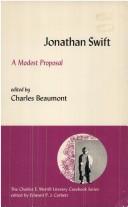
by Jonathan Swift
“Effective sociopolitical satire — from Jonathan Swift's 1729 "A Modest Proposal" to modern media — may inadvertently preserve the status quo by converting genuine anger into laughter.”
other
by Connop Thirlwall
“Connop Thirlwall's 1833 essay formalized dramatic irony by identifying that tension arises when audiences possess information characters lack.”
More from Stuff You Should Know
We summarize every new episode. Want them in your inbox?
Similar Episodes
Related episodes from other podcasts

The Jordan Harbinger Show
Jul 28
1362: Danny Bate | Why English Spelling Is a Beautiful Mess

Software Engineering Daily
Jun 18
Biome and the Future of JavaScript Tooling

Everything Everywhere Daily
Feb 26
Marvel Comics
Everything Everywhere Daily
Sep 26
The FBIs Most Wanted List

Invest Like the Best with Patrick O'Shaughnessy
Sep 16
Michael Moritz - Lessons From 40 Years of Investing and Writing - [Invest Like the Best, EP.491]
Explore Related Topics
This podcast is featured in Best Science Podcasts (2026) — ranked and reviewed with AI summaries.
Read this week's Software Engineering Podcast Insights — cross-podcast analysis updated weekly.
You're clearly into Stuff You Should Know.
Every Monday, we deliver AI summaries of the latest episodes from Stuff You Should Know and 192+ other podcasts. Free for one show.
Start My Monday DigestNo credit card · Unsubscribe anytime