I dropped out of college and built a $3.6B company from scratch
Episode
58 min
Read time
2 min
Topics
Health & Wellness, Investing, Startups
AI-Generated Summary
Key Takeaways
- ✓Consumer vs. Enterprise Pivot: When Box faced a fork between consumer and enterprise markets, the math was clear — consumers paid roughly $5/month while enterprises paid up to $5M/year. Levie recommends founders treat these as entirely separate markets requiring different products, teams, and business models, not a single product serving two audiences simultaneously.
- ✓Regret Minimization for Acquisition Decisions: When facing a half-billion-dollar acquisition offer in their mid-twenties, the Box founders used a Bezos-style regret minimization framework. They mapped out what they would do post-acquisition and concluded they would simply rebuild toward their current position — making continuation the more logical choice when the market still had 100x growth ahead.
- ✓Founder Reading List for Competitive Strategy: Levie recommends six books to predict technology market outcomes: *Seven Powers*, *The Innovator's Dilemma*, *The Innovator's Solution* (read as a pair), *Positioning*, *Blue Ocean Strategy*, and *Crossing the Chasm*. Together, these frameworks help founders assess whether incumbents will respond to disruption and whether a startup can survive that response.
- ✓Catastrophization Management for Founders: Levie works with a therapist specifically to identify and interrupt catastrophization — the pattern of extrapolating one negative event into total company failure. Naming the pattern shortens anxiety cycles from multi-day spirals to faster recovery. Founders who recognize the pattern in real time can recalibrate rather than operate from worst-case assumptions.
- ✓Invest in Your Own P&L: Levie identifies a concrete angel investing strategy — buy equity in the tools your company cannot stop using. Box's own tech stack predicted major winners across cloud infrastructure and storage. Engineers adopting a tool before mainstream adoption signals future value with roughly 90% accuracy, outperforming most conventional investment research approaches.
What It Covers
Aaron Levie, co-founder and CEO of Box, a $3.6B enterprise cloud storage company, discusses the 20-year journey from a college dropout building file storage software to navigating AI's impact on enterprise software, acquisition decisions, mental health management, and business strategy frameworks for founders.
Key Questions Answered
- •Consumer vs. Enterprise Pivot: When Box faced a fork between consumer and enterprise markets, the math was clear — consumers paid roughly $5/month while enterprises paid up to $5M/year. Levie recommends founders treat these as entirely separate markets requiring different products, teams, and business models, not a single product serving two audiences simultaneously.
- •Regret Minimization for Acquisition Decisions: When facing a half-billion-dollar acquisition offer in their mid-twenties, the Box founders used a Bezos-style regret minimization framework. They mapped out what they would do post-acquisition and concluded they would simply rebuild toward their current position — making continuation the more logical choice when the market still had 100x growth ahead.
- •Founder Reading List for Competitive Strategy: Levie recommends six books to predict technology market outcomes: *Seven Powers*, *The Innovator's Dilemma*, *The Innovator's Solution* (read as a pair), *Positioning*, *Blue Ocean Strategy*, and *Crossing the Chasm*. Together, these frameworks help founders assess whether incumbents will respond to disruption and whether a startup can survive that response.
- •Catastrophization Management for Founders: Levie works with a therapist specifically to identify and interrupt catastrophization — the pattern of extrapolating one negative event into total company failure. Naming the pattern shortens anxiety cycles from multi-day spirals to faster recovery. Founders who recognize the pattern in real time can recalibrate rather than operate from worst-case assumptions.
- •Invest in Your Own P&L: Levie identifies a concrete angel investing strategy — buy equity in the tools your company cannot stop using. Box's own tech stack predicted major winners across cloud infrastructure and storage. Engineers adopting a tool before mainstream adoption signals future value with roughly 90% accuracy, outperforming most conventional investment research approaches.
Notable Moment
Levie describes how AI is making founders busier, not less busy — because the ease of launching agent-driven tasks creates a backlog of human follow-up work. Every process kicked off still requires a human decision at the end, compounding workload rather than reducing it.
Episode Transcript
You know what you're getting into here? Nope. Let me give you the simplest explanation. You know how on Twitter, you're funnier than the smart guys and then smarter than the actual funny guys? We did that in the business podcasting space. By the way, I was supposed to be prepping for this podcast, and in the last hour, actually, all I did was watch millionaire matchmaker season three episode 11, which, Aaron, if you remember, is when your cofounder went on millionaire matchmaker. And so I don't have a whole lot of prep, but that was a great episode. Would do you remember when he did that? I do. Yes. Were were you in support of that? Not exactly. So, it was, we we took a flyer on that one. They actually well, the the weirder story was they asked for both of us to do it. Somehow, I had better judgment. So Sam, have you seen this episode? Yeah. But so I actually met your cofounder, Dylan. When I was starting my first company in San Francisco, I didn't have a lot of money, and then we weren't making any money. And I did part time work at a scavenger hunt company, and Box was a client one time. And so I got to hang out with him, And he had told me about being on the show. Wow. Really? And by the way, we were, like, at this bar at, like, the end of the scavenger hunt at, like, 7PM, and he pulled up his laptop and went to the back table and was, like, working. And, he couldn't enjoy the scavenger hunt. Well, I think that's one of the crazier things about y'all story. You've been there for twenty years. It's kinda like four friends, you know, started in college type of deal. And are all four still there now twenty years later? So, three of us went to middle school, and high school together, then four of us went to high school together. And we had tried lots of different ideas, throughout middle school and high school. And then finally, as we went to college, kind of people people split off to different schools. And then this idea kind of emerged, and we all we all kinda got back together on it, and then dropped out of college in in kind of two two parts, in 2005 and, and 2006. And so we we've just been working together for for, I mean, honestly, like, almost thirty years, on different things, which is kinda crazy to to think about it at this point. So right now, we have, Dylan is, you know, CFO. He runs a a bunch of functions in the company. He was famous for Millionaire Matchmaker. Apparently, definitely his his main claim to fame at this point. And then Jeff and Sam. Jeff has a bit of a a farm. He's he's kinda getting into the farm world, and then Sam is at …
Get the full transcript (12,386 words) + summary by email — free
One-time email with the complete transcript and AI summary of this episode. No account needed.
One email, no spam. We’ll also show you what SignalCast does.

You just read a 3-minute summary of a 55-minute episode.
Get My First Million summarized like this every Monday — plus up to 2 more podcasts, free.
Pick Your Podcasts — FreeKeep Reading
More from My First Million
We tested Instinct, MUSE and Grokbot. They’re ridiculous.
Sep 30 · 74 min

20VC (20 Minute VC)
20VC: Nebius Co-Founder on AI Infrastructure Bubbles | The Real Impact of Open Source on OpenAI & Anthropic | How Price Elastic is Demand for Compute | Could Nebius Sell 10x More Compute If They Had It & more with Roman Chernin
Jun 8
More from My First Million
MIT scientist: Elon Musk was right, we are almost certainly in a simulation
Sep 28 · 61 min
20VC (20 Minute VC)
20VC: Everyone is Wrong; We Will Have More Developers in Five Years | Why Frontier Labs Will Be Way More Valuable Than They Are Today | Are SaaS Companies Cooked: Which Thrive & Which Die with Aaron Levie, Founder at Box
Apr 20
Books, tools, and gear mentioned in this episode
SignalCast may earn commission on purchases via these links. As an Amazon Associate, SignalCast earns from qualifying purchases.
Books
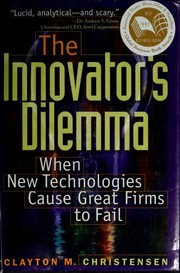 The Innovator's DilemmaRecommended
“Levie recommends six books to predict technology market outcomes: *Seven Powers*, *The Innovator's Dilemma*, *The Innovator's Solution*”
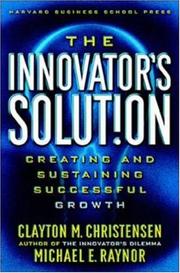 The Innovator's SolutionRecommended
“Levie recommends six books to predict technology market outcomes: *Seven Powers*, *The Innovator's Dilemma*, *The Innovator's Solution* (read as a pair)”
 PositioningRecommended
“Levie recommends six books to predict technology market outcomes: *Positioning*, *Blue Ocean Strategy*, and *Crossing the Chasm*”
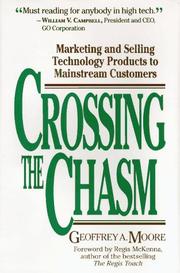 Crossing the ChasmRecommended
“Levie recommends six books to predict technology market outcomes: *Positioning*, *Blue Ocean Strategy*, and *Crossing the Chasm*”
 Seven PowersRecommended
“Levie recommends six books to predict technology market outcomes: *Seven Powers*, *The Innovator's Dilemma*, *The Innovator's Solution*”
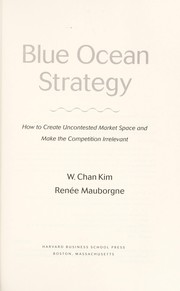 Blue Ocean StrategyRecommended
“Levie recommends six books to predict technology market outcomes: *Positioning*, *Blue Ocean Strategy*, and *Crossing the Chasm*”
company
- BoxBy guest
“Aaron Levie, co-founder and CEO of Box, a $3.6B enterprise cloud storage company, discusses the 20-year journey from a college dropout building file storage software”
More from My First Million
We summarize every new episode. Want them in your inbox?
We tested Instinct, MUSE and Grokbot. They’re ridiculous.
MIT scientist: Elon Musk was right, we are almost certainly in a simulation
There’s 98 days until 2027...Do this and you’ll thank yourself on Jan 1st
Whatnot founder: This is the future of e-commerce
Coach for SpaceX & OpenAI destroys your limiting beliefs for 88 minutes straight
Similar Episodes
Related episodes from other podcasts

20VC (20 Minute VC)
Jun 8
20VC: Nebius Co-Founder on AI Infrastructure Bubbles | The Real Impact of Open Source on OpenAI & Anthropic | How Price Elastic is Demand for Compute | Could Nebius Sell 10x More Compute If They Had It & more with Roman Chernin
20VC (20 Minute VC)
Apr 20
20VC: Everyone is Wrong; We Will Have More Developers in Five Years | Why Frontier Labs Will Be Way More Valuable Than They Are Today | Are SaaS Companies Cooked: Which Thrive & Which Die with Aaron Levie, Founder at Box

The Biotech Startups Podcast
Mar 5
🧬 If You Knew What Could Go Wrong, You’d Never Start - The Founder’s Leap | Sujal Patel (Part 2/4)

Latent Space
Mar 5
Every Agent Needs a Box — Aaron Levie, Box

The SaaS Podcast
Jan 29
Product-Market Fit: How Tito Goldstein Found It After 2 Years of Near-Zero Revenue
Explore Related Topics
This podcast is featured in Best Startup Podcasts (2026) — ranked and reviewed with AI summaries.
Read this week's Health & Longevity Podcast Insights — cross-podcast analysis updated weekly.
You're clearly into My First Million.
Every Monday, we deliver AI summaries of the latest episodes from My First Million and 192+ other podcasts. Free for one show.
Start My Monday DigestNo credit card · Unsubscribe anytime