#1061 - Oliver Burkeman - Why You Can’t Stop Your Productivity Addiction
Episode
92 min
Read time
3 min
Topics
Productivity, Product & Tech Trends, Crypto & Web3
AI-Generated Summary
Key Takeaways
- ✓Insecure Overachiever Pattern: High achievers driven by a need to "fix" an internal void operate in a perpetual deficit state where every accomplishment instantly becomes the new minimum standard. Burkeman identifies this as the core mechanism behind productivity addiction — success produces only relief, never joy. The diagnostic question: when things go well, does your dominant sensation feel like celebration or the abatement of fear? That distinction reveals whether you're creating or fleeing.
- ✓Control vs. Flow Performance: Attempting to consciously manage performance in real time — what Burkeman calls the "controlly" mode — produces worse outcomes than releasing into the activity. Elite performers across writing, speaking, and sports more frequently operate in flow states where self-monitoring is suspended. The practical implication: when output quality drops, the instinct to grip harder is counterproductive. Deliberately loosening conscious oversight tends to restore performance faster than increased vigilance.
- ✓Finitude as Liberation: Because every human life ends with unfinished tasks, unanswered emails, and unmet goals, failure is the structural baseline — not an avoidable outcome. Burkeman argues that recognizing this removes the psychological burden of "staving off the great failure." Accepting that the plane has already crashed, metaphorically, redirects energy from defensive maneuvering toward engaged participation in whatever is actually in front of you right now.
- ✓Interest as Productivity Engine: Burkeman's most counterintuitive productivity finding is that navigating work by what genuinely interests you in a given moment outperforms rigid task scheduling. Insecure overachievers distrust this because they fear they'll collapse without external structure. In practice, people oriented toward achievement find that obligation-based tasks — admin, commitments, correspondence — naturally become appealing at certain points in the day without forcing, making interest-led scheduling a net-positive system.
- ✓Frankl's Inverse Law: While Viktor Frankl observed that people lacking meaning seek pleasure as distraction, a distinct cohort operates in reverse — those for whom joy, ease, and playfulness are difficult to access default to perpetual hard work because meaning-through-effort is more reliably available than moment-to-moment happiness. This group becomes expert at delayed gratification but systematically deprioritizes present enjoyment, producing outward success alongside chronic subjective dissatisfaction that conventional "work harder" advice actively worsens.
What It Covers
Oliver Burkeman joins Chris Williamson to examine why high achievers systematically convert success into minimum acceptable standards, how the "insecure overachiever" pattern drives productivity addiction, why control-seeking undermines actual performance, and how finite humans can pursue ambitious goals without tying self-worth to outcomes — drawing on Krishnamurti, Jungian psychology, and Burkeman's own midlife transition.
Key Questions Answered
- •Insecure Overachiever Pattern: High achievers driven by a need to "fix" an internal void operate in a perpetual deficit state where every accomplishment instantly becomes the new minimum standard. Burkeman identifies this as the core mechanism behind productivity addiction — success produces only relief, never joy. The diagnostic question: when things go well, does your dominant sensation feel like celebration or the abatement of fear? That distinction reveals whether you're creating or fleeing.
- •Control vs. Flow Performance: Attempting to consciously manage performance in real time — what Burkeman calls the "controlly" mode — produces worse outcomes than releasing into the activity. Elite performers across writing, speaking, and sports more frequently operate in flow states where self-monitoring is suspended. The practical implication: when output quality drops, the instinct to grip harder is counterproductive. Deliberately loosening conscious oversight tends to restore performance faster than increased vigilance.
- •Finitude as Liberation: Because every human life ends with unfinished tasks, unanswered emails, and unmet goals, failure is the structural baseline — not an avoidable outcome. Burkeman argues that recognizing this removes the psychological burden of "staving off the great failure." Accepting that the plane has already crashed, metaphorically, redirects energy from defensive maneuvering toward engaged participation in whatever is actually in front of you right now.
- •Interest as Productivity Engine: Burkeman's most counterintuitive productivity finding is that navigating work by what genuinely interests you in a given moment outperforms rigid task scheduling. Insecure overachievers distrust this because they fear they'll collapse without external structure. In practice, people oriented toward achievement find that obligation-based tasks — admin, commitments, correspondence — naturally become appealing at certain points in the day without forcing, making interest-led scheduling a net-positive system.
- •Frankl's Inverse Law: While Viktor Frankl observed that people lacking meaning seek pleasure as distraction, a distinct cohort operates in reverse — those for whom joy, ease, and playfulness are difficult to access default to perpetual hard work because meaning-through-effort is more reliably available than moment-to-moment happiness. This group becomes expert at delayed gratification but systematically deprioritizes present enjoyment, producing outward success alongside chronic subjective dissatisfaction that conventional "work harder" advice actively worsens.
- •Advice Hyper-Responders and Selection Bias: The people most drawn to high-intensity productivity content are precisely those who already over-apply that approach and need the opposite message. Simultaneously, people who need more discipline consume relaxation content. This creates a systematic mismatch where self-improvement media amplifies existing tendencies rather than correcting deficits. Burkeman notes this mirrors a broader pattern: the most susceptible audience for any message is the one for whom that message is least appropriate.
- •Settling as Structural Reality: Commitment-avoidance operates on the false premise that keeping options open avoids trade-offs. Burkeman reframes settling not as a choice but as an inescapable feature of finite existence — every path, including deliberate non-commitment, carries its own costs and foregone benefits. Recognizing that the alternative to committing is not freedom but a different set of losses removes the fantasy of a cost-free option and makes actual decision-making clearer and less emotionally loaded.
Notable Moment
Burkeman describes a period lasting weeks where he was completely unable to work and felt directionless — symptoms resembling depression but better understood as the gap between an old operating system falling away and a new one not yet formed. He argues this disorienting incongruence phase is structurally necessary during any genuine personal evolution, not a malfunction.
Episode Transcript
Valentine's Day is coming up, and whether you want to more deeply connect with your partner or work out whether or not you should break up, I've got the fix for you. I have put together a list of 50 of the most viral and science backed ways to connect with your partner more deeply and 25 questions that will help you work out whether or not you should break up. And they're all available right now at the modern wisdom Valentine's review, and it is completely free. You can get it by going to chriswillx.com/valentines. That's chriswillx.com/valentines. Is it possible to be the best in the world and relaxed at the same time? The best in the world? I don't know. I, I what I do think is that it is very possible to be really, really good at what you do and relaxed. And, actually, my experience is that the more relaxed I can be, the better I am at things. I'm not gonna claim to be the best in the world at anything. But, I I think that notion that you've either got to choose a relaxing life or a an accomplished one, this is, this is the thing I'm on a mission, very personally motivated mission to prove is not, not how it works. I think there's a tension between having high standards, which is hypervigilance and obsession and focus and really paying attention to stuff, and that just tends to bleed into the personality and the ambient anxiety. And, I can see, for instance, if you were to say, is it possible to be the best in the world and never relax at the same time? That question would seem pretty obvious to answer. Yes. Of course. Because the exact same level of resolution that you're obsessing over your pursuit with is the thing that kind of destroys the rest of your life. The interesting question is to work out whether you can kind of be on and off or if you can hold things a little bit more loosely whilst still getting the right level of output you want. Yeah. It's really interesting. I think that, there's there's something I mean, this runs through a lot of what I try to write about, but there's something about wanting to feel in control of the process of getting better at things or being good at things, which is kind of completely different from the actual process of getting better at them or or being good at them. So I think there's you know, this is on some level just the banal observation that people who really excel in what they do are very often or perhaps more often in a flow state while they're doing it. They're kind of they sort of let go into the action. They're not sort of sitting back inside their minds, controlling it all in a very, sort of, conscious, controlly controlly way. So, yeah, for me and, of course, …
Get the full transcript (15,947 words) + summary by email — free
One-time email with the complete transcript and AI summary of this episode. No account needed.
One email, no spam. We’ll also show you what SignalCast does.

You just read a 3-minute summary of a 89-minute episode.
Get Modern Wisdom summarized like this every Monday — plus up to 2 more podcasts, free.
Pick Your Podcasts — FreeKeep Reading
More from Modern Wisdom
Why Men & Women Are Giving Up On Each Other - Daniel Cox - #1166
Oct 22 · 114 min

The Prof G Pod
What Actually Predicts Divorce, and What Women Really Want in a Partner — ft. James Sexton
Sep 9
More from Modern Wisdom
Forgotten War Heroes Who Changed The World - The Fat Electrician - #1165
Oct 19 · 167 min

In Good Company with Nicolai Tangen
Susan Cain: Why Introverts Make Great Leaders, Staying Human in the AI Age and the Bittersweet Life
Aug 5
Books, tools, and gear mentioned in this episode
SignalCast may earn commission on purchases via these links. As an Amazon Associate, SignalCast earns from qualifying purchases.
Books
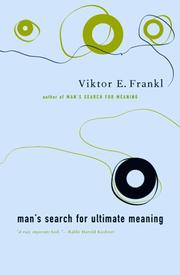
by Viktor Frankl
“While Viktor Frankl observed that people lacking meaning seek pleasure as distraction, a distinct cohort operates in reverse — those for whom joy, ease, and playfulness are difficult to access default to perpetual hard work because meaning-through-effort is more reliably available than moment-to-moment happiness.”
More from Modern Wisdom
We summarize every new episode. Want them in your inbox?
Why Men & Women Are Giving Up On Each Other - Daniel Cox - #1166
Forgotten War Heroes Who Changed The World - The Fat Electrician - #1165
Father Of Quantum Computing: How To Think Like A Genius - David Deutsch - #1164
9 Harsh Truths No One Wants To Admit - Shaan Puri - #1163
Why Life Feels So Dull All The Time (and how to fix it) - Robert Greene - #1162
Similar Episodes
Related episodes from other podcasts

The Prof G Pod
Sep 9
What Actually Predicts Divorce, and What Women Really Want in a Partner — ft. James Sexton

In Good Company with Nicolai Tangen
Aug 5
Susan Cain: Why Introverts Make Great Leaders, Staying Human in the AI Age and the Bittersweet Life

The Rich Roll Podcast
Aug 3
Stoic Lessons From The Odyssey w/ Ryan Holiday
The Prof G Pod
May 21
Why Trump's Iran Strikes Are Unconstitutional — with David French

We Study Billionaires
Apr 26
TIP810: Berkshire Hathaway 2026 Valuation w/ Chris Bloomstran
Explore Related Topics
This podcast is featured in Best Mindset Podcasts (2026) — ranked and reviewed with AI summaries.
You're clearly into Modern Wisdom.
Every Monday, we deliver AI summaries of the latest episodes from Modern Wisdom and 192+ other podcasts. Free for one show.
Start My Monday DigestNo credit card · Unsubscribe anytime