#415 — The Cover-Up
Episode
24 min
Read time
2 min
Topics
Health & Wellness, Leadership, Psychology & Behavior
AI-Generated Summary
Key Takeaways
- ✓Media Access Failure: Over 200 Biden-supporting Democrats only spoke after Election Day 2024 because the administration successfully stonewalled investigative journalism by framing any Biden criticism as helping Trump, an existential threat, thereby justifying concealment of his decline.
- ✓Inner Circle Loyalty Structure: Biden removed advisers who challenged him, including pollster John Anzalone who wanted to survey reelection viability in 2023. Anita Dunn refused polling, stating the decision was already made, exemplifying how loyalty trumped honest assessment within his team.
- ✓One-Term Promise Reversal: Biden's team strategically leaked in December 2019 that he would serve only one term, but after better-than-expected 2022 midterms, he unilaterally decided to run again without any internal process, stress testing, or honest polling data presented to him.
- ✓Communication Versus Decision-Making False Dichotomy: Biden's aides argued he remained competent in private decision-making despite public communication failures. However, presidential communication ability is equally vital for rallying support for policy, war, peace, and legislation in the modern media era.
What It Covers
Jake Tapper discusses his book Original Sin with Sam Harris, revealing how Biden's inner circle concealed his cognitive decline from 2022 onward, creating a systematic cover-up that prevented Democratic leadership from addressing his fitness for reelection.
Key Questions Answered
- •Media Access Failure: Over 200 Biden-supporting Democrats only spoke after Election Day 2024 because the administration successfully stonewalled investigative journalism by framing any Biden criticism as helping Trump, an existential threat, thereby justifying concealment of his decline.
- •Inner Circle Loyalty Structure: Biden removed advisers who challenged him, including pollster John Anzalone who wanted to survey reelection viability in 2023. Anita Dunn refused polling, stating the decision was already made, exemplifying how loyalty trumped honest assessment within his team.
- •One-Term Promise Reversal: Biden's team strategically leaked in December 2019 that he would serve only one term, but after better-than-expected 2022 midterms, he unilaterally decided to run again without any internal process, stress testing, or honest polling data presented to him.
- •Communication Versus Decision-Making False Dichotomy: Biden's aides argued he remained competent in private decision-making despite public communication failures. However, presidential communication ability is equally vital for rallying support for policy, war, peace, and legislation in the modern media era.
Notable Moment
Tapper reveals that after Beau Biden's death in 2015, a top aide described Biden's psyche melting away like water poured on sand, suggesting Obama opposed his 2016 presidential run partly due to concerns about his mental state following this tragedy.
Episode Transcript
Welcome to the Making Sense podcast. This is Sam Harris. Just a note to say that if you're hearing this, you're not currently on our subscriber feed and will only be hearing the first part of this conversation. In order to access full episodes of the Making Sense podcast, you'll need to subscribe at samharris.org. We don't run ads on the podcast, and therefore it's made possible entirely through the support of our subscribers, so if you enjoy what we're doing here, please consider becoming one. Welcome to the Making Sense podcast. This is Sam Harris. I have a, brief housekeeping here. I wanna update you all on some changes we're making to the podcast. After many years of giving free subscriptions to everyone who asked for them, usually at least a 100 people a day, some days over a thousand, it has become clear that this policy is no longer working as intended. Unfortunately, just too many people are taking advantage of it. We've always known that some percentage of people would abuse the policy, but things have recently gotten out of hand. This might have something to do with my releasing more podcasts on video. I'm not sure. But, it's just obvious from the pattern of behavior that this is not what we intended or what anyone would assume we would intend. And so regrettably, we have been forced to acknowledge that the policy is well and truly broken at this point. We might revisit it in the future or not. I don't know. But for now, the paywall on the podcast and on Substack will be a normal paywall. If there's content we feel that really must reach a wider audience, we can release that as a public service announcement. So I'm sure that'll happen, and that ensures that the most essential messages get out there and remain accessible to everyone regardless of their subscription status. I just want to take a moment to acknowledge all of you who have been supporting my work with your subscription throughout this whole time, and thank you for doing that and choosing to pay when you could have taken it for free. It's really all of you who deserve the credit for enabling us to offer this free policy for so many years. In truth, it worked far longer than anyone would have expected. I also want to address those of you who will rightly claim that I originally said that anyone who couldn't afford the podcast could always get it for free. At the time, I certainly meant that, and I still wish this could be the case. But this policy was a novel experiment for a digital subscription business, And at this point, the results are just not compatible with what we're trying to do here. That said, we will continue to offer partial scholarships and you can find information about that and how to apply on the subscription page of my website. On another note, I'm gonna …
Get the full transcript (4,211 words) + summary by email — free
One-time email with the complete transcript and AI summary of this episode. No account needed.
One email, no spam. We’ll also show you what SignalCast does.

You just read a 3-minute summary of a 21-minute episode.
Get Making Sense summarized like this every Monday — plus up to 2 more podcasts, free.
Pick Your Podcasts — FreeKeep Reading
More from Making Sense
#492 — The Second Plane, 25 Years Later
Sep 9 · 37 min

The Ezra Klein Show
How Groupthink Protected Biden and Re-elected Trump
May 21
More from Making Sense
#491 — The Suicide of the Left
Sep 1 · 25 min

10% Happier with Dan Harris
Resetting Your Nervous System When You're Anxious, Hurting, or Just Powering Through | Johanna Franzel
Aug 5
Books, tools, and gear mentioned in this episode
SignalCast may earn commission on purchases via these links. As an Amazon Associate, SignalCast earns from qualifying purchases.
Books
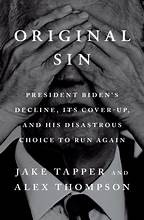 Original SinBy guest
by Jake Tapper
“Jake Tapper discusses his book Original Sin with Sam Harris, revealing how Biden's inner circle concealed his cognitive decline from 2022 onward”
More from Making Sense
We summarize every new episode. Want them in your inbox?
#492 — The Second Plane, 25 Years Later
#491 — The Suicide of the Left
#490 — Lies, Bulls**t, and the Rule of Law
#489 — More From Sam: A Fabulist at Cambridge, the Strait of Hormuz, AOC in 2028, and More
#150 — The Map of Misunderstanding (From the Archive)
Similar Episodes
Related episodes from other podcasts

The Ezra Klein Show
May 21
How Groupthink Protected Biden and Re-elected Trump

10% Happier with Dan Harris
Aug 5
Resetting Your Nervous System When You're Anxious, Hurting, or Just Powering Through | Johanna Franzel
10% Happier with Dan Harris
Mar 6
How To Stop Getting Dragged Around By Your Anxieties, Thought Loops, and Insecurities | Sebene Selassie

Pod Save America
Dec 16
Donald Trump, Empath in Chief
10% Happier with Dan Harris
Sep 2
When Life's Not Working, Don't Try Harder. Change Your Situation Instead. | Angela Duckworth
Explore Related Topics
This podcast is featured in Best Philosophy Podcasts (2026) — ranked and reviewed with AI summaries.
Read this week's Health & Longevity Podcast Insights — cross-podcast analysis updated weekly.
You're clearly into Making Sense.
Every Monday, we deliver AI summaries of the latest episodes from Making Sense and 192+ other podcasts. Free for one show.
Start My Monday DigestNo credit card · Unsubscribe anytime