Socrates in Prison
Episode
50 min
Read time
2 min
Topics
Philosophy & Wisdom, Science & Discovery, History
AI-Generated Summary
Key Takeaways
- ✓Legal obligation theory: Socrates presents two foundational arguments for political obedience: the benefit argument (citizens owe obedience for goods received) and implicit contract theory (remaining in Athens constitutes agreement to obey its laws, establishing consent through action not words).
- ✓Soul-body dualism: Philosophy serves as preparation for death by disentangling the soul from bodily concerns during life. Socrates argues the soul is essentially alive and deathless, therefore indestructible, though ancient readers including Cicero found these arguments unconvincing despite wanting to believe them.
- ✓Philosophical method over conclusions: Socrates maintains open inquiry until his final breath, inviting challenges and admitting potential errors in his immortality arguments. He seeks agreement through rational reflection rather than persuasion, demonstrating that how one conducts philosophical investigation matters as much as conclusions reached.
- ✓Civil disobedience paradox: Socrates refuses to obey a hypothetical law banning philosophy but accepts execution under unjust conviction. This tension between individual conscience and legal authority creates debate about whether he models submission to law or principled resistance, influencing political philosophy for millennia.
What It Covers
Plato's Crito and Phaedo recount Socrates' final days in prison, where he refuses escape, defends obedience to Athenian law, argues for the soul's immortality, and dies calmly by hemlock in 399 BCE.
Key Questions Answered
- •Legal obligation theory: Socrates presents two foundational arguments for political obedience: the benefit argument (citizens owe obedience for goods received) and implicit contract theory (remaining in Athens constitutes agreement to obey its laws, establishing consent through action not words).
- •Soul-body dualism: Philosophy serves as preparation for death by disentangling the soul from bodily concerns during life. Socrates argues the soul is essentially alive and deathless, therefore indestructible, though ancient readers including Cicero found these arguments unconvincing despite wanting to believe them.
- •Philosophical method over conclusions: Socrates maintains open inquiry until his final breath, inviting challenges and admitting potential errors in his immortality arguments. He seeks agreement through rational reflection rather than persuasion, demonstrating that how one conducts philosophical investigation matters as much as conclusions reached.
- •Civil disobedience paradox: Socrates refuses to obey a hypothetical law banning philosophy but accepts execution under unjust conviction. This tension between individual conscience and legal authority creates debate about whether he models submission to law or principled resistance, influencing political philosophy for millennia.
Notable Moment
Socrates' final words request a cock be sacrificed to Asclepius, the healing god, reframing his death as medicine curing the sickness of embodied life rather than poison ending it, transforming execution into philosophical liberation.
Episode Transcript
This BBC podcast is supported by ads outside The UK. Make their holiday unforgettable with a gift that says it all from Pandora Jewelry. A gift that tells a story and shows you know theirs. That doesn't just sparkle, but speaks. From new festive charms to forever rings and personal engravings. This season, give a gift that's perfectly theirs. Whether you're shopping for a shiny surprise for your significant other, matching bracelets to celebrate your friendship, or a heartfelt gift for a family member, say more this holiday season with Pandora. Shop now at pandora.net or visit your closest Pandora store. Here's a holiday giving hack. Don't wrap your giving in paperwork. The biggest banks in the country trust us to run their charitable giving programs. I'm a charitable strategist at Wren. We specialize in donor advised funds and send over $25,000,000,000 to charities each year. We make giving easy for financial advisors, family offices, and philanthropists. Think less paperwork, more mission. Wren just makes giving season a lot less taxing. Learn more at reninc.com. BBC Sounds, music, radio, podcasts. This is In Our Time from BBC Radio four, and this is one of more than a thousand episodes you can find on BBC Sounds and on our website. If you scroll down the page for this edition, you find a reading list to go with it. I hope you enjoy the program. Hello. In March, Socrates' friends were pleading for him to escape from prison in Athens where he was awaiting his death by hemlock. Plato recounted this in two works, the Crito, in which Socrates shows his respect for the laws under which he'd been convicted, and the Phaedo, where he embraced death as the immortal soul's release from the prison of the body. In both, Socrates remains calm and keeps working on his philosophy, so consoling his friends and, for the last two and a half thousand years, inspiring others by his example. When we need to discuss Plato's Crito and Phaedo are Fiona Lee, associate professor in the department of philosophy at University College London, James Warren, professor of ancient philosophy at the University of Cambridge and fellow of Corpus Christi College Cambridge, and Angie Hobbs, professor of the public understanding of philosophy at the University of Sheffield. Angie Hobbs, what had just happened in the life of Socrates? Why was he in prison? Yes. He's just been convicted of refusing to believe in the city's gods, of believing in new divine beings, and of corrupting the young. And he's been sentenced to death. And he's awaiting the hemlock. The hemlock can't be administered while the Athenians have sent a sacred mission to the island of Delos in honor of Apollo. And they do this every year, and the boat was sanctified the day before the trial, and they have to wait for the return of the boat from Delos, before the hemlock can be administered. So that just adds to the drama. And Crito is …
Get the full transcript (8,848 words) + summary by email — free
One-time email with the complete transcript and AI summary of this episode. No account needed.
One email, no spam. We’ll also show you what SignalCast does.

You just read a 3-minute summary of a 47-minute episode.
Get In Our Time summarized like this every Monday — plus up to 2 more podcasts, free.
Pick Your Podcasts — FreeKeep Reading


Books, tools, and gear mentioned in this episode
SignalCast may earn commission on purchases via these links. As an Amazon Associate, SignalCast earns from qualifying purchases.
Books
by Plato
“Plato's Crito and Phaedo recount Socrates' final days in prison, where he refuses escape, defends obedience to Athenian law, argues for the soul's immortality, and dies calmly by hemlock in 399 BCE.”
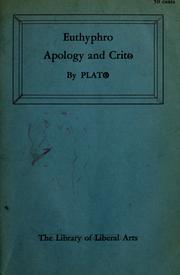
by Plato
“Plato's Crito and Phaedo recount Socrates' final days in prison, where he refuses escape, defends obedience to Athenian law, argues for the soul's immortality, and dies calmly by hemlock in 399 BCE.”
More from In Our Time
We summarize every new episode. Want them in your inbox?
Similar Episodes
Related episodes from other podcasts

The Diary of a CEO
Oct 19
The Deathbed Doctor: Weeks Before Death, Patients Start Having Visions! | Dr Christopher Kerr

The Daily (NYT)
Oct 18
Elizabeth Holmes and Nathan Fielder Keep Us Guessing

The Rich Roll Podcast
Sep 7
Olympic Medalist Jenny Simpson On Her Sudden Cardiac Arrest After A Race & The Journey Back To Health

The School of Greatness
Jul 3
The Untapped Potential Inside You | Colin O'Brady
The Daily (NYT)
Jun 28
The Last 12 Weeks
Explore Related Topics
This podcast is featured in Best History Podcasts (2026) — ranked and reviewed with AI summaries.
You're clearly into In Our Time.
Every Monday, we deliver AI summaries of the latest episodes from In Our Time and 192+ other podcasts. Free for one show.
Start My Monday DigestNo credit card · Unsubscribe anytime