Elizabeth Anscombe
Episode
54 min
Read time
2 min
Topics
Relationships, Software Development, Philosophy & Wisdom
AI-Generated Summary
Key Takeaways
- ✓Doctrine of Double Effect: Anscombe distinguished between intended consequences and merely foreseen ones in moral action. Truman intended civilian deaths at Hiroshima as means to end war, making it murder, not collateral damage from targeting military infrastructure with foreseeable civilian casualties.
- ✓Intention Through Description: Actions carry multiple descriptions simultaneously. A person pumping water moves their arm, operates machinery, and replenishes supply. Intentionality depends on which descriptions the actor endorses when asked why, revealing nested purposes connected by in order to relationships between bodily movements and aims.
- ✓Why Question Method: Anscombe reveals intentional action patterns by examining when the question why applies. If someone answers with reasons rather than I did not know I was doing that, the action counts as intentional under that description, creating a formal pattern independent of mental states.
- ✓Consequentialism Critique: Anscombe coined consequentialism to describe the view holding people equally responsible for all action consequences regardless of intention versus foresight. She argued modern moral philosophy wrongly stripped concepts like moral obligation from their Judeo-Christian context, rendering them meaningless in secular frameworks.
What It Covers
Elizabeth Anscombe transformed twentieth century moral philosophy by challenging consequentialism, establishing philosophy of action as a distinct field, and reviving Aristotelian virtue ethics through her groundbreaking 1957 book Intention and influential essay Modern Moral Philosophy.
Key Questions Answered
- •Doctrine of Double Effect: Anscombe distinguished between intended consequences and merely foreseen ones in moral action. Truman intended civilian deaths at Hiroshima as means to end war, making it murder, not collateral damage from targeting military infrastructure with foreseeable civilian casualties.
- •Intention Through Description: Actions carry multiple descriptions simultaneously. A person pumping water moves their arm, operates machinery, and replenishes supply. Intentionality depends on which descriptions the actor endorses when asked why, revealing nested purposes connected by in order to relationships between bodily movements and aims.
- •Why Question Method: Anscombe reveals intentional action patterns by examining when the question why applies. If someone answers with reasons rather than I did not know I was doing that, the action counts as intentional under that description, creating a formal pattern independent of mental states.
- •Consequentialism Critique: Anscombe coined consequentialism to describe the view holding people equally responsible for all action consequences regardless of intention versus foresight. She argued modern moral philosophy wrongly stripped concepts like moral obligation from their Judeo-Christian context, rendering them meaningless in secular frameworks.
Notable Moment
In 1956, Anscombe publicly opposed Oxford awarding Harry Truman an honorary degree, calling him a mass murderer for bombing Hiroshima and Nagasaki. Her protest received international newspaper coverage and letters of gratitude from bomb survivors, though Oxford proceeded with the award.
Episode Transcript
This BBC podcast is supported by ads outside The UK. Make their holiday unforgettable with a gift that says it all from Pandora Jewelry. A gift that tells a story and shows you know theirs. That doesn't just sparkle, but speaks. From new festive charms to forever rings and personal engravings. This season, give a gift that's perfectly theirs. Whether you're shopping for a shiny surprise for your significant other, matching bracelets to celebrate your friendship, or a heartfelt gift for a family member, say more this holiday season with Pandora. Shop now at pandora.net or visit your closest Pandora store. Your charitable giving stack just called, and it wants a glow up. Donor advised funds or DAFs are the fastest growing giving vehicle for a reason. Wren technology is already used by the top institutions in the country for their DAFs. With Wren, you can oversee your charitable accounts, recommend grants, and deep dive on your giving history, all in one place. Wren just makes giving a lot less taxing. Learn more at reninc.com. It's the Kia season of new traditions sales event. So don't just hang your own lights. Venture out and look for the northern lights. Drink cocoa on the beach or be a drive by karaoke caroler. Because every new Kia comes with a ten year, 100,000 mile limited powertrain warranty, so you can take holidays to places they've never been. See your local Kia dealer or visit kia.com to learn more. Kia, movement that inspires. See Kia dealer for warranty details. Event ends 01/02/1926. BBC Sounds. Music, radio, podcasts. Thanks for downloading this episode of In Our Time. There's a reading list to go with it on our website, and you can get news about our programs if you follow us on Twitter at at b b c in our time. I hope you enjoy the program. Hello. In 1956, Oxford University awarded an honorary degree to the former US president Harry s Truman for his role in ending the second World War. One philosopher, Elizabeth Anscombe, objected strongly. She argued that although dropping nuclear bombs on Hiroshima and Nagasaki may have ended the fighting, it amounted to the murder of tens of thousands of innocent civilians. It was therefore an irredeemable immoral act, and there was something fundamentally wrong with the moral philosophy that didn't see that. This was the starting point for a bodywork that changed the terms in which philosophers discussed moral and ethical questions in the second half of the twentieth century. Anscombe was also instrumental in making action and the question of what it means to intend to do something, a leading area of philosophical work. With me to discuss Elizabeth Anscombe, Rachel Wiseman, senior lecturer in philosophy at the University of Liverpool, Konstantin Sandis, visiting professor of philosophy at the University of Hertfordshire and director of LECS Academic, and Roger Teichman, lecturer in philosophy at St. Hilda's College, University of Oxford. Roger, can you tell us about Anscombe's early …
Get the full transcript (10,040 words) + summary by email — free
One-time email with the complete transcript and AI summary of this episode. No account needed.
One email, no spam. We’ll also show you what SignalCast does.

You just read a 3-minute summary of a 51-minute episode.
Get In Our Time summarized like this every Monday — plus up to 2 more podcasts, free.
Pick Your Podcasts — FreeKeep Reading


Books, tools, and gear mentioned in this episode
SignalCast may earn commission on purchases via these links. As an Amazon Associate, SignalCast earns from qualifying purchases.
Books
- Modern Moral PhilosophyBy guest
by Elizabeth Anscombe
“establishing philosophy of action as a distinct field, and reviving Aristotelian virtue ethics through her groundbreaking 1957 book Intention and influential essay Modern Moral Philosophy”
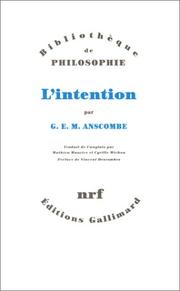 IntentionBy guest
by Elizabeth Anscombe
“transforming twentieth century moral philosophy by challenging consequentialism, establishing philosophy of action as a distinct field, and reviving Aristotelian virtue ethics through her groundbreaking 1957 book Intention”
More from In Our Time
We summarize every new episode. Want them in your inbox?
Similar Episodes
Related episodes from other podcasts

Freakonomics Radio
May 6
Was Adam Smith Really a Right-Winger? (Update)

Everything Everywhere Daily
Sep 12
Ivan the Terrible
Everything Everywhere Daily
Jul 9
Ashoka the Great

How to Take Over the World
May 22
The Undefeated Samurai: Miyamoto Musashi
Everything Everywhere Daily
Apr 27
Cotton: How It Helped Build The Modern World
Explore Related Topics
This podcast is featured in Best History Podcasts (2026) — ranked and reviewed with AI summaries.
Read this week's Software Engineering Podcast Insights — cross-podcast analysis updated weekly.
You're clearly into In Our Time.
Every Monday, we deliver AI summaries of the latest episodes from In Our Time and 192+ other podcasts. Free for one show.
Start My Monday DigestNo credit card · Unsubscribe anytime