Access the Sublime & Live Your Best Life | Robert Greene
Episode
138 min
Read time
3 min
Topics
Productivity, Health & Wellness, Relationships
AI-Generated Summary
Key Takeaways
- ✓Gurdjieff's Self-Remembering Practice: The Armenian mystic Gurdjieff developed a daily attention exercise where you focus intensely on an ordinary object — a vase, a cup, a flower — while internally stating "I am remembering this moment." Practiced consistently over weeks, this retrains perception so that ordinary environments begin appearing vivid and alive. Greene reports this works neurologically similarly to meditation, literally rewiring how the brain constructs reality without requiring substances or extraordinary circumstances.
- ✓Childhood Memory Archaeology for Life Purpose: People who cannot identify their life's calling have typically had their natural impulse voices buried under parental, educational, and social conditioning. Greene's method involves treating memory like an archaeological dig — systematically revisiting earliest childhood moments of spontaneous excitement unconnected to external approval. Equally useful: cataloguing what you deeply hate or find repulsive in work environments, since strong aversion signals misalignment with your core nature as reliably as attraction does.
- ✓Time Perception as a Controllable Variable: Human experience of time is far more plastic than assumed. Greene describes two distinct modes: childhood time, where time flows internally like a river you inhabit, versus adult time, where you observe it from the shoreline. Meditation practiced for 40 minutes daily can restore the internal flow state. Interacting with animals, plants, or other species with radically different lifespans — octopuses live three years maximum — can also shift your temporal frame of reference toward richer, denser experience.
- ✓Handwriting Activates Distinct Neural Pathways: Greene wrote his entire new book by hand across over 100 notebooks because the brain-hand relationship has ancient neural roots distinct from typing or dictation. Neuroscientist Eddie Chang's research confirms the hand's motor representation in the brain is nested inside language areas, creating feedback loops between gesture and verbal formulation. Slowing composition to handwriting speed forces deeper cognitive processing, produces qualitatively different thinking, and engages sensory experience — ink texture, color, flow — that typing eliminates entirely.
- ✓Reporting an Experience Degrades Living It: When people film concerts, hike with phones navigating, or mentally compose social media posts during events, they shift from first-person immersion to third-person broadcast mode. Greene argues these are neurologically incompatible states. The sublime requires being inside an experience rather than outside it. Practical application: separate the experience phase from the reporting phase entirely — do the thing fully first, then document afterward, the same way laboratory scientists conduct experiments before writing papers about them.
What It Covers
Robert Greene, author of Mastery and The 48 Laws of Power, joins Andrew Huberman to discuss Greene's new book The Law of the Sublime — exploring how humans can expand their daily consciousness beyond habitual perception through specific practices involving attention, time, nature, love, and childhood memory to access transcendent experiences without drugs or extreme circumstances.
Key Questions Answered
- •Gurdjieff's Self-Remembering Practice: The Armenian mystic Gurdjieff developed a daily attention exercise where you focus intensely on an ordinary object — a vase, a cup, a flower — while internally stating "I am remembering this moment." Practiced consistently over weeks, this retrains perception so that ordinary environments begin appearing vivid and alive. Greene reports this works neurologically similarly to meditation, literally rewiring how the brain constructs reality without requiring substances or extraordinary circumstances.
- •Childhood Memory Archaeology for Life Purpose: People who cannot identify their life's calling have typically had their natural impulse voices buried under parental, educational, and social conditioning. Greene's method involves treating memory like an archaeological dig — systematically revisiting earliest childhood moments of spontaneous excitement unconnected to external approval. Equally useful: cataloguing what you deeply hate or find repulsive in work environments, since strong aversion signals misalignment with your core nature as reliably as attraction does.
- •Time Perception as a Controllable Variable: Human experience of time is far more plastic than assumed. Greene describes two distinct modes: childhood time, where time flows internally like a river you inhabit, versus adult time, where you observe it from the shoreline. Meditation practiced for 40 minutes daily can restore the internal flow state. Interacting with animals, plants, or other species with radically different lifespans — octopuses live three years maximum — can also shift your temporal frame of reference toward richer, denser experience.
- •Handwriting Activates Distinct Neural Pathways: Greene wrote his entire new book by hand across over 100 notebooks because the brain-hand relationship has ancient neural roots distinct from typing or dictation. Neuroscientist Eddie Chang's research confirms the hand's motor representation in the brain is nested inside language areas, creating feedback loops between gesture and verbal formulation. Slowing composition to handwriting speed forces deeper cognitive processing, produces qualitatively different thinking, and engages sensory experience — ink texture, color, flow — that typing eliminates entirely.
- •Reporting an Experience Degrades Living It: When people film concerts, hike with phones navigating, or mentally compose social media posts during events, they shift from first-person immersion to third-person broadcast mode. Greene argues these are neurologically incompatible states. The sublime requires being inside an experience rather than outside it. Practical application: separate the experience phase from the reporting phase entirely — do the thing fully first, then document afterward, the same way laboratory scientists conduct experiments before writing papers about them.
- •Love as Ego Dissolution Practice: Greene frames romantic love as one of the most accessible sublime experiences available to humans because it combines physical and spiritual dimensions simultaneously. The obstacle is that falling in love requires genuine vulnerability — exposing psychological defenses — which triggers primal abandonment fear rooted in early childhood. Greene argues modern culture actively discourages this vulnerability through cynicism and social performance pressure, and that choosing to fall fully in love with one person constitutes a deliberate act of rebellion against narcissistic cultural defaults.
- •Technology as Sublime Tool vs. Sublime Barrier: Technology blocks sublime experience when it keeps users locked inside the human social world — tracking metrics, seeking validation, broadcasting presence. However, Greene uses NASA telescope imagery and space science content as legitimate sublime portals, accessing cosmic scale visuals unavailable through direct experience. The distinction is intent: consuming content for private internal experience versus consuming it for social signaling produces entirely different neurological and psychological outcomes, with only the former capable of expanding consciousness.
Notable Moment
After his stroke left him unable to travel or take psychedelics as originally planned for his research, Greene sat in a hospital bed and found the world suddenly appeared radically new — clouds, birds, and trees registering as if seen for the first time. This forced constraint ultimately shaped the book's core argument: the sublime is available inside the smallest, most ordinary daily circumstances.
Episode Transcript
People would come to me, and they would say, Robert, I don't know what my life's task is. I'm in my twenties. You write about it. You write about da Vinci. You write about all these other people. I have no idea. So I had to go, like, why wouldn't they know it? Because if you think about your early childhood, you had those moments. You knew that you would love this. You loved kicking a ball. I loved sports. But thinking deeply about their experience, I came to realize that first of all, they've lost a deep connection to those childhood experience, those moments they've forgotten about them. Why have they forgotten about them? These other voices intervened. Their parents told them what they should love, what they shouldn't love. They had to learn math and they didn't wanna learn math. The teachers told them what they were good at, which kind of constrains your brain into a certain career path. We have to cut out all of those voices. We literally had to go back into their childhood to uncover those moments where something sparked and they were excited, not because their parents told them, but because it was them. Welcome to the Huberman Lab Podcast, where we discuss science and science based tools for everyday life. I'm Andrew Huberman, and I'm a professor of neurobiology and ophthalmology at Stanford School of Medicine. My guest today is Robert Greene. Robert Greene is a renowned author of books such as The Laws of Human Nature, The 48 Laws of Power, and The Art of Seduction. Another one of his books entitled Mastery remains one of my all time favorite books, and is one that I have recommended to the students I've taught in classes, in my laboratory, and to my friends and family and acquaintances for years. But with all of that said, I do believe that the topics Robert discusses today are the most important of all. And I don't say that lightly. Today, we talk about the sublime and how to access the sublime. For many of us, we hear the sublime and it sounds abstract. But today Robert explains that accessing the sublime in your daily life is not only possible, but is truly the key to a great life. One full of rich experiences in your work, your relationships, your relationship to yourself, to animals, and even to the galaxies. And importantly, today, Robert provides tools and examples for how to access the sublime in daily life. So it's probably obvious by now that I'm a huge fan of Robert Green as the person and his books and his teaching, including his teachings in today's conversation. You're in for a real gift with this one, so enjoy. Before we begin, I'd like to emphasize that this podcast is separate from my teaching and research roles at Stanford. It is however, part of my desire and effort to bring zero cost to consumer information about science …
Get the full transcript (23,281 words) + summary by email — free
One-time email with the complete transcript and AI summary of this episode. No account needed.
One email, no spam. We’ll also show you what SignalCast does.

You just read a 3-minute summary of a 135-minute episode.
Get Huberman Lab summarized like this every Monday — plus up to 2 more podcasts, free.
Pick Your Podcasts — FreeKeep Reading
More from Huberman Lab
Essentials: How Smells Influence Our Hormones, Health & Behavior | Dr. Noam Sobel
Oct 29 · 34 min

Dwarkesh Podcast
What I learned about power from LBJ and Robert Moses
Oct 29
More from Huberman Lab
Unlocking Persistent Motivation & Extreme Resilience | Ross Edgley
Oct 26 · 163 min

Modern Wisdom
Why Life Feels So Dull All The Time (and how to fix it) - Robert Greene - #1162
Oct 12
Books, tools, and gear mentioned in this episode
SignalCast may earn commission on purchases via these links. As an Amazon Associate, SignalCast earns from qualifying purchases.
Books
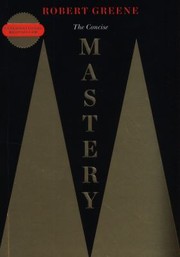
by Robert Greene
“Robert Greene, author of Mastery and The 48 Laws of Power, joins Andrew Huberman to discuss Greene's new book”
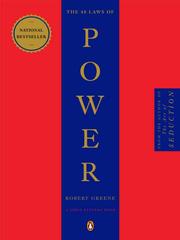
by Robert Greene
“Robert Greene, author of Mastery and The 48 Laws of Power, joins Andrew Huberman to discuss Greene's new book”
- The Law of the SublimeBy guest
by Robert Greene
“Robert Greene, author of Mastery and The 48 Laws of Power, joins Andrew Huberman to discuss Greene's new book The Law of the Sublime — exploring how humans can expand their daily consciousness”
More from Huberman Lab
We summarize every new episode. Want them in your inbox?
Essentials: How Smells Influence Our Hormones, Health & Behavior | Dr. Noam Sobel
Unlocking Persistent Motivation & Extreme Resilience | Ross Edgley
Essentials: Developing a Rational Approach to Supplementation for Health & Performance
What Makes Great Leaders & How to Live an Extraordinary Life | Dr. Jared Diamond
Essentials: Neuralink & Technologies to Enhance Human Brains | Dr. Matt MacDougall
Similar Episodes
Related episodes from other podcasts

Dwarkesh Podcast
Oct 29
What I learned about power from LBJ and Robert Moses

Modern Wisdom
Oct 12
Why Life Feels So Dull All The Time (and how to fix it) - Robert Greene - #1162
Modern Wisdom
Oct 3
Willpower Expert: The Secret To Effortless Discipline - Angela Duckworth - #1158

a16z Podcast
Sep 7
Can Open Source Keep AI Power From Concentrating?

Masters of Scale
Sep 3
Angela Duckworth on why grit isn’t enough
Explore Related Topics
This podcast is featured in Best Health Podcasts (2026) — ranked and reviewed with AI summaries.
Read this week's Health & Longevity Podcast Insights — cross-podcast analysis updated weekly.
You're clearly into Huberman Lab.
Every Monday, we deliver AI summaries of the latest episodes from Huberman Lab and 192+ other podcasts. Free for one show.
Start My Monday DigestNo credit card · Unsubscribe anytime