Zero to One
Episode
62 min
Read time
3 min
Topics
Career Growth, Productivity, Relationships
AI-Generated Summary
Key Takeaways
- ✓Contrarian Question Framework: Thiel's core diagnostic tool asks: what truth do very few people agree with you on? Weak answers cite widely-held beliefs like "education is broken." Strong answers follow the structure "most people believe X, but the opposite is true." Identifying a genuine contrarian truth reveals something about the future others cannot see, and lets you build toward that future before competitors recognize it exists.
- ✓Monopoly as Strategy: Thiel argues competitive markets destroy profits entirely, making monopoly the only viable business target. Four paths to monopoly exist: proprietary technology at least 10x better than alternatives, network effects, economies of scale, and brand. Critically, start by dominating a small niche first — Amazon began with books, Facebook launched only at Harvard — then expand outward once monopoly in that niche is secured.
- ✓Definite Optimism: Thiel maps four worldviews on two axes: optimism/pessimism and definite/indefinite. Definite optimists outperform all others because they believe the future improves only through deliberate action and concrete planning. Indefinite optimists — who assume things will improve without a plan — produce stagnation. The prescription: reject hedging, form a specific vision of a better future, and execute a multi-year plan toward it rather than deferring to process.
- ✓Power Law Focus: Roughly 20% of inputs drive 80% or more of results across venture capital, careers, marketing channels, and relationships. Thiel argues investors who understand this make as few bets as possible, concentrating on power-law opportunities. Practically: experiment across channels or approaches until one produces outsized returns, then concentrate entirely on that lever. Owning 0.01% of Google exceeds owning 50% of a mediocre startup.
- ✓One Responsibility Per Person: At PayPal, Thiel assigned every employee exactly one unique responsibility and evaluated them solely on that metric. This eliminated internal competition for overlapping roles, which he identifies as the primary source of startup conflict. Internal factional strife functions like an autoimmune disease — the visible cause of failure is external, but the real cause is internal. Single-ownership roles also create micro-monopolies that reinforce company-wide clarity of vision.
What It Covers
Ben Wilson of How to Take Over the World breaks down Peter Thiel's book Zero to One, covering Thiel's frameworks for building monopolies, practicing definite optimism, leveraging power laws, and founding startups. Thiel co-founded PayPal and Palantir and was Facebook's first investor, giving him credibility behind companies collectively valued above $3 trillion.
Key Questions Answered
- •Contrarian Question Framework: Thiel's core diagnostic tool asks: what truth do very few people agree with you on? Weak answers cite widely-held beliefs like "education is broken." Strong answers follow the structure "most people believe X, but the opposite is true." Identifying a genuine contrarian truth reveals something about the future others cannot see, and lets you build toward that future before competitors recognize it exists.
- •Monopoly as Strategy: Thiel argues competitive markets destroy profits entirely, making monopoly the only viable business target. Four paths to monopoly exist: proprietary technology at least 10x better than alternatives, network effects, economies of scale, and brand. Critically, start by dominating a small niche first — Amazon began with books, Facebook launched only at Harvard — then expand outward once monopoly in that niche is secured.
- •Definite Optimism: Thiel maps four worldviews on two axes: optimism/pessimism and definite/indefinite. Definite optimists outperform all others because they believe the future improves only through deliberate action and concrete planning. Indefinite optimists — who assume things will improve without a plan — produce stagnation. The prescription: reject hedging, form a specific vision of a better future, and execute a multi-year plan toward it rather than deferring to process.
- •Power Law Focus: Roughly 20% of inputs drive 80% or more of results across venture capital, careers, marketing channels, and relationships. Thiel argues investors who understand this make as few bets as possible, concentrating on power-law opportunities. Practically: experiment across channels or approaches until one produces outsized returns, then concentrate entirely on that lever. Owning 0.01% of Google exceeds owning 50% of a mediocre startup.
- •One Responsibility Per Person: At PayPal, Thiel assigned every employee exactly one unique responsibility and evaluated them solely on that metric. This eliminated internal competition for overlapping roles, which he identifies as the primary source of startup conflict. Internal factional strife functions like an autoimmune disease — the visible cause of failure is external, but the real cause is internal. Single-ownership roles also create micro-monopolies that reinforce company-wide clarity of vision.
- •Sales Is Non-Negotiable: Even technically superior products require deliberate distribution. Thiel's rule: experiment until one sales or marketing channel drives 80%+ of revenue, then double down exclusively on that channel. Viral growth and organic frenzies almost always have calculated recruiting and pitching operating beneath the surface. Edison, Jobs, Picasso, and Napoleon all combined exceptional output with deliberate self-promotion — treating sales as inseparable from the work itself.
Notable Moment
Thiel recounts how a California schoolteacher with no credentials proposed in the 1940s to dam San Francisco Bay, create freshwater lakes, and reclaim 20,000 acres — and Congress held hearings on it. Today that same proposal would be dismissed immediately, illustrating how definitively America shifted from bold planning to process-obsessed indefinite optimism.
Episode Transcript
I'm a show you how great I am. But that body power. I just wanna say from the bottom of my heart, I'd like to take this chance to apologize to absolutely nobody. Hello and welcome to How to Take Over the World, this is Ben Wilson. Today, I'm doing an episode on Peter Thiel's book Zero to One. I generally don't care much for leadership books. One of the reasons that I started this podcast is that I think that biography is a much better tool, a better motivator, and a better teacher than leadership and self help books. And if you look through history, you find that the great leaders, whether they are conquerors, entrepreneurs, scientists, or artists have been motivated by the stories of the greatest who preceded them, not by books of theory. But there are a few exceptions. One of them that I have always appreciated is this book, Zero to One. Peter Thiel, if you don't know, is a cofounder of PayPal, Palantir, and Founders Fund, and was the first investor in Facebook, among other accomplishments. So he's directly founded companies that are worth a little more than half $1,000,000,000,000. And then if you include companies that he has backed, like Facebook and Anduril, that number rises to something north of $3,000,000,000,000. So, Peter Thiel has a lot of credibility. Autobiographical in a lot of ways. It isn't a work of of pure theory. It is a work based on the things that he has lived and experienced. And I read it pretty soon after it came out, zero to one, and it has really contributed a lot to the way that I think and contributed a lot to my success, I think. So since it's been of so much value to me, I thought it'd be value to you. In the introduction, Teal says that Zero to One is about how to build companies that create new things. Right. He says most companies go from one to N, you know, think of a normal business, right? Like a landscaping business. You take an existing concept and you find new customers. You compete in an existing market. But what teal is interested in is how to create something totally new, a process he calls going from zero to one. He's taking this from a startup perspective and there is a lot of startup specific advice, but I think it's a great book for anyone who is trying to start or do something new. Much of what he says reminds me of Picasso starting a new art movement with Cubism or Da Vinci creating new painting styles or Lee Kuan Yew starting a new country or Caesar Augustus creating a new regime. So I think that while yes, he does give some startup specific advice, whatever your domain, I think zero to one has something to teach us about how to build new things. So let's get into it. I read through the whole thing …
Get the full transcript (11,347 words) + summary by email — free
One-time email with the complete transcript and AI summary of this episode. No account needed.
One email, no spam. We’ll also show you what SignalCast does.

You just read a 3-minute summary of a 59-minute episode.
Get How to Take Over the World summarized like this every Monday — plus up to 2 more podcasts, free.
Pick Your Podcasts — FreeKeep Reading
More from How to Take Over the World
Steve Jobs in Exile
Jul 15 · 50 min

The Jordan Harbinger Show
1370: Peter Zeihan | North American Solutions to a Breaking World Order
Aug 18
More from How to Take Over the World
The Cancer Episode
Jul 3 · 16 min

The Diary of a CEO
Creatine Expert: Creatine Is The Secret To Weight Loss
Jun 15
Books, tools, and gear mentioned in this episode
SignalCast may earn commission on purchases via these links. As an Amazon Associate, SignalCast earns from qualifying purchases.
Books
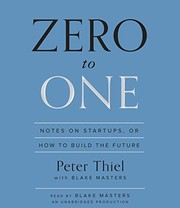
by Peter Thiel
“Ben Wilson of How to Take Over the World breaks down Peter Thiel's book Zero to One, covering Thiel's frameworks for building monopolies, practicing definite optimism, leveraging power laws, and founding startups.”
More from How to Take Over the World
We summarize every new episode. Want them in your inbox?
Similar Episodes
Related episodes from other podcasts

The Jordan Harbinger Show
Aug 18
1370: Peter Zeihan | North American Solutions to a Breaking World Order

The Diary of a CEO
Jun 15
Creatine Expert: Creatine Is The Secret To Weight Loss

The Daily (NYT)
Jun 6
Everything You Need to Know About the World Cup

Lenny's Podcast
Apr 19
Why half of product managers are in trouble | Nikhyl Singhal (Meta, Google)

20VC (20 Minute VC)
Mar 14
20Growth: Inside Lovable's $400M ARR Growth Machine | How Lovable Does Product Launches | How Lovable Hacks Social To Make Posts Go Viral | How Lovable Makes Every Employee a Brand with Elena Verna
Explore Related Topics
This podcast is featured in Best History Podcasts (2026) — ranked and reviewed with AI summaries.
You're clearly into How to Take Over the World.
Every Monday, we deliver AI summaries of the latest episodes from How to Take Over the World and 192+ other podcasts. Free for one show.
Start My Monday DigestNo credit card · Unsubscribe anytime