Adolf Hitler (Part 2)
Episode
138 min
Read time
3 min
Topics
Investing, Leadership, Design & UX
AI-Generated Summary
Key Takeaways
- ✓Theory of Victory: Every power-seeking effort requires a complete step-by-step path from start to finish, not just a starting action and an end goal. The Beer Hall Putsch failed because Hitler had step A (coerce the Bavarian triumvirate) and a destination (march on Berlin) but no steps B through D. A plan without a coherent causal chain connecting each stage is not a plan — it is a wish, and it will collapse the moment reality pushes back.
- ✓Main Character Strategy: Actively claim full responsibility for outcomes rather than sharing or deflecting it, because visibility and accountability are the same currency in politics and leadership. Hitler seized sole ownership of the putsch at trial, turning co-defendants' finger-pointing into a spotlight. This transformed a treason trial into a national platform, made him famous across Germany for the first time, and attracted future leaders like Goebbels who read press coverage of the proceedings.
- ✓Converting Failure into Founding Myth: Defeats can be reframed as sacred origin stories when the leader controls the narrative immediately and consistently. Hitler declared the 14 dead stormtroopers martyrs, designated blood-stained flags from the putsch as sacred relics used to consecrate future party banners, and recast a 24-hour collapse as proof of commitment. This technique transforms sunk costs into motivational capital and deepens follower loyalty beyond what success alone produces.
- ✓Articulating a Clear, Durable Vision: Leaders need a written, in-depth articulation of their vision for the people who will dedicate serious time and resources to the cause — speeches alone are insufficient for core organizers. Mein Kampf served this function for the NSDAP, providing ideological depth while deliberately keeping policy specifics vague enough to avoid alienating potential supporters. The 25-point party platform similarly functioned as a founding document: rarely updated, broadly worded, but symbolically anchoring.
- ✓Building Before the Moment Arrives: The NSDAP won only 2.6% of the vote in 1928, yet within two years captured 18.3% and 107 Reichstag seats — an eightfold increase — because infrastructure, propaganda techniques, and party networks were already in place when the Great Depression hit in late 1929. Patient organizational investment during unfavorable conditions determines who is positioned to capture a crisis. Parties that wait until conditions improve before building will always be too late to capitalize on sudden shifts.
What It Covers
Ben Wilson traces Hitler's path from the failed 1923 Beer Hall Putsch — where 14 died and the movement collapsed — through 13 months in Landsberg Prison, a strategic pivot to electoral politics, and a rise from 2.6% of the vote in 1928 to becoming Chancellor of Germany in January 1933, examining the specific political mechanics that enabled this transformation.
Key Questions Answered
- •Theory of Victory: Every power-seeking effort requires a complete step-by-step path from start to finish, not just a starting action and an end goal. The Beer Hall Putsch failed because Hitler had step A (coerce the Bavarian triumvirate) and a destination (march on Berlin) but no steps B through D. A plan without a coherent causal chain connecting each stage is not a plan — it is a wish, and it will collapse the moment reality pushes back.
- •Main Character Strategy: Actively claim full responsibility for outcomes rather than sharing or deflecting it, because visibility and accountability are the same currency in politics and leadership. Hitler seized sole ownership of the putsch at trial, turning co-defendants' finger-pointing into a spotlight. This transformed a treason trial into a national platform, made him famous across Germany for the first time, and attracted future leaders like Goebbels who read press coverage of the proceedings.
- •Converting Failure into Founding Myth: Defeats can be reframed as sacred origin stories when the leader controls the narrative immediately and consistently. Hitler declared the 14 dead stormtroopers martyrs, designated blood-stained flags from the putsch as sacred relics used to consecrate future party banners, and recast a 24-hour collapse as proof of commitment. This technique transforms sunk costs into motivational capital and deepens follower loyalty beyond what success alone produces.
- •Articulating a Clear, Durable Vision: Leaders need a written, in-depth articulation of their vision for the people who will dedicate serious time and resources to the cause — speeches alone are insufficient for core organizers. Mein Kampf served this function for the NSDAP, providing ideological depth while deliberately keeping policy specifics vague enough to avoid alienating potential supporters. The 25-point party platform similarly functioned as a founding document: rarely updated, broadly worded, but symbolically anchoring.
- •Building Before the Moment Arrives: The NSDAP won only 2.6% of the vote in 1928, yet within two years captured 18.3% and 107 Reichstag seats — an eightfold increase — because infrastructure, propaganda techniques, and party networks were already in place when the Great Depression hit in late 1929. Patient organizational investment during unfavorable conditions determines who is positioned to capture a crisis. Parties that wait until conditions improve before building will always be too late to capitalize on sudden shifts.
- •Holding Out for the Decisive Position: Hitler refused the vice chancellorship twice, accepting short-term losses — including 2 million votes and a drop from 230 to 196 Reichstag seats — rather than accept a subordinate role. His reasoning: joining a dysfunctional government as number two would taint him with its failures while giving him no real control. Identifying the single position that unlocks everything else, then refusing all substitutes, is a higher-leverage strategy than accumulating incremental influence in the wrong role.
- •Doing Nothing as Active Strategy: When facing political setbacks between November 1932 and January 1933, Hitler deliberately withdrew from confrontation rather than pushing back, allowing opponents to exhaust and destroy each other. He described this as refusing to give pressure something to push against — a force with no resistance dissipates. Von Papen and Schleicher's governments collapsed within months without Hitler's intervention. Strategic inaction, timed correctly, can be more effective than direct opposition when enemies are already overextended.
Notable Moment
After the putsch collapsed, Hitler was arrested, despondent, and reportedly suicidal in custody. Yet at trial, he delivered what observers called one of the most rhetorically effective speeches of his career — reframing himself not as a defendant but as a prosecutor of the government itself. The proceedings, expected to end his career, instead made him a nationally recognized figure for the first time.
Episode Transcript
How does one actually take power? By November 1923, Adolf Hitler had built a movement. But many people start movements. Any lunatic can get a few dozen followers together if he has a modicum of charisma. At any given time in any given nation, there are dozens of new movements whether religious, political, cultural, or artistic, and yet very few of them ever actually do anything, and almost none of them actually take power. So on part one, we looked at how Hitler built a movement. And in this episode, we will look at the mechanics of how he actually took power for himself and for the National Socialist movement. When we left Hitler, he was still unknown to the majority of Germans. When we end this episode, he will be the Fuhrer, the undisputed leader of all of Germany. This episode is a warning. It's obviously a look at one way, at least, that tyranny can overtake a nation, but it's also a playbook because the rules for taking power are the same whether you're a dictator or someone who's trying to do good in the world. So let's look into how you can copy that playbook. So let's get into it. My name is Ben Wilson, and this is how to take over the world. I'm a show you how great I am, But have mighty power. I just wanna say from the bottom of my heart, I'd like to take this chance to apologize to absolutely nobody. It's 11/08/1923, a cold autumn night in Munich. The Burgerbraukeller was one of the largest beer halls in the city, and tonight, it was packed. 3,000 people had crowded in to hear a speech from the state commissioner, Gustav von Kahr. Kahr was droning on. The crowd was fidgeting. Waitresses wove between the pack tables delivering steins of beer to men in great coats. The air was thick with cigarette smoke and murmured conversation. And then at around 08:30 in the evening, the side doors of the hall burst open. In stormed Adolf Hitler flanked by a detachment of stormtroopers in steel helmets armed to the teeth. Outside the SA had completely surrounded the building. A heavy machine gun had been wheeled up to the entrance and pointed at the door. Hitler pushed through the crowd shouldering his way to the front of the hall. He climbed up on a table. He raised his pistol and he fired a single shot into the ceiling. The room went silent. The national revolution has broken out. Hitler shouted into the stunned hall. The Bavarian government is deposed. This hall is surrounded by 600 men. Nobody is allowed to leave. This was, of course, the Beer Hall Putsch, and over the next eighteen hours, Adolf Hitler would attempt to overthrow the government of Bavaria and from there, march on Berlin itself. So let's back up for a moment and explain what brought us here. Germany in 1923 is coming apart. The government and …
Get the full transcript (23,400 words) + summary by email — free
One-time email with the complete transcript and AI summary of this episode. No account needed.
One email, no spam. We’ll also show you what SignalCast does.

You just read a 3-minute summary of a 135-minute episode.
Get How to Take Over the World summarized like this every Monday — plus up to 2 more podcasts, free.
Pick Your Podcasts — FreeKeep Reading
More from How to Take Over the World
Steve Jobs in Exile
Jul 15 · 50 min

How I Built This
Toast: Aman Narang. How a Long Wait for the Dinner Check Launched a $2 Billion Business.
Jul 20
More from How to Take Over the World
The Cancer Episode
Jul 3 · 16 min

20VC (20 Minute VC)
20VC: $5BN in Revenue, 7 to 7,000 Employees in 9 Months, 206,000 Tests in a Single Day: The Craziest Story in Startups: Curative with Fred Turner
Jul 18
Books, tools, and gear mentioned in this episode
SignalCast may earn commission on purchases via these links.
Books
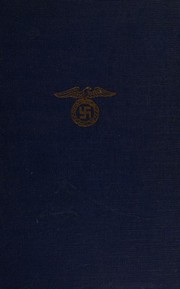 Mein KampfBy guest
by Adolf Hitler
“Mein Kampf served this function for the NSDAP, providing ideological depth while deliberately keeping policy specifics vague enough to avoid alienating potential supporters.”
More from How to Take Over the World
We summarize every new episode. Want them in your inbox?
Similar Episodes
Related episodes from other podcasts

How I Built This
Jul 20
Toast: Aman Narang. How a Long Wait for the Dinner Check Launched a $2 Billion Business.

20VC (20 Minute VC)
Jul 18
20VC: $5BN in Revenue, 7 to 7,000 Employees in 9 Months, 206,000 Tests in a Single Day: The Craziest Story in Startups: Curative with Fred Turner

The Long Run with Luke Timmerman
Jun 30
Ep204: Troy Wilson on Precision Cancer Drugs and Combos

David Senra
May 3
Adam Foroughi, AppLovin
How I Built This
Apr 20
KIND bars: Daniel Lubetzky. From peace in the Middle East to a $5 billion snack bar
Explore Related Topics
This podcast is featured in Best History Podcasts (2026) — ranked and reviewed with AI summaries.
Read this week's Investing & Markets Podcast Insights — cross-podcast analysis updated weekly.
You're clearly into How to Take Over the World.
Every Monday, we deliver AI summaries of the latest episodes from How to Take Over the World and 192+ other podcasts. Free for one show.
Start My Monday DigestNo credit card · Unsubscribe anytime