The Rare Earth Hypothesis
Episode
15 min
Read time
2 min
Topics
Fundraising & VC, Software Development, Science & Discovery
AI-Generated Summary
Key Takeaways
- ✓Planetary prerequisites: Complex life requires a precise stack of conditions: a stable G-type star with a 10-billion-year lifespan, orbit within the Goldilocks Zone, plate tectonics for carbon-cycle regulation, a large stabilizing moon, a magnetic field, and a Jupiter-sized planetary shield against impacts.
- ✓Evolutionary bottlenecks: The transition from prokaryotes to eukaryotes — cells with nuclei and mitochondria — appears to have occurred exactly once in 3.8 billion years of Earth's history. This single event, taking roughly 2 billion years, is considered the strongest candidate for a rare Earth evolutionary bottleneck.
- ✓Extinction as prerequisite: The Chicxulub asteroid impact 66 million years ago, an ultra-rare event, eliminated dinosaurs and enabled mammalian dominance. Without that specific catastrophe, mammals likely remain marginal creatures — meaning intelligent life on Earth depended on a random planetary-scale disaster occurring at the right moment.
- ✓Reframing the Drake Equation: Most Drake Equation variables remain unknown, but the Rare Earth framework adds compounding improbability at each step — planetary formation, atmospheric chemistry, evolutionary transitions, extinction events — suggesting the equation's output should trend toward near-zero for intelligent civilizations per galaxy.
What It Covers
The Rare Earth Hypothesis, proposed by astronomers Peter Ward and Donald Brownlee, argues that Earth's complex life resulted from an improbable chain of planetary conditions and evolutionary events, suggesting intelligent civilizations may be extraordinarily rare across the universe's 2 trillion galaxies.
Key Questions Answered
- •Planetary prerequisites: Complex life requires a precise stack of conditions: a stable G-type star with a 10-billion-year lifespan, orbit within the Goldilocks Zone, plate tectonics for carbon-cycle regulation, a large stabilizing moon, a magnetic field, and a Jupiter-sized planetary shield against impacts.
- •Evolutionary bottlenecks: The transition from prokaryotes to eukaryotes — cells with nuclei and mitochondria — appears to have occurred exactly once in 3.8 billion years of Earth's history. This single event, taking roughly 2 billion years, is considered the strongest candidate for a rare Earth evolutionary bottleneck.
- •Extinction as prerequisite: The Chicxulub asteroid impact 66 million years ago, an ultra-rare event, eliminated dinosaurs and enabled mammalian dominance. Without that specific catastrophe, mammals likely remain marginal creatures — meaning intelligent life on Earth depended on a random planetary-scale disaster occurring at the right moment.
- •Reframing the Drake Equation: Most Drake Equation variables remain unknown, but the Rare Earth framework adds compounding improbability at each step — planetary formation, atmospheric chemistry, evolutionary transitions, extinction events — suggesting the equation's output should trend toward near-zero for intelligent civilizations per galaxy.
Notable Moment
For roughly 2 billion years after life first appeared, evolution stalled entirely at single-celled organisms with no nucleus. Life's long plateau before the eukaryote leap suggests biological complexity is not an inevitable progression but an extreme outlier.
Episode Transcript
In 1950 physicist Enrico Fermi asked a very simple yet important question. If the universe has intelligent civilizations, as so many people believe, where are they? This became known as the Fermi Paradox, and it's been one of the most foremost philosophical and scientific questions of our age. One of the most straightforward answers to the Fermi paradox is also one that many people simply don't wanna believe. Learn more about the rare earth hypothesis and how we actually might be alone on this episode of Everything Everywhere Daily. This episode is sponsored by Horizon three. Big companies will often hire white hat hackers to test their own networks to discover vulnerabilities before a bad guy does. The Node Zero platform by Horizon three is an autonomous AI hacker that attacks your own environment at machine speed, just as a real hacker would. It tests your external, cloud, internal, and web application attack surfaces in a single test, and can be deployed in minutes. Net Zero has completed more than 225,000 production safe tests with zero downtime, and is trusted by the NSA, the CISA, and Fortune 100 companies. The process is simple. Hack, fix, verify, repeat. Node zero finds the weakness, your team fixes it, and you can verify the repair with one click. Knowing exactly how an attacker could come after you replaces guesswork with real peace of mind. Go see exactly what an attacker would find in your environment before they do. Go to horizon3.ai/everything and request your free Node Zero demo. Visit horizon3.ai/everything. Again, that's horizon3.ai/everything. No commitment required. Results in hours, not weeks. This episode is sponsored by Quince. For a while, I've been telling you about Quince. I have sweaters, t shirts, blankets, and towels that I've all gotten from Quince. That's because Quince is at the sweet spot of high quality and low prices. They provide some of the same products that you'll find from other luxury brands for a fraction of the price. Go to their website, and they will show you exactly who the brands are and the prices, and the savings are astonishing. Everything at Quince is priced 50 to 80% less than similar brands. They work directly with ethical factories and cut out the middleman, so you're paying for high quality, not brand markup. Upgrade your everyday. Download the Quince app for app exclusive offers or go to quince.com/daily for free shipping on your order and three hundred sixty five day returns. Now available in Canada and The UK too. That's quince.com/daily for free shipping and three hundred sixty five day returns. Quints.com/daily. The origin of this episode goes back to a book I first read about twenty five years ago by astronomers Peter Ward and Donald e Brownlee, titled Rare Earth, Why Complex Life is Uncommon in the Universe. They are the originators of the theory that I'll be covering in this episode and the one I tend to lean towards. But before I get into the theory …
Get the full transcript (2,574 words) + summary by email — free
One-time email with the complete transcript and AI summary of this episode. No account needed.
One email, no spam. We’ll also show you what SignalCast does.

You just read a 3-minute summary of a 12-minute episode.
Get Everything Everywhere Daily summarized like this every Monday — plus up to 2 more podcasts, free.
Pick Your Podcasts — FreeKeep Reading
More from Everything Everywhere Daily
How DNA Solves Crimes
Sep 21 · 15 min

The Prof G Pod
China Decode: Is China Winning the Global AI Trust War?
Sep 1
More from Everything Everywhere Daily
The Never-Ending Voyager Missions (Encore)
Sep 20 · 15 min

Masters of Scale
Pioneers of AI: Designing AI for people and the planet, with Aza Raskin
Aug 29
Books, tools, and gear mentioned in this episode
SignalCast may earn commission on purchases via these links. As an Amazon Associate, SignalCast earns from qualifying purchases.
Books
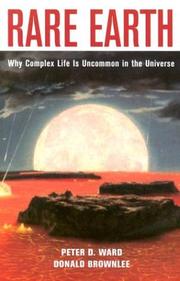 Rare EarthBy guest
by Peter Ward, Donald Brownlee
“The Rare Earth Hypothesis, proposed by astronomers Peter Ward and Donald Brownlee, argues that Earth's complex life resulted from an improbable chain of planetary conditions and evolutionary events”
More from Everything Everywhere Daily
We summarize every new episode. Want them in your inbox?
Similar Episodes
Related episodes from other podcasts

The Prof G Pod
Sep 1
China Decode: Is China Winning the Global AI Trust War?

Masters of Scale
Aug 29
Pioneers of AI: Designing AI for people and the planet, with Aza Raskin

The Indicator
Jun 23
Why the $250 bill would be good … For criminals!

The Daily (NYT)
Jun 10
The Iran War's Devastating Butterfly Effect

All-In with Chamath, Jason, Sacks & Friedberg
Jun 10
Dan Dreyfus: America's Critical Minerals Crisis is Here
Explore Related Topics
This podcast is featured in Best History Podcasts (2026) — ranked and reviewed with AI summaries.
Read this week's Software Engineering Podcast Insights — cross-podcast analysis updated weekly.
You're clearly into Everything Everywhere Daily.
Every Monday, we deliver AI summaries of the latest episodes from Everything Everywhere Daily and 192+ other podcasts. Free for one show.
Start My Monday DigestNo credit card · Unsubscribe anytime