The Odyssey of the Odyssey
Episode
14 min
Read time
2 min
Topics
Sales & Revenue, Crypto & Web3, Science & Discovery
AI-Generated Summary
Key Takeaways
- ✓Oral-to-written transition: The Odyssey originated around the 13th century BC but wasn't standardized until the 6th century BC, when Athenian tyrant Pisistratus commissioned an official master copy performed at the Panathenaic Games to assert Athens' cultural dominance over rival city-states.
- ✓Alexandrian standardization: Aristarchus of Samothrace produced the definitive master text in the 2nd century BC at the Library of Alexandria by comparing hundreds of regional variants. Every modern edition of the Odyssey traces directly back to this single standardized scholarly effort.
- ✓Cultural reinterpretation: Roman audiences reframed Odysseus as villain rather than hero. The cunning Trojan Horse, celebrated in Greece as brilliant strategy, was viewed in Rome as cowardly deception — a contrast Emperor Augustus exploited by commissioning the Aeneid to promote rival Trojan hero Aeneas.
- ✓Archaeological mapping: Researchers can use the Odyssey's geographic clues as investigative tools. A 2005 team proposed the Palaki Peninsula on Kefalonia as the real Ithaca, arguing Bronze Age earthquakes severed it from the mainland, matching Homer's description of a westernmost, low-lying island.
What It Covers
The Odyssey traces nearly 3,000 years of transmission history, from anonymous Greek oral bards through Athenian tyrant Pisistratus, Alexandrian scholars, Roman adaptation, Byzantine preservation, and Renaissance printing to modern archaeological investigation.
Key Questions Answered
- •Oral-to-written transition: The Odyssey originated around the 13th century BC but wasn't standardized until the 6th century BC, when Athenian tyrant Pisistratus commissioned an official master copy performed at the Panathenaic Games to assert Athens' cultural dominance over rival city-states.
- •Alexandrian standardization: Aristarchus of Samothrace produced the definitive master text in the 2nd century BC at the Library of Alexandria by comparing hundreds of regional variants. Every modern edition of the Odyssey traces directly back to this single standardized scholarly effort.
- •Cultural reinterpretation: Roman audiences reframed Odysseus as villain rather than hero. The cunning Trojan Horse, celebrated in Greece as brilliant strategy, was viewed in Rome as cowardly deception — a contrast Emperor Augustus exploited by commissioning the Aeneid to promote rival Trojan hero Aeneas.
- •Archaeological mapping: Researchers can use the Odyssey's geographic clues as investigative tools. A 2005 team proposed the Palaki Peninsula on Kefalonia as the real Ithaca, arguing Bronze Age earthquakes severed it from the mainland, matching Homer's description of a westernmost, low-lying island.
Notable Moment
The earliest surviving Odyssey manuscripts come from Egypt, not Greece. Because writing materials were scarce, bards maintained abbreviated competing scripts allowing live improvisation, meaning no single authoritative text existed for centuries after literacy returned.
Episode Transcript
For thousands of years, a tale of war, wandering, monsters, and homecoming has traveled across oceans, languages, and civilizations. Its journey from ancient performance to written masterpiece reveals a story that survived empires, religious upheavals, and technological revolutions. And along the way, it's been preserved, translated, reimagined, and shared by countless generations. Learn more about the historical journey of the Odyssey on this episode of Everything Everywhere Daily. This episode is sponsored by Horizon three. Big companies will often hire white hat hackers to test their own networks to discover vulnerabilities before a bad guy does. The Node Zero platform by Horizon three is an autonomous AI hacker that attacks your own environment at machine speed, just as a real hacker would. It tests your external, cloud, internal, and web application attack surfaces in a single test, and can be deployed in minutes. Net Zero has completed more than 225,000 production safe tests with zero downtime and is trusted by the NSA, the CISA, and Fortune 100 companies. The process is simple. Hack, fix, verify, repeat. Node Zero finds the weakness, your team fixes it, and you can verify the repair with one click. Knowing exactly how an attacker could come after you replaces guesswork with real peace of mind. Go see exactly what an attacker would find in your environment before they do. Go to horizon3.ai/everything and request your free Node Zero demo. Visit horizon3.ai/everything. Again, that's horizon3.ai/everything. No commitment required. Results in hours, not weeks. This episode is sponsored by Mint Mobile. When we were kids, summer meant freedom. No homework, no teachers, no school. And as adults, summer can still mean freedom, thanks to Mint Mobile's summer sale. Right now, all of Mint's plans are $15 a month, even unlimited. So free yourself from big wireless and their gimmicks and gotchas, and switch to Mint Mobile for high speed data and coverage on T Mobile's five g network. That's why I recommend Mint Mobile. It works with your current phone, your current phone number, and you can keep all your contacts. To get your new wireless plan for this $15 a month, go to mintmobile.com/eed. That's mintmobile.com/eed. Cut your wireless bill to $15 a month at mintmobile.com/eed. That's it. There's no catch. Upfront payment of $45 for three months, $90 for six months, or $180 for twelve month plan required. $15 per month equivalent. Taxes and fees extra. Initial plan term only. Greater than 50 gigabyte may slow when network is busy. Includes up to 20 gigabyte hotspot. Capable device required. Availability, speed, and coverage varies. See mintmobile.com for details. The Odyssey is one of the oldest and most influential works of literature ever created. For nearly three thousand years, the journey of Odysseus has shaped how people think about adventure, heroism, loyalty, and the struggle to return home. The Odyssey is an ancient Greek epic poem traditionally attributed to Homer that tells the story of Odysseus, king of Ithaca, and his ten year journey home after …
Get the full transcript (2,491 words) + summary by email — free
One-time email with the complete transcript and AI summary of this episode. No account needed.
One email, no spam. We’ll also show you what SignalCast does.

You just read a 3-minute summary of a 11-minute episode.
Get Everything Everywhere Daily summarized like this every Monday — plus up to 2 more podcasts, free.
Pick Your Podcasts — FreeKeep Reading
More from Everything Everywhere Daily
The Never-Ending Voyager Missions (Encore)
Sep 20 · 15 min

Invest Like the Best with Patrick O'Shaughnessy
Michael Moritz - Lessons From 40 Years of Investing and Writing - [Invest Like the Best, EP.491]
Sep 16
More from Everything Everywhere Daily
The Rise and Fall of Vaudeville
Sep 19 · 15 min

Acquired
The Home Depot
Sep 14
Books, tools, and gear mentioned in this episode
SignalCast may earn commission on purchases via these links. As an Amazon Associate, SignalCast earns from qualifying purchases.
Books
 The AeneidBy guest
by Virgil
“Emperor Augustus exploited by commissioning the Aeneid to promote rival Trojan hero Aeneas.”
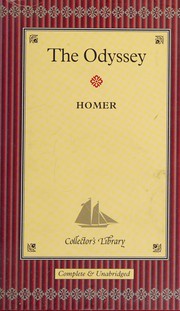 The OdysseyBy guest
by Homer
“The Odyssey traces nearly 3,000 years of transmission history, from anonymous Greek oral bards through Athenian tyrant Pisistratus, Alexandrian scholars, Roman adaptation, Byzantine preservation, and Renaissance printing to modern archaeological investigation.”
More from Everything Everywhere Daily
We summarize every new episode. Want them in your inbox?
Similar Episodes
Related episodes from other podcasts

Invest Like the Best with Patrick O'Shaughnessy
Sep 16
Michael Moritz - Lessons From 40 Years of Investing and Writing - [Invest Like the Best, EP.491]

Acquired
Sep 14
The Home Depot

Stuff You Should Know
Sep 10
The Odyssey Episode

The Tim Ferriss Show
Jul 7
#874: Guy Oseary — The Legendary Hollywood Power Broker on 5-Minute Decisions, 36 Years of Managing Madonna, 26 IPOs, and Spotting Magic First

Radiolab
Jun 26
The Gondolier
Explore Related Topics
This podcast is featured in Best History Podcasts (2026) — ranked and reviewed with AI summaries.
You're clearly into Everything Everywhere Daily.
Every Monday, we deliver AI summaries of the latest episodes from Everything Everywhere Daily and 192+ other podcasts. Free for one show.
Start My Monday DigestNo credit card · Unsubscribe anytime