#439 How Eiichiro Oda Works
Episode
32 min
Read time
2 min
Topics
Health & Wellness, Fundraising & VC, Sales & Revenue
AI-Generated Summary
Key Takeaways
- ✓Differentiation over saturation: When Oda launched One Piece in 1997, he deliberately avoided the dominant hero-versus-demons formula saturating the manga market. His framework mirrors Peter Thiel's Zero to One principle: all failed companies are the same because they never escape competition. Identify what the market already has, then build the opposite.
- ✓Single-reader targeting: Rather than optimizing for a global audience, Oda evaluates every story decision against one benchmark — his 15-year-old self. This collapses creative paralysis into a single question: would that version of me find this awesome? The approach mirrors how Pixar and Steve Jobs validated products against personal taste first.
- ✓Deadline-pressure ideation: Oda deliberately withholds sleep and food as he approaches weekly deadlines, sleeping roughly 3 hours (2AM–5AM) during production cycles. His reasoning: humans only generate genuinely new ideas at their physical limit. After submitting each manuscript, he allows one recovery day before the next cycle begins.
- ✓Minimal team, maximum ownership: Oda personally draws every moving element — people, animals, smoke, clouds, waves — leaving only static backgrounds to assistants. His principle, echoed by Jerry Seinfeld and Toby Lütke of Shopify, is that quality is inversely proportional to the number of people touching the work. One author reaches creative heights teams cannot.
- ✓Fixed endpoint, flexible path: Oda has known One Piece's ending since the beginning, but invents story arcs spontaneously — including nine major pirate characters created within hours under deadline pressure. Knowing the destination enables improvisation on the route, a pattern consistent with Jeff Bezos's documented principle: be stubborn on vision, flexible on details.
What It Covers
Eiichiro Oda, creator of One Piece — the best-selling comic series in history with 600 million copies in circulation — maintains a schedule of sleeping only 3 hours nightly (2AM–5AM), draws nearly every moving element himself, and has sustained this approach for nearly 30 years.
Key Questions Answered
- •Differentiation over saturation: When Oda launched One Piece in 1997, he deliberately avoided the dominant hero-versus-demons formula saturating the manga market. His framework mirrors Peter Thiel's Zero to One principle: all failed companies are the same because they never escape competition. Identify what the market already has, then build the opposite.
- •Single-reader targeting: Rather than optimizing for a global audience, Oda evaluates every story decision against one benchmark — his 15-year-old self. This collapses creative paralysis into a single question: would that version of me find this awesome? The approach mirrors how Pixar and Steve Jobs validated products against personal taste first.
- •Deadline-pressure ideation: Oda deliberately withholds sleep and food as he approaches weekly deadlines, sleeping roughly 3 hours (2AM–5AM) during production cycles. His reasoning: humans only generate genuinely new ideas at their physical limit. After submitting each manuscript, he allows one recovery day before the next cycle begins.
- •Minimal team, maximum ownership: Oda personally draws every moving element — people, animals, smoke, clouds, waves — leaving only static backgrounds to assistants. His principle, echoed by Jerry Seinfeld and Toby Lütke of Shopify, is that quality is inversely proportional to the number of people touching the work. One author reaches creative heights teams cannot.
- •Fixed endpoint, flexible path: Oda has known One Piece's ending since the beginning, but invents story arcs spontaneously — including nine major pirate characters created within hours under deadline pressure. Knowing the destination enables improvisation on the route, a pattern consistent with Jeff Bezos's documented principle: be stubborn on vision, flexible on details.
Notable Moment
Oda once admitted he would skip a parent's funeral if it conflicted with a manuscript deadline, and told a new editor to be prepared to die for One Piece — expecting collaborators to match the same unconditional commitment he demands of himself.
Episode Transcript
So every few months, my friend Eric Lyman, who's the CEO and cofounder of Ramp, will text me, do an episode on Echiro Oda. So Echiro Oda is the legendary creator of One Piece. He is the most successful manga artist of all time. And so manga is just a Japanese term for what we would call in the West comics or or graphic novels. So Oda's creation, One Piece, is one of the most successful and highest grossing media franchises in history. It's the best selling manga and comic book series in history. It's also with over 600,000,000 copies in circulation worldwide. In fact, Oda has the Guinness World Records for the most copies published for the same comic book series by a single author. But the reason Eric asked me to do an episode on him is because Oda's often described as a maniac because he's got this insane work ethic, a very eccentric lifestyle, and essentially just this inhuman daily schedule. And so what I wanna focus on is the details of how he lives and runs his life because I feel his habits are truly extreme. So I wanna do a basically how Echiro Oda works episode. Now there's no books or biographies on him. In fact, he's intensely, extremely private. He doesn't even allow his face to be photographed. So what I've done is spent the last week going through all of the interviews I found on him and then made an outline essentially in his own words of him describing how he works and how he built, again, one of the most successful media franchises in history. And so one of the things I love most about Oda is the fact that he is just designing the product that he wants to use. Says, He I set out to draw the manga I wanted to read when I was young. When I started, I had to draw things that didn't exist to get attention. There were plenty of heroes who fight demons and save the world. The market was saturated with that kind of story. I wanted to do something different. So he knew by the age of four what he wanna do for a living. He wanted to be a manga artist. He was 22 when he starts creating One Piece. It's still ongoing to this day, and he's 51 years old. And so when I read this part of the interview when he's like, I wanted to do something different. I thought of Peter Thiel's book Zero to One, which again, if you could summarize it, essentially differentiation is the whole game. Over and over again in that book, Peter will say, do not build an undifferentiated commodity business. He has this great line in there where he all happy companies are different. All failed companies are the same. They failed to escape competition. Even in his early twenties, Oda knew he would lose if he just did the same thing that …
Get the full transcript (6,746 words) + summary by email — free
One-time email with the complete transcript and AI summary of this episode. No account needed.
One email, no spam. We’ll also show you what SignalCast does.

You just read a 3-minute summary of a 29-minute episode.
Get The Founders Podcast summarized like this every Monday — plus up to 2 more podcasts, free.
Pick Your Podcasts — FreeKeep Reading

Books, tools, and gear mentioned in this episode
SignalCast may earn commission on purchases via these links. As an Amazon Associate, SignalCast earns from qualifying purchases.
Books
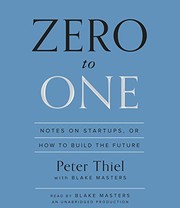
by Peter Thiel
“His framework mirrors Peter Thiel's Zero to One principle: all failed companies are the same because they never escape competition.”
More from The Founders Podcast
We summarize every new episode. Want them in your inbox?
Similar Episodes
Related episodes from other podcasts


Explore Related Topics
This podcast is featured in Best Business Podcasts (2026) — ranked and reviewed with AI summaries.
Read this week's Health & Longevity Podcast Insights — cross-podcast analysis updated weekly.
You're clearly into The Founders Podcast.
Every Monday, we deliver AI summaries of the latest episodes from The Founders Podcast and 192+ other podcasts. Free for one show.
Start My Monday DigestNo credit card · Unsubscribe anytime