The Age of Enlightenment
Episode
15 min
Read time
2 min
Topics
Leadership, Software Development, Philosophy & Wisdom
AI-Generated Summary
Key Takeaways
- ✓Separation of Powers: Montesquieu proposed dividing government into three distinct branches — legislative, executive, and judicial — each equipped with checks and balances to prevent any single body from accumulating absolute power, a framework directly embedded in the U.S. Constitution and most modern democracies.
- ✓Natural Rights as Government's Sole Purpose: John Locke argued in Two Treatises of Government that authority derives from the people, not divine mandate, and that government exists only to protect life, liberty, and property — a framework Thomas Jefferson mirrored almost directly in the Declaration of Independence.
- ✓Uniform Legal Codes: Cesare Beccaria argued in On Crimes and Punishment that laws must apply equally across all social classes, be written in common languages rather than Latin, and that punishments should be proportionate to crimes — eliminating torture and the death penalty entirely.
- ✓Education as Blank-Slate Development: Locke's tabula rasa concept held that humans are born without innate knowledge, making rational, curiosity-driven education — not rote Latin memorization — the foundation of social progress, a principle Diderot operationalized by compiling the first comprehensive Encyclopedia of human knowledge.
What It Covers
The Age of Enlightenment traces how late 17th- to 18th-century thinkers — Locke, Voltaire, Rousseau, Montesquieu, and others — used reason and evidence to dismantle divine-right monarchy, reshape legal systems, and lay foundations for modern democracy and human rights.
Key Questions Answered
- •Separation of Powers: Montesquieu proposed dividing government into three distinct branches — legislative, executive, and judicial — each equipped with checks and balances to prevent any single body from accumulating absolute power, a framework directly embedded in the U.S. Constitution and most modern democracies.
- •Natural Rights as Government's Sole Purpose: John Locke argued in Two Treatises of Government that authority derives from the people, not divine mandate, and that government exists only to protect life, liberty, and property — a framework Thomas Jefferson mirrored almost directly in the Declaration of Independence.
- •Uniform Legal Codes: Cesare Beccaria argued in On Crimes and Punishment that laws must apply equally across all social classes, be written in common languages rather than Latin, and that punishments should be proportionate to crimes — eliminating torture and the death penalty entirely.
- •Education as Blank-Slate Development: Locke's tabula rasa concept held that humans are born without innate knowledge, making rational, curiosity-driven education — not rote Latin memorization — the foundation of social progress, a principle Diderot operationalized by compiling the first comprehensive Encyclopedia of human knowledge.
Notable Moment
Voltaire argued that Isaac Newton deserved more reverence than conquerors like Caesar or Alexander — because mastering minds through truth outweighs enslaving them through violence, reframing scientific achievement as a greater force than military conquest.
Episode Transcript
For centuries, political authority, religious doctrine, and inherited tradition shaped how most Europeans understood the world. Then a generation of writers, scientists, and philosophers began insisting that every institution, belief, and law should be subjected to reason and evidence. Their ideas challenged kings, churches, and ancient social hierarchies, helping inspire revolutions and reshape modern government, science, and human rights. Learn more about the enlightenment and the age of reason on this episode of Everything Everywhere Daily. This episode is sponsored by HexClad. You've heard me talk about how I've been using HexClad in my kitchen for about a year and a half now. Well, now HexClad is taking its hybrid technology outdoors with a barbecue collection designed for foods that usually treat grill grates like an escape hatch. The hex clad barbecue grill pan is perfect for vegetables, seafood, fish, and kebabs. Its perforated design allows heat and smoke to circulate, so you still get the real grilled flavor. It combines the searing power of stainless steel, the durability of cast iron, and the convenience of non stick. It's heat safe up to 900 degrees, dishwasher safe, easy to clean, and backed by a lifetime warranty. So if you're planning on spending time behind the grill this summer, don't make it harder than it needs to be. Stop losing food through the grates, stop fighting cleanup, and upgrade your backyard cooking setup with HexClad's barbecue collection. For a limited time only, my listeners get 10% off their order with my exclusive link. Just head to hexclad.com/daily. Support the show and check them out at hexclad.com/daily to make sure to let them know I sent you. This episode is sponsored by Quince. Several months ago, I moved into a new apartment, and I've been buying new furniture as of late. And one of the other things I've been doing is shopping at Quince for all my home decorating needs. From soft bending and washable rugs to curtains, towels, decor, and pieces that make a room feel more finished, Quint's has become one of those places I trust when I want my home to feel a little more comfortable and put things together without overpaying. Everything at Quint's is priced 50 to 80% less than similar brands. They work directly with ethical factories and cut out the middleman, so you're paying for exceptional quality, not brand markup. And, of course, it's not just home furnishings. Quince has become a trusted favorite for everything from travel gear to clothing to everyday essentials. In addition to fixing up your home, you can make your summer wardrobe easier. Go to quince.com/daily for free shipping on your order and three hundred sixty five day returns. Now available in Canada too. That's quince.com/daily for free shipping and three hundred sixty five day returns. Quintce.com/daily. There have been many episodes of this podcast where I have referenced the enlightenment or enlightenment ideals. Given the enlightenment's historical importance and its role in the creation of the modern world, I …
Get the full transcript (2,543 words) + summary by email — free
One-time email with the complete transcript and AI summary of this episode. No account needed.
One email, no spam. We’ll also show you what SignalCast does.

You just read a 3-minute summary of a 12-minute episode.
Get Everything Everywhere Daily summarized like this every Monday — plus up to 2 more podcasts, free.
Pick Your Podcasts — FreeKeep Reading

Books, tools, and gear mentioned in this episode
SignalCast may earn commission on purchases via these links. As an Amazon Associate, SignalCast earns from qualifying purchases.
Books
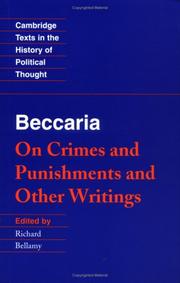 On Crimes and PunishmentBy guest
by Cesare Beccaria
“Cesare Beccaria argued in On Crimes and Punishment that laws must apply equally across all social classes, be written in common languages rather than Latin, and that punishments should be proportionate to crimes”
- Encyclopedia of human knowledgeBy guest
by Diderot
“Diderot operationalized by compiling the first comprehensive Encyclopedia of human knowledge”
 Two Treatises of GovernmentBy guest
by John Locke
“John Locke argued in Two Treatises of Government that authority derives from the people, not divine mandate, and that government exists only to protect life, liberty, and property”
More from Everything Everywhere Daily
We summarize every new episode. Want them in your inbox?
Similar Episodes
Related episodes from other podcasts

Stuff You Should Know
May 16
Did Mallory Make it to the Top of Everest First?
Stuff You Should Know
May 12
Humanists, the Happy Heathens

The Rest is History
Mar 12
651. London’s Golden Age: Sex and Scandal in Georgian Britain (Part 2)

Philosophize This!
Feb 11
Episode #244 ... After Virtue - Alasdair MacIntyre (why moral conversations feel unsatisfying)

Throughline
Dec 4
The Bitter History of Chocolate
Explore Related Topics
This podcast is featured in Best History Podcasts (2026) — ranked and reviewed with AI summaries.
Read this week's Software Engineering Podcast Insights — cross-podcast analysis updated weekly.
You're clearly into Everything Everywhere Daily.
Every Monday, we deliver AI summaries of the latest episodes from Everything Everywhere Daily and 192+ other podcasts. Free for one show.
Start My Monday DigestNo credit card · Unsubscribe anytime