651. London’s Golden Age: Sex and Scandal in Georgian Britain (Part 2)
Episode
68 min
Read time
3 min
Topics
Career Growth, Relationships, Leadership
AI-Generated Summary
Key Takeaways
- ✓Contradictory self-documentation: Boswell's journal functions on two simultaneous levels — recording events while also recording his own self-observation of those events. This dual-layer writing produces an unusually honest psychological portrait. Readers two and a half centuries later can trace, step by step, how he rationalizes poor behavior, shifts blame, and recovers self-regard. The technique offers a model for honest self-reflection: document not just actions but the reasoning used to justify them afterward.
- ✓Mentor-seeking as psychological strategy: Boswell systematically sought out figures — Johnson, Rousseau, Voltaire, Paoli — not purely for celebrity access but as moral anchors against his own acknowledged instability. He explicitly named Johnson as a "sheet anchor" in his journals and used the phrase "resemble Johnson" as a self-regulatory mantra during low periods. Identifying a specific admired person and invoking their standards during temptation is a concrete behavioral tool Boswell consciously deployed.
- ✓Celebrity access through persistence: Boswell gained audiences with Rousseau, Voltaire, and Paoli by refusing initial rejections and deploying charm on gatekeepers. Rousseau turned him away citing illness; Boswell charmed the housekeeper instead. Voltaire's staff said no; Boswell waited. Each meeting produced historically significant records. The pattern: identify the gatekeeper, not just the target, and treat social persistence as a legitimate strategy rather than an imposition.
- ✓Writing as reputation management: Before returning to Britain from Corsica, Boswell published unsigned newspaper letters referring to himself in the third person, framing his Corsican visit as a quasi-official government mission. The campaign successfully built public interest in Corsican independence and established his own persona as a man of consequence. Controlling one's own narrative through third-party framing — even self-authored — shaped public perception more effectively than direct self-promotion.
- ✓The gap year as intellectual capital: Boswell's three-and-a-half-year continental tour, funded by his father as legal study in Utrecht, produced encounters with Rousseau, Voltaire, and Paoli, a published book on Corsica, and election to Johnson's exclusive Club in 1773. Extended travel with deliberate celebrity-seeking converted a reluctant legal education into a literary career. The lesson: structured wandering with specific human targets yields disproportionate long-term returns over conventional credential-building alone.
What It Covers
Part 2 of a series on James Boswell and Samuel Johnson traces Boswell's arrival in London in 1763, his pursuit of prostitutes and actress "Louisa," his contraction of gonorrhea, his travels through Utrecht, Germany, Switzerland, Italy, and Corsica, his meetings with Rousseau, Voltaire, and Paoli, and the deepening of his friendship with Johnson through 1773.
Key Questions Answered
- •Contradictory self-documentation: Boswell's journal functions on two simultaneous levels — recording events while also recording his own self-observation of those events. This dual-layer writing produces an unusually honest psychological portrait. Readers two and a half centuries later can trace, step by step, how he rationalizes poor behavior, shifts blame, and recovers self-regard. The technique offers a model for honest self-reflection: document not just actions but the reasoning used to justify them afterward.
- •Mentor-seeking as psychological strategy: Boswell systematically sought out figures — Johnson, Rousseau, Voltaire, Paoli — not purely for celebrity access but as moral anchors against his own acknowledged instability. He explicitly named Johnson as a "sheet anchor" in his journals and used the phrase "resemble Johnson" as a self-regulatory mantra during low periods. Identifying a specific admired person and invoking their standards during temptation is a concrete behavioral tool Boswell consciously deployed.
- •Celebrity access through persistence: Boswell gained audiences with Rousseau, Voltaire, and Paoli by refusing initial rejections and deploying charm on gatekeepers. Rousseau turned him away citing illness; Boswell charmed the housekeeper instead. Voltaire's staff said no; Boswell waited. Each meeting produced historically significant records. The pattern: identify the gatekeeper, not just the target, and treat social persistence as a legitimate strategy rather than an imposition.
- •Writing as reputation management: Before returning to Britain from Corsica, Boswell published unsigned newspaper letters referring to himself in the third person, framing his Corsican visit as a quasi-official government mission. The campaign successfully built public interest in Corsican independence and established his own persona as a man of consequence. Controlling one's own narrative through third-party framing — even self-authored — shaped public perception more effectively than direct self-promotion.
- •The gap year as intellectual capital: Boswell's three-and-a-half-year continental tour, funded by his father as legal study in Utrecht, produced encounters with Rousseau, Voltaire, and Paoli, a published book on Corsica, and election to Johnson's exclusive Club in 1773. Extended travel with deliberate celebrity-seeking converted a reluctant legal education into a literary career. The lesson: structured wandering with specific human targets yields disproportionate long-term returns over conventional credential-building alone.
- •Friendship asymmetry as sustainable dynamic: The Johnson-Boswell relationship remained structurally unequal — Boswell always the supplicant, Johnson the authority — yet proved durable across decades. Johnson tolerated and reciprocated affection precisely because Boswell offered unconditional admiration without competitive threat. Johnson explicitly told Boswell he was unlikely to forget him. Sustainable mentorship relationships often require one party to accept a permanently subordinate role rather than seeking eventual equality.
Notable Moment
After Boswell escorted Rousseau's mistress Therese Levasseur from Paris to Dover — a journey during which they became intimate — he delivered her to Rousseau in Chiswick and then immediately rushed to reunite with Johnson. The contrast between the two relationships, one purely physical and unsatisfying, the other emotionally sustaining, underscores the episode's central argument about what Boswell actually needed.
Episode Transcript
This episode is brought to you by TikTok. TikTok gives parents the visibility control they need to help shape an environment that makes sense for their teens. For starters, teens under 18 have a sixty minute screen time reminder in place. And with family pairing, parents can set their own screen time limits, see their teen's followers, whom they follow, and help restrict content that's not right for them. Because with peace of mind in place, discovery and creativity can follow. Learn more at tiktok.com/guardiansguide. This episode is brought to you by Claude, by Anthropic. Now history lives in the contradictions. Yeah. I've always been fascinated by the great mysteries of history, like what happened to the Maya civilization of Central America. Why were all those great cities deserted? But, Tom, there's one mystery that's always fascinated you, isn't there? Yes, Dominic. I've always been fascinated by the question of how humans came to make and use fire. How did that originate? And a tremendous discovery was announced just last year that, the place where it seems fire was invented was Suffolk. Well, do you know one of the things that makes history so fascinating is the kind of back and forth between sources to try and explain these great mysteries. And you know what's built for that kind of thinking? Claude is built for that way of thinking. It doesn't smooth things over. It helps you dig into the disagreement to reveal something new. An anthropic just committed to not running adverts in Claude, so your thinking stays yours. Try Claude for free at claud.ai/rest is history. This podcast is brought to you by Carvana. Car shopping shouldn't feel like preparing for a marathon of paperwork. That's why Carvana makes buying and financing your car easy. From start to finish, search thousands of vehicles with great prices, all online, all on your time. And when you're ready, your new car shows up right at your door. It doesn't get better than that. Buy your car the easy way on Carvana. Delivery fees may apply. Sunday, November 28. I breakfasted with mister Douglass. I went to Saint James's church and heard service and a good sermon on by what means shall a young man learn to order his ways, in which the advantages of early piety were well displayed. What a curious inconsistent thing is the mind of man. In the midst of divine service, I was laying plans for having women and yet I had the most sincere feelings of religion. So that was James Boswell writing in his journal six months before his fateful meeting with Samuel Johnson, the hero of this story, in Thomas Davis's bookshop. So Boswell had begun this great journal, one of the most glittering scintillating records of life in the eighteenth century ever written, arguably the most complete record of what it's like to live in the eighteenth century. He'd begun this enormous project two weeks earlier. But who was this young man …
Get the full transcript (12,721 words) + summary by email — free
One-time email with the complete transcript and AI summary of this episode. No account needed.
One email, no spam. We’ll also show you what SignalCast does.

You just read a 3-minute summary of a 65-minute episode.
Get The Rest is History summarized like this every Monday — plus up to 2 more podcasts, free.
Pick Your Podcasts — FreeKeep Reading
More from The Rest is History
716. King Arthur: The Truth Behind the Legend (Part 4)
Oct 21 · 66 min

a16z Podcast
Building Blackstone, Backing Costco, with Tony James
May 5
More from The Rest is History
715. King Arthur: The Mysteries of Merlin (Part 3)
Oct 18 · 64 min

We Study Billionaires
RWH073: Unstoppable w/ Sir Michael Moritz
Oct 11
Books, tools, and gear mentioned in this episode
SignalCast may earn commission on purchases via these links. As an Amazon Associate, SignalCast earns from qualifying purchases.
Books
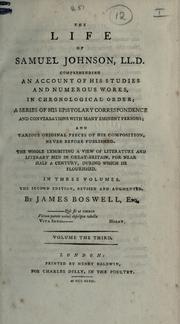
by James Boswell
“Boswell's three-and-a-half-year continental tour, funded by his father as legal study in Utrecht, produced encounters with Rousseau, Voltaire, and Paoli, a published book on Corsica, and election to Johnson's exclusive Club in 1773.”
More from The Rest is History
We summarize every new episode. Want them in your inbox?
716. King Arthur: The Truth Behind the Legend (Part 4)
715. King Arthur: The Mysteries of Merlin (Part 3)
714. King Arthur: Lancelot and the Round Table (Part 2)
713. King Arthur: The Once & Future King (Part 1)
712. The Terror: The Fall of Robespierre (Part 6)
Similar Episodes
Related episodes from other podcasts

a16z Podcast
May 5
Building Blackstone, Backing Costco, with Tony James

We Study Billionaires
Oct 11
RWH073: Unstoppable w/ Sir Michael Moritz

Stuff You Should Know
Oct 8
Stand-Up Pt II

Modern Wisdom
Sep 28
James Sexton, Rick Glassman, Matt McCusker - Mostly Wise #4 - #1156

The Vergecast
Sep 17
Apple's new iPhones and Watches are better than the last ones
Explore Related Topics
This podcast is featured in Best History Podcasts (2026) — ranked and reviewed with AI summaries.
You're clearly into The Rest is History.
Every Monday, we deliver AI summaries of the latest episodes from The Rest is History and 192+ other podcasts. Free for one show.
Start My Monday DigestNo credit card · Unsubscribe anytime