John Dickinson: The Reluctant Revolutionary
Episode
16 min
Read time
2 min
Topics
Health & Wellness, Sales & Revenue, Philosophy & Wisdom
AI-Generated Summary
Key Takeaways
- ✓Historical Reputation vs. Reality: Dickinson is commonly miscast as a loyalist or Quaker pacifist, but neither holds up. He took up arms in the Continental Army — a distinction fewer than one-third of Declaration signers can claim — and spent years writing against British colonial overreach.
- ✓Constitutional Framing as Organizing Tool: Dickinson's 1767 "Letters from a Farmer in Pennsylvania" unified colonial resistance by establishing one clear legal principle: Britain could regulate trade but had no constitutional authority to levy revenue taxes without colonial representation or consent.
- ✓Strategic Dissent Over Moral Cowardice: Dickinson's opposition to independence in 1776 centered on preparedness and geopolitical risk — specifically that a financially unstable America might trade British rule for French dependency, losing mercantilist benefits while gaining an unpredictable and potentially exploitative new patron.
- ✓Reputation Recovery Through Continued Service: After being stripped of rank and ostracized overnight, Dickinson rebuilt credibility by serving as a private soldier, signing the Articles of Confederation, governing Delaware and Pennsylvania, and driving the Great Compromise that enabled constitutional ratification.
What It Covers
John Dickinson, colonial America's most prolific political writer, shaped the legal case against British taxation, drafted the Articles of Confederation, and helped ratify the Constitution — yet refused to sign the Declaration of Independence, erasing himself from historical memory.
Key Questions Answered
- •Historical Reputation vs. Reality: Dickinson is commonly miscast as a loyalist or Quaker pacifist, but neither holds up. He took up arms in the Continental Army — a distinction fewer than one-third of Declaration signers can claim — and spent years writing against British colonial overreach.
- •Constitutional Framing as Organizing Tool: Dickinson's 1767 "Letters from a Farmer in Pennsylvania" unified colonial resistance by establishing one clear legal principle: Britain could regulate trade but had no constitutional authority to levy revenue taxes without colonial representation or consent.
- •Strategic Dissent Over Moral Cowardice: Dickinson's opposition to independence in 1776 centered on preparedness and geopolitical risk — specifically that a financially unstable America might trade British rule for French dependency, losing mercantilist benefits while gaining an unpredictable and potentially exploitative new patron.
- •Reputation Recovery Through Continued Service: After being stripped of rank and ostracized overnight, Dickinson rebuilt credibility by serving as a private soldier, signing the Articles of Confederation, governing Delaware and Pennsylvania, and driving the Great Compromise that enabled constitutional ratification.
Notable Moment
Dickinson stepped away from the independence vote rather than block it — a deliberate absence that allowed Pennsylvania's approval and ensured the unanimous ratification threshold was met, despite his personal opposition remaining unchanged.
Episode Transcript
He was one of the most influential political writers of the American Revolution, helped shape the argument against British taxation, drafted major documents for the Continental Congress, and helped create both of America's first two systems of government. Yet when the colonies decided to declare their independence, he refused to support it. And for that decision, he paid a steep price that can still be felt today. Learn more about John Dickinson, the reluctant revolutionary, on this episode of Everything Everywhere Daily. This episode is sponsored by Babbel. As long time listeners know, I've spent over a decade traveling around the world and have visited most of the countries on Earth. As such, I know firsthand the power of learning at least a few words and phrases in the language of any country you might be visiting. I picked up a bit wherever I've been to, but it's always been a challenge if you haven't learned anything beforehand. And that's why I've started using Babbel. I've begun working on two languages that I've always been the weakest at, French and German. Babbel is built for real life, not vocabulary lists or verb charts, but real conversation practice. Lessons are quick, practical, and built by more than 200 language experts, not AI. Babbel's award winning app has sold over 25,000,000 subscriptions and is backed by a fourteen day money back guarantee. If you've got summer travel coming up, now is the time to start so you can actually use what you learn on the trip. Right now, Babbel is offering listeners up to 60% off. Go to babel.com/daily. That's babel, babbel,.com/daily for up to 60% off. Rules and restrictions may apply. This episode is sponsored by Mint Mobile. When we were kids, summer meant freedom. No homework, no teachers, no school. And as adults, summer can still mean freedom, thanks to Mint Mobile's summer sale. Right now, all of Mint's plans are $15 a month, even unlimited. So free yourself from big wireless and their gimmicks and gotchas, and switch to Mint Mobile for high speed data and coverage on T Mobile's five gs network. That's why I recommend Mint Mobile. It works with your current phone, your current phone number, and you can keep all your contacts. To get your new wireless plan for this $15 a month, go to mintmobile.com/eed. That's mintmobile.com/eed. Cut your wireless bill to $15 a month at mintmobile.com/eed. That's it. There's no catch. Upfront payment of $45 for three months, $90 for six months, or $180 for twelve month plan required. $15 per month equivalent. Taxes and fees extra. Initial plan term only. Greater than 50 gigabyte may slow when network is busy. Includes up to 20 gigabyte hotspot. Capable device required. Availability, speed, and coverage varies. See mintmobile.com for details. John Dickinson is one of the most misunderstood figures in American history. Our collective historical imagination often portrays him as a loyalist, a coward, or both. In the 2008 HBO mini series John Adams, …
Get the full transcript (2,723 words) + summary by email — free
One-time email with the complete transcript and AI summary of this episode. No account needed.
One email, no spam. We’ll also show you what SignalCast does.

You just read a 3-minute summary of a 13-minute episode.
Get Everything Everywhere Daily summarized like this every Monday — plus up to 2 more podcasts, free.
Pick Your Podcasts — FreeKeep Reading
More from Everything Everywhere Daily
Questions and Answers: Volume 46
Oct 1 · 15 min

The Daily (NYT)
The Intertwined Legacies of Gloria Steinem and Dolly Parton
Sep 4
More from Everything Everywhere Daily
Neanderthals
Sep 30 · 16 min

All-In with Chamath, Jason, Sacks & Friedberg
Senators John Fetterman and Dave McCormick: Bipartisanship, Money in DC, Datacenters, Graham Platner
Jun 10
Books, tools, and gear mentioned in this episode
SignalCast may earn commission on purchases via these links. As an Amazon Associate, SignalCast earns from qualifying purchases.
Books
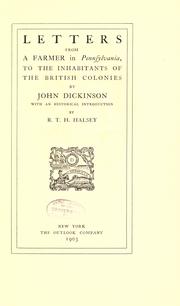
by John Dickinson
“Dickinson's 1767 "Letters from a Farmer in Pennsylvania" unified colonial resistance by establishing one clear legal principle: Britain could regulate trade but had no constitutional authority to levy revenue taxes without colonial representation or consent.”
More from Everything Everywhere Daily
We summarize every new episode. Want them in your inbox?
Similar Episodes
Related episodes from other podcasts

The Daily (NYT)
Sep 4
The Intertwined Legacies of Gloria Steinem and Dolly Parton

All-In with Chamath, Jason, Sacks & Friedberg
Jun 10
Senators John Fetterman and Dave McCormick: Bipartisanship, Money in DC, Datacenters, Graham Platner
The Daily (NYT)
May 31
Olivia Rodrigo Tried Writing Love Songs. Then Life Got Messy.

How I Built This
May 11
Room & Board: John Gabbert. A Broken Deal, a Family Rift, and the Birth of a Furniture Giant

TED Radio Hour
Mar 13
Curious stories of coexistence
Explore Related Topics
This podcast is featured in Best History Podcasts (2026) — ranked and reviewed with AI summaries.
Read this week's Health & Longevity Podcast Insights — cross-podcast analysis updated weekly.
You're clearly into Everything Everywhere Daily.
Every Monday, we deliver AI summaries of the latest episodes from Everything Everywhere Daily and 192+ other podcasts. Free for one show.
Start My Monday DigestNo credit card · Unsubscribe anytime