How to Build a Cognitive Training Plan | Monday Advice
Episode
62 min
Read time
3 min
Topics
Productivity, Health & Wellness, Fundraising & VC
AI-Generated Summary
Key Takeaways
- ✓Reading Endurance KPI: Test your cognitive baseline by reading conceptual nonfiction — books with arguments or theories within your current knowledge level — and timing how long you sustain focus with zero context-switching. Scoring: under 5 minutes is brain-rotted, 15 minutes is distractible, 30 minutes matches the pre-smartphone 2012 average, 75 minutes is impressive, and reading a full book daily (as Theodore Roosevelt reportedly did) represents peak cognitive performance.
- ✓Contemplation Control KPI: Walk without devices and attempt to make sustained progress on a real personal or professional problem entirely in your head, redirecting attention each time it wanders. Stop timing when you can no longer return focus meaningfully. Scoring benchmarks: under 1 minute is brain-rotted, 1–3 minutes is distractible, 10 minutes matches the pre-2012 average, 30 minutes is impressive, and Nietzsche's documented 6–8 hour daily walking-composition sessions represent the outer limit.
- ✓Written Persuasiveness KPI: Write a structured argument defending a genuinely contested position you hold. Assess the output by format: disorganized emotional attacks score brain-rotted, a bullet-point list of supporting reasons scores distractible, a good-faith pros-and-cons argument in paragraphs reaches the pre-2012 average, a first-principles logical scaffold reaches impressive, and writing that permanently shifts public understanding — like Rachel Carson's Silent Spring, which directly created the EPA — represents the cognitive weapon tier.
- ✓Phase Two Cognitive Fitness: Newport distinguishes between Phase One (vague commitments like grayscale phone screens or occasional digital detoxes) and Phase Two, which requires quantifiable numbers and targeted training. Just as general lifestyle changes don't improve a specific mile time, general screen reduction doesn't rebuild deep focus. Improvement requires deliberately practicing the exact measured activity — reading longer, meditating productively more — and incrementally pushing scores toward the next calibration level.
- ✓Mechanical vs. Judgment-Based Cognitive Work: A framework from scholarly publishing research distinguishes tasks where AI assistance is appropriate (mechanical, repetitive formatting or data processing with no originality required) from tasks where human responsibility must remain primary (judgment, interpretation, original argument). Newport adds a third boundary: written communication presented as coming from a specific person but generated by AI constitutes a form of psychological fraud, because readers simulate the sender's mind when reading text.
What It Covers
Cal Newport proposes a cognitive fitness framework modeled on physical training, introducing three measurable Key Performance Indicators — reading endurance, contemplation control, and written persuasiveness — with calibrated scoring scales from "brain rotted" to "cognitive weapon," plus a training methodology for systematically improving each score rather than making vague commitments to use technology less.
Key Questions Answered
- •Reading Endurance KPI: Test your cognitive baseline by reading conceptual nonfiction — books with arguments or theories within your current knowledge level — and timing how long you sustain focus with zero context-switching. Scoring: under 5 minutes is brain-rotted, 15 minutes is distractible, 30 minutes matches the pre-smartphone 2012 average, 75 minutes is impressive, and reading a full book daily (as Theodore Roosevelt reportedly did) represents peak cognitive performance.
- •Contemplation Control KPI: Walk without devices and attempt to make sustained progress on a real personal or professional problem entirely in your head, redirecting attention each time it wanders. Stop timing when you can no longer return focus meaningfully. Scoring benchmarks: under 1 minute is brain-rotted, 1–3 minutes is distractible, 10 minutes matches the pre-2012 average, 30 minutes is impressive, and Nietzsche's documented 6–8 hour daily walking-composition sessions represent the outer limit.
- •Written Persuasiveness KPI: Write a structured argument defending a genuinely contested position you hold. Assess the output by format: disorganized emotional attacks score brain-rotted, a bullet-point list of supporting reasons scores distractible, a good-faith pros-and-cons argument in paragraphs reaches the pre-2012 average, a first-principles logical scaffold reaches impressive, and writing that permanently shifts public understanding — like Rachel Carson's Silent Spring, which directly created the EPA — represents the cognitive weapon tier.
- •Phase Two Cognitive Fitness: Newport distinguishes between Phase One (vague commitments like grayscale phone screens or occasional digital detoxes) and Phase Two, which requires quantifiable numbers and targeted training. Just as general lifestyle changes don't improve a specific mile time, general screen reduction doesn't rebuild deep focus. Improvement requires deliberately practicing the exact measured activity — reading longer, meditating productively more — and incrementally pushing scores toward the next calibration level.
- •Mechanical vs. Judgment-Based Cognitive Work: A framework from scholarly publishing research distinguishes tasks where AI assistance is appropriate (mechanical, repetitive formatting or data processing with no originality required) from tasks where human responsibility must remain primary (judgment, interpretation, original argument). Newport adds a third boundary: written communication presented as coming from a specific person but generated by AI constitutes a form of psychological fraud, because readers simulate the sender's mind when reading text.
- •AI Watermarking and Production Code Risk: Anthropic is implementing watermarking in Claude's text output by using a seeded pseudo-random number generator to resolve synonym-level token choices, making AI-generated text detectable without altering meaning. Separately, Newport cites a listener case where AI-generated production code crashed a major consumer website twice, prompting a retreat to selective AI use — writing specific isolated components by hand — because reviewing unfamiliar AI-generated code is too slow and error-prone for high-stakes deployment.
Notable Moment
Newport points out that Theodore Roosevelt read a full book daily — often in multiple languages including German, French, Italian, and Latin — during his White House years, while simultaneously running the country. Newport uses this as the "cognitive weapon" ceiling for reading endurance, contrasting it with today's students unable to finish a 20-page article.
Episode Transcript
I've been thinking recently about an article from the Chronicle of Higher Education that several of you sent me. It was titled, My Students Can't Read. Let me, start here with the intro from the article. Here's what the intro of the article says. Six weeks into the term, I assigned my rhetoric and writing students a 20 page article. It was the same length I had assigned for five years and the same length I had read without complaint as an undergraduate a decade ago. Not one student finished it. When I asked why, a student answered honestly. It was too long, and she kept losing track of what the paper was about. Now when we hear accounts like this, our normal response is to wring our hands and worry that we're raising sort of a new generation of kids that are barely literate. But here's the follow-up question that we need to also ask. Could you read that 20 page article? Like, honestly, if you were given that much reading, are you still able to do it? See, I think if we pull on this thread a little bit harder, what soon becomes clear is that we don't really have a great way of quantitatively testing how fried our brains have actually become due to digital distraction. But we need these tests. Right? Because in physical fitness, we have measures known as key performance indicators, like your BMI or how long it takes you to run a mile. They provide us a great way to get feedback on our physical health and gives us targets we can use to systematically work on improving. Well, here's my thought. We need something similar for our cognitive health. And this is what I wanna talk about today. I'm gonna propose three cognitive performance indicators that you can go and test today to see exactly how distracted your brain has or has not become. I'll then talk about how to systematically improve those scores if you're not happy with your results. Alright? So if you've worried at all about your cognitive, fitness starting to slip in recent years, then you need to listen to this episode. Let's get into it. As always, I'm Cal Newport, and this is Deep Questions, the show for people seeking depth in a distracted world. Alright. Before we get into these KPIs, I wanna start with, unfolding this motivation a little bit more. I wanna go back to March to to an article that I published in the New York Times. Jesse, we can bring this up on the screen here. It called for us to take cognitive fitness as seriously as we take physical fitness. And here's, a key quote from that article. I said, I think we're finally ready for a similar burst of self reinforcing action in defense of our cognitive fitness. I'm done seeding my brain, the core of all that makes me who I am, to the financial interest of a small …
Get the full transcript (11,840 words) + summary by email — free
One-time email with the complete transcript and AI summary of this episode. No account needed.
One email, no spam. We’ll also show you what SignalCast does.

You just read a 3-minute summary of a 59-minute episode.
Get Deep Questions with Cal Newport summarized like this every Monday — plus up to 2 more podcasts, free.
Pick Your Podcasts — FreeKeep Reading
More from Deep Questions with Cal Newport
A Stark Warning From a Former AI Doomer
Oct 8 · 77 min

10% Happier with Dan Harris
Muscle Regulates Your Emotions: The Science of Protein, Strength, and Aging Well | Dr. Gabrielle Lyon
Jun 24
More from Deep Questions with Cal Newport
Combating the Whirlwind with a Single Sheet of Paper
Oct 5 · 66 min

Practical AI
Open models and the future of Physical AI with NVIDIA
Oct 1
Books, tools, and gear mentioned in this episode
SignalCast may earn commission on purchases via these links. As an Amazon Associate, SignalCast earns from qualifying purchases.
Books
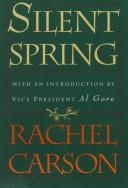
by Rachel Carson
“writing that permanently shifts public understanding — like Rachel Carson's Silent Spring, which directly created the EPA — represents the cognitive weapon tier.”
Tools
by Anthropic
“Anthropic is implementing watermarking in Claude's text output by using a seeded pseudo-random number generator to resolve synonym-level token choices, making AI-generated text detectable without altering meaning.”
More from Deep Questions with Cal Newport
We summarize every new episode. Want them in your inbox?
A Stark Warning From a Former AI Doomer
Combating the Whirlwind with a Single Sheet of Paper
An Insider's Guide to AI Doom
Kids Should *Not* Use Chatbots! (You Should Be Wary, Too…)
The Truth About Brain Rot
Similar Episodes
Related episodes from other podcasts

10% Happier with Dan Harris
Jun 24
Muscle Regulates Your Emotions: The Science of Protein, Strength, and Aging Well | Dr. Gabrielle Lyon

Practical AI
Oct 1
Open models and the future of Physical AI with NVIDIA

Huberman Lab
Sep 17
Essentials: How to Assess & Improve All Aspects of Your Fitness | Dr. Andy Galpin

The Tim Ferriss Show
Jul 29
#877: Q&A with Tim — The Art of Male Friendship, Mini-Retirements, Higher-Resolution Living, Reinvention in The Age of AI, and More
Huberman Lab
Jul 13
How to Improve Your Memory & Cognitive Function at Any Age | Dr. Alan Castel
Explore Related Topics
This podcast is featured in Best Mindset Podcasts (2026) — ranked and reviewed with AI summaries.
Read this week's Health & Longevity Podcast Insights — cross-podcast analysis updated weekly.
You're clearly into Deep Questions with Cal Newport.
Every Monday, we deliver AI summaries of the latest episodes from Deep Questions with Cal Newport and 192+ other podcasts. Free for one show.
Start My Monday DigestNo credit card · Unsubscribe anytime