#877: Q&A with Tim — The Art of Male Friendship, Mini-Retirements, Higher-Resolution Living, Reinvention in The Age of AI, and More
Episode
75 min
Read time
3 min
Topics
Career Growth, Productivity, Health & Wellness
AI-Generated Summary
Key Takeaways
- ✓Career Pivot Framework: Before treating a career decision as binary (stay vs. leave), list options C through G using Derek Sivers' "more than two options" framework at sive.rs/options. One example: build a new business outside work hours until it reaches 50% of current salary before quitting. This process often reveals the real problem is fixing the current situation, not escaping it entirely.
- ✓AI-Era Meta Skills: Four skills remain durable regardless of AI disruption: learning how to learn (covered in the 80-page meta-learning section of The Four Hour Chef), asking precise questions, written communication, and negotiation. Resources include Secrets of Power Negotiating by Dawson, Getting Past No, and Getting to Yes by William Ury. These apply across disciplines and compound over decades.
- ✓Male Friendship Formation: Men bond most effectively through shared activities and projects rather than face-to-face conversation. Side-by-side activities — hiking, building something, rock climbing — reduce direct eye contact, which can trigger threat responses. Tim cites building a card game with a friend over a year as an example of how deep connection forms indirectly through sustained shared work.
- ✓Mini-Retirement Protocol: Taking three to four weeks away from routine forces necessary systems improvements before departure — eliminating unnecessary tasks, automating processes, and clarifying policies. One to two weeks is insufficient because triage temptation remains. Scheduling mini-retirements once or twice annually functions as a controlled burn, preventing larger operational failures and restoring perspective on what actually matters.
- ✓Cognitive Decline Prevention: The single highest-leverage intervention for cognitive health is exercise, specifically the Norwegian 4x4 interval protocol three times per week, which produced five years of measurable benefit over six months in research. Tim supplements with urolithin A for mitochondrial function, sulforaphane precursor Avmacol, intermittent fasting of 16-plus hours to trigger ketone production, and regular sauna use for heat shock protein activation.
What It Covers
Tim Ferriss answers listener questions across six domains: personal reinvention, AI-era skill-building, male friendship formation, podcast evolution, cognitive decline prevention, and higher-resolution living. He references frameworks from Derek Sivers, IFS therapy, and his own Four Hour Work Week methodology, while sharing current fitness protocols, language learning strategies, and privacy practices for navigating modern life.
Key Questions Answered
- •Career Pivot Framework: Before treating a career decision as binary (stay vs. leave), list options C through G using Derek Sivers' "more than two options" framework at sive.rs/options. One example: build a new business outside work hours until it reaches 50% of current salary before quitting. This process often reveals the real problem is fixing the current situation, not escaping it entirely.
- •AI-Era Meta Skills: Four skills remain durable regardless of AI disruption: learning how to learn (covered in the 80-page meta-learning section of The Four Hour Chef), asking precise questions, written communication, and negotiation. Resources include Secrets of Power Negotiating by Dawson, Getting Past No, and Getting to Yes by William Ury. These apply across disciplines and compound over decades.
- •Male Friendship Formation: Men bond most effectively through shared activities and projects rather than face-to-face conversation. Side-by-side activities — hiking, building something, rock climbing — reduce direct eye contact, which can trigger threat responses. Tim cites building a card game with a friend over a year as an example of how deep connection forms indirectly through sustained shared work.
- •Mini-Retirement Protocol: Taking three to four weeks away from routine forces necessary systems improvements before departure — eliminating unnecessary tasks, automating processes, and clarifying policies. One to two weeks is insufficient because triage temptation remains. Scheduling mini-retirements once or twice annually functions as a controlled burn, preventing larger operational failures and restoring perspective on what actually matters.
- •Cognitive Decline Prevention: The single highest-leverage intervention for cognitive health is exercise, specifically the Norwegian 4x4 interval protocol three times per week, which produced five years of measurable benefit over six months in research. Tim supplements with urolithin A for mitochondrial function, sulforaphane precursor Avmacol, intermittent fasting of 16-plus hours to trigger ketone production, and regular sauna use for heat shock protein activation.
- •Higher-Resolution Living via Language: Learning a language expands experiential resolution — the same way a botanist sees distinct species where others see only trees. Conversational functional fluency in a new language requires roughly 8–12 weeks. Practical method: watch familiar shows like Parks and Recreation with target-language subtitles enabled. The Michel Thomas Method audio program builds language fundamentals in one to two weeks across French, Spanish, German, and Korean.
Notable Moment
Tim describes a one-day TMS protocol from AMPA Health that pre-administers a small dose of the antibiotic D-cycloserine to induce neuroplasticity, then delivers a full week's worth of brain stimulation in a single session. He reports three to four months of complete anxiety relief afterward — compressing what normally requires five days of clinical treatment.
Episode Transcript
Optimal minimal. At this altitude, I can run flat out for a half mile before my hands start to shake. Can I answer your personal question? Now what is it in the perfect time? What it's like to be out of shape? I'm a cybernetic organism living tissue over metal endoscopy. Lead him. I am going to just hop into it. Take advantage of everybody being here. Thanks for joining. There are a lot of questions submitted, hundreds upon hundreds. Narrow that down to a few dozen. And I will answer a handful, and then we'll hop to the live feed and answer questions there. So the first question is from Christine. Over the years, we've watched you going through quite a transformation from a driven hyper optimized logical business investor to a grounded relationship focused man talking openly about trauma, mental health struggles, and meditation. What are your comments on the transformation? And for someone who is still stuck in the driven hyper optimized logical phase and sees that they need to change something, what advice would you give? So the first observation or perhaps question I would pose in response to that is, are you stuck? Maybe you're not stuck. And I say that because my shift certainly eventually, and it took me decades to get there, focusing on addressing childhood sexual abuse and so on, which I've written about extensively, so I won't belabor it here and drag people into that, was because I recognized over time that the 17 separate problems I thought were separate were in fact all stemming from this unaddressed elephant room that required some I don't wanna say handling, maybe it's metabolizing. Maybe it's revisiting. Maybe it's recontextualizing as an adult. So that was a necessary step for me. I couldn't proceed past go without addressing that. I don't think everyone requires that. And there are tools, I think, that almost anyone can benefit from that may steer you towards introspection or more internal validation versus external validation, like, some of you will recognize this, the book Awareness by Anthony de Mello. I still read it at least once a year. There are frameworks that I think nearly anyone can benefit from, like IFS, Internal Family Systems, and I did a live session on this podcast with the founder of IFS, Richard Schwartz. I would caution, though, that just as you frame the question as being stuck in a driven hyper optimized phase, it is just as easy, if not easier, to get stuck in doing the quote, unquote work. And you only have to visit Austin to see what I'm talking about. There are lots of people who can't seem to get past a hyper reflective, never ending cycle of polishing the self. And I think that any obsession with the self, whether that is validated by others through your bank account or achievements or getting pats on the back for doing the quote, unquote work is poisonous in excess. The …
Get the full transcript (13,215 words) + summary by email — free
One-time email with the complete transcript and AI summary of this episode. No account needed.
One email, no spam. We’ll also show you what SignalCast does.

You just read a 3-minute summary of a 72-minute episode.
Get The Tim Ferriss Show summarized like this every Monday — plus up to 2 more podcasts, free.
Pick Your Podcasts — FreeKeep Reading
More from The Tim Ferriss Show
#882: Why Kids Can Learn 10x Faster Than We Think — Niels Hoven of Mentava (Tim Coaching Session)
Sep 10 · 133 min

The Prof G Pod
Does Wealth Make You Selfish?, How Scott Stays Informed, and Negotiating Equity Deals
Mar 9
More from The Tim Ferriss Show
#881: Tales of Overcoming The Odds, and How to Turn Losses Into Wins — Tim McGraw, Terry Crews, Dax Shepard, and More
Sep 4 · 65 min

Everything Everywhere Daily
Questions and Answers: Volume 45
Sep 1
Books, tools, and gear mentioned in this episode
SignalCast may earn commission on purchases via these links. As an Amazon Associate, SignalCast earns from qualifying purchases.
Books
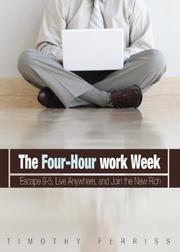
by Tim Ferriss
“learning how to learn (covered in the 80-page meta-learning section of The Four Hour Chef)”
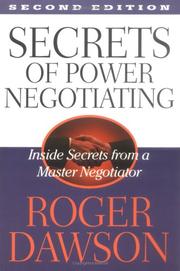 Secrets of Power NegotiatingRecommended
by Dawson
“Resources include Secrets of Power Negotiating by Dawson, Getting Past No, and Getting to Yes by William Ury”
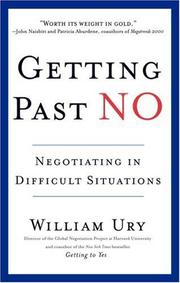 Getting Past NoRecommended
by William Ury
“Resources include Secrets of Power Negotiating by Dawson, Getting Past No, and Getting to Yes by William Ury”
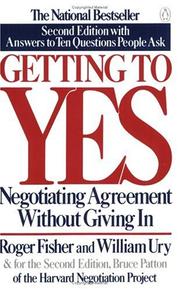 Getting to YesRecommended
by William Ury
“Resources include Secrets of Power Negotiating by Dawson, Getting Past No, and Getting to Yes by William Ury”
- The Four Hour Work WeekBy guest
by Tim Ferriss
“He references frameworks from Derek Sivers, IFS therapy, and his own Four Hour Work Week methodology”
Tools
- Michel Thomas MethodRecommended
“The Michel Thomas Method audio program builds language fundamentals in one to two weeks across French, Spanish, German, and Korean”
by AMPA Health
“Tim describes a one-day TMS protocol from AMPA Health that pre-administers a small dose of the antibiotic D-cycloserine to induce neuroplasticity”
Products
- Urolithin ARecommended
“Tim supplements with urolithin A for mitochondrial function, sulforaphane precursor Avmacol, intermittent fasting of 16-plus hours”
other
- More Than Two Options FrameworkRecommended
by Derek Sivers
“list options C through G using Derek Sivers' 'more than two options' framework at sive.rs/options”
- Norwegian 4x4 Interval ProtocolRecommended
“The single highest-leverage intervention for cognitive health is exercise, specifically the Norwegian 4x4 interval protocol three times per week”
More from The Tim Ferriss Show
We summarize every new episode. Want them in your inbox?
#882: Why Kids Can Learn 10x Faster Than We Think — Niels Hoven of Mentava (Tim Coaching Session)
#881: Tales of Overcoming The Odds, and How to Turn Losses Into Wins — Tim McGraw, Terry Crews, Dax Shepard, and More
#880: Relationship Tools That Work — Esther Perel, Brené Brown, Dr. Sue Johnson, Terry Real, and More on Conflict, Repair, and Lasting Love
#879: How to Reinvent Yourself and Make Bold Moves — Decisive Stories from Matthew McConaughey, Steve Young, Samin Nosrat, and More
#878: How to Start When You're Stuck, Finish What You Begin, and Stop Waiting for Inspiration — Creative Advice from Elizabeth Gilbert, Seth Godin, Joyce Carol Oates, Anne Lamott and More
Similar Episodes
Related episodes from other podcasts

The Prof G Pod
Mar 9
Does Wealth Make You Selfish?, How Scott Stays Informed, and Negotiating Equity Deals

Everything Everywhere Daily
Sep 1
Questions and Answers: Volume 45

The Ezra Klein Show
Aug 7
AMA: Peter Thiel, Chris Rufo and the D.S.A.
The Prof G Pod
Aug 5
The Basics of Financial Security + Can American Small Business Compete Again?
The Prof G Pod
Aug 3
When to Sell Your Stocks, and How to Survive a High-Pressure Job
Explore Related Topics
This podcast is featured in Best Business Podcasts (2026) — ranked and reviewed with AI summaries.
Read this week's Health & Longevity Podcast Insights — cross-podcast analysis updated weekly.
You're clearly into The Tim Ferriss Show.
Every Monday, we deliver AI summaries of the latest episodes from The Tim Ferriss Show and 192+ other podcasts. Free for one show.
Start My Monday DigestNo credit card · Unsubscribe anytime