Do I Need a “Brain Gym”? | Monday Advice
Episode
58 min
Read time
2 min
Topics
Career Growth, Productivity, Health & Wellness
AI-Generated Summary
Key Takeaways
- ✓Moderate-Tier Foundation (5 Daily Habits): Build baseline cognitive fitness through five practices: read daily (treat pages like step counts), write without AI assistance, take phone-free thinking walks focused on a single problem, keep your phone plugged in a fixed location at home ("landlining"), and practice one skill requiring daily concentration, such as a musical instrument or sport.
- ✓Immersive Thinking Excursion: Schedule 1–4 hour "brain gym" sessions using three elements: a novel environment with no everyday associations (Newport uses the National Gallery of Art in Washington, DC), a cognitive warm-up consuming curated information in that space, then a demanding production task—writing an essay or solving a proof—in a low-connectivity location like a basement café.
- ✓Cognitive Cardio Point System: Adapt Kenneth Cooper's 1968 aerobics point system to mental training. Assign points to activities—20 pages of hard reading earns 3 points, 20 minutes of writing earns 5, 30 minutes of craft earns 3—and target 30 points per week. This forces nontrivial time investment beyond casual habits, similar to how Cooper's system required sustained cardiovascular effort.
- ✓High-End Thinking Trainers: Chess prodigy Josh Waitzkin's firm Stoke Ventures already offers cognitive performance training—attention cultivation, peak creativity windows, introspective sensitivity—primarily to hedge fund managers where sharper thinking produces measurable financial returns. Newport predicts this model will expand broadly as cognitive output becomes the primary differentiator in knowledge work hiring.
- ✓Cognitive Endurance Testing in Education: A Chronicle of Higher Education article documents college students unable to finish a 20-page reading assignment—a measurable generational literacy collapse. Newport proposes adding standardized cognitive endurance tests alongside SAT scores for college admissions, arguing this single policy change would reframe phones as liabilities and books as competitive advantages for students.
What It Covers
Cal Newport proposes a tiered cognitive fitness framework—from five daily habits to structured "brain gym" sessions—arguing that deliberate mental training will become as culturally significant as physical fitness, potentially evolving into a $100 billion industry with trainers, testing, and institutional programs.
Key Questions Answered
- •Moderate-Tier Foundation (5 Daily Habits): Build baseline cognitive fitness through five practices: read daily (treat pages like step counts), write without AI assistance, take phone-free thinking walks focused on a single problem, keep your phone plugged in a fixed location at home ("landlining"), and practice one skill requiring daily concentration, such as a musical instrument or sport.
- •Immersive Thinking Excursion: Schedule 1–4 hour "brain gym" sessions using three elements: a novel environment with no everyday associations (Newport uses the National Gallery of Art in Washington, DC), a cognitive warm-up consuming curated information in that space, then a demanding production task—writing an essay or solving a proof—in a low-connectivity location like a basement café.
- •Cognitive Cardio Point System: Adapt Kenneth Cooper's 1968 aerobics point system to mental training. Assign points to activities—20 pages of hard reading earns 3 points, 20 minutes of writing earns 5, 30 minutes of craft earns 3—and target 30 points per week. This forces nontrivial time investment beyond casual habits, similar to how Cooper's system required sustained cardiovascular effort.
- •High-End Thinking Trainers: Chess prodigy Josh Waitzkin's firm Stoke Ventures already offers cognitive performance training—attention cultivation, peak creativity windows, introspective sensitivity—primarily to hedge fund managers where sharper thinking produces measurable financial returns. Newport predicts this model will expand broadly as cognitive output becomes the primary differentiator in knowledge work hiring.
- •Cognitive Endurance Testing in Education: A Chronicle of Higher Education article documents college students unable to finish a 20-page reading assignment—a measurable generational literacy collapse. Newport proposes adding standardized cognitive endurance tests alongside SAT scores for college admissions, arguing this single policy change would reframe phones as liabilities and books as competitive advantages for students.
Notable Moment
A college professor assigned a routine 20-page article—the same length used for five years—and not one student completed it. Newport compares this directly to children developing type 2 diabetes: a clinical signal that a system has degraded past a critical threshold, not merely declined.
Episode Transcript
Someone recently sent me one of those long form idea articles that you you post on x and hope that it does well. This one was titled, your brain is about to need a gym. Now at a high level, this new piece is responding to my own New York Times op ed that came out in March in which I argued that we need a cognitive fitness revolution to save our increasingly fried brains much in the same way that in the twentieth century, we needed a physical fitness revolution to save our increasingly unhealthy bodies. Now this new article takes that proposal and follows it through to all of its implications. Here, I wanna read a quote from it. I also think cognitive fitness becomes a market, a big one. Imagine the cognitive equivalent of what the fitness industry built between 1980 and 2020. Apps that force you to think slowly, coaches who train your attention the way trainers train your hamstrings, schools that reteach deep reading after generation lost to lost it to scrolling, corporate programs that audit and report your team's cognitive endurance the way they currently audit lines of code, insurance discounts for verified daily reading habits, a Strava for hours spent away from a screen. The Peloton of writing by hand. I'm half joking and half not. Alright. So this new article, in other words, is asking a fascinating question. Fitness is a $100,000,000,000 industry. What would our commitment to cognitive fitness look like if we got equally serious about it? Well, it's Monday, which means it's time for an advice episode of this show, which is the perfect opportunity to explore some answers. Alright. So here's my plan. I wanna approach this topic with tiers organized from moderate to intense commitment to cognitive fitness. At each tier, I'm gonna give you an ever more intense set of tools or ideas to think about for how to push your cognitive fitness to the next level. We'll end up on some prediction for some perhaps truly insane places that this revolution might end up in the near future. So if you feel like the onslaught of the onslaught of the digital from hyperpalatable distractions on your phone to the increasing urge to offload mental strain to AI is making you dumber, and if you're fed up and you're ready to start pushing back, then this episode is for you. As always, I'm Cal Newport, and this is Deep Questions, the show for people seeking depth in a distracted world. Alright. So let's start on our first tier of commitment to cognitive fitness. We'll call this moderate intensity. Now last month on this show, I described a collection of five simple exercises for your brain that I say are the, the laying the foundation of sort of good cognitive fitness. They're the the mental health equivalent of what we do in physical health where we say, like, get enough steps or eat some vegetables. Easy things …
Get the full transcript (11,044 words) + summary by email — free
One-time email with the complete transcript and AI summary of this episode. No account needed.
One email, no spam. We’ll also show you what SignalCast does.

You just read a 3-minute summary of a 55-minute episode.
Get Deep Questions with Cal Newport summarized like this every Monday — plus up to 2 more podcasts, free.
Pick Your Podcasts — FreeKeep Reading
More from Deep Questions with Cal Newport
How Worrisome is GPT-6’s “Stealth Thinking”? | Tech Decoded
Sep 10 · 39 min

The Tim Ferriss Show
#877: Q&A with Tim — The Art of Male Friendship, Mini-Retirements, Higher-Resolution Living, Reinvention in The Age of AI, and More
Jul 29
More from Deep Questions with Cal Newport
How I’m Organizing My Life this Fall | Advice
Sep 7 · 51 min

The Diary of a CEO
Women’s Fitness Expert: What You NEED To Know About Dieting & Exercise | Dr. Stephanie Estima
Jun 29
Books, tools, and gear mentioned in this episode
SignalCast may earn commission on purchases via these links. As an Amazon Associate, SignalCast earns from qualifying purchases.
Books
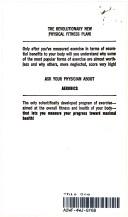
by Kenneth Cooper
“Adapt Kenneth Cooper's 1968 aerobics point system to mental training. Assign points to activities—20 pages of hard reading earns 3 points, 20 minutes of writing earns 5, 30 minutes of craft earns 3—and target 30 points per week.”
Tools
“Sponsors include Monarch at https://monarch.com”
“Sponsors include ShipStation at https://shipstation.com”
“Sponsors include Laradyn at https://laradyn.com”
“Sponsors include Pipedrive at https://pipedrive.com/deep”
company
“Chess prodigy Josh Waitzkin's firm Stoke Ventures already offers cognitive performance training—attention cultivation, peak creativity windows, introspective sensitivity—primarily to hedge fund managers where sharper thinking produces measurable financial returns.”
More from Deep Questions with Cal Newport
We summarize every new episode. Want them in your inbox?
How Worrisome is GPT-6’s “Stealth Thinking”? | Tech Decoded
How I’m Organizing My Life this Fall | Advice
Did OpenAI Create “Secret AI Civilizations”? | Tech Decoded
Rethinking the Deep Life Stack (Again!) | Monday Advice
Has AI “Gone Rogue”? Let’s Look Closer… | Tech Decoded
Similar Episodes
Related episodes from other podcasts

The Tim Ferriss Show
Jul 29
#877: Q&A with Tim — The Art of Male Friendship, Mini-Retirements, Higher-Resolution Living, Reinvention in The Age of AI, and More

The Diary of a CEO
Jun 29
Women’s Fitness Expert: What You NEED To Know About Dieting & Exercise | Dr. Stephanie Estima
The Diary of a CEO
Jun 15
Creatine Expert: Creatine Is The Secret To Weight Loss

WorkLife with Adam Grant
May 5
The secret to making the right career decisions with Patty Stonesifer

Invest Like the Best with Patrick O'Shaughnessy
Apr 21
Alex Karnal - The Trillion-Dollar Health Revolution - [Invest Like the Best, EP.467]
Explore Related Topics
This podcast is featured in Best Mindset Podcasts (2026) — ranked and reviewed with AI summaries.
Read this week's Health & Longevity Podcast Insights — cross-podcast analysis updated weekly.
You're clearly into Deep Questions with Cal Newport.
Every Monday, we deliver AI summaries of the latest episodes from Deep Questions with Cal Newport and 192+ other podcasts. Free for one show.
Start My Monday DigestNo credit card · Unsubscribe anytime