David Heinemeier Hansson (DHH), Co-founder of 37signals
Episode
101 min
Read time
3 min
Topics
Relationships, Investing, Startups
AI-Generated Summary
Key Takeaways
- ✓Constraint-Driven Quality: Basecamp's first version was built on just 10 hours per week of development time, not per day — per week. That extreme scarcity forced ruthless prioritization and produced a product customers still pay for today, 20 years later. When AI now enables teams to build in days what once took months, the discipline of saying no becomes the primary skill. Deliberately imposing artificial constraints prevents feature bloat that unlimited capacity naturally generates.
- ✓Editing as Core Product Strategy: When writing Rework, DHH and Jason Fried submitted a 50,000-word manuscript, then cut it to 25,000 words — the publisher panicked and called it a pamphlet. The same principle applies to software: 37signals reviews near-complete Basecamp 5 features and removes them if they expand complexity beyond the product's core promise of simplicity. Customer surveys consistently rank ease-of-use as the number one reason people choose Basecamp over competitors.
- ✓Finished Software as a Business Model: 37signals keeps deprecated Basecamp versions running indefinitely rather than forcing upgrades. The original 2004 version, discontinued for new sales in 2010, still generates millions in annual profit with near-zero development cost. Customers who haven't seen a new feature in 16 years remain enthusiastic advocates. This "finished software" model eliminates churn from forced migrations and creates a low-overhead revenue stream that compounds quietly alongside active product lines.
- ✓Out-Teaching vs. Out-Spending: With no marketing budget against Microsoft in 2004, 37signals competed by publishing Getting Real, Rework, and continuous blog content — giving away insights freely to build reciprocal relationships with potential customers. Kathy Sierra's framework of outteaching the competition rather than outspending became the company's operating strategy for two decades. The mechanism: humans have a deep, consistent desire to reciprocate. Provide genuine value first; a percentage will convert when given the opportunity.
- ✓Tobi Lütke's AI Playbook: Shopify's CEO identified the shift from AI autocomplete to autonomous agents earlier than most operators and wrote an internal memo in 2023 directing the company to restructure around that transition. Shopify built proprietary tools — including Scout for synthesizing customer feedback across all channels and River for deploying coding agents — that DHH describes as more capable than anything commercially available. The lesson: direct hands-on experimentation with tools, not secondhand reading, is what builds genuine conviction about technological transitions.
What It Covers
David Heinemeier Hansson, co-founder of 37signals and creator of Ruby on Rails, covers building profitable software without venture capital, the discipline of radical product simplicity, how constraints produce better work than unlimited resources, his switch from Mac to Linux, Shopify CEO Tobi Lütke's early AI conviction, and why independence from investors and customers represents the ultimate creative freedom.
Key Questions Answered
- •Constraint-Driven Quality: Basecamp's first version was built on just 10 hours per week of development time, not per day — per week. That extreme scarcity forced ruthless prioritization and produced a product customers still pay for today, 20 years later. When AI now enables teams to build in days what once took months, the discipline of saying no becomes the primary skill. Deliberately imposing artificial constraints prevents feature bloat that unlimited capacity naturally generates.
- •Editing as Core Product Strategy: When writing Rework, DHH and Jason Fried submitted a 50,000-word manuscript, then cut it to 25,000 words — the publisher panicked and called it a pamphlet. The same principle applies to software: 37signals reviews near-complete Basecamp 5 features and removes them if they expand complexity beyond the product's core promise of simplicity. Customer surveys consistently rank ease-of-use as the number one reason people choose Basecamp over competitors.
- •Finished Software as a Business Model: 37signals keeps deprecated Basecamp versions running indefinitely rather than forcing upgrades. The original 2004 version, discontinued for new sales in 2010, still generates millions in annual profit with near-zero development cost. Customers who haven't seen a new feature in 16 years remain enthusiastic advocates. This "finished software" model eliminates churn from forced migrations and creates a low-overhead revenue stream that compounds quietly alongside active product lines.
- •Out-Teaching vs. Out-Spending: With no marketing budget against Microsoft in 2004, 37signals competed by publishing Getting Real, Rework, and continuous blog content — giving away insights freely to build reciprocal relationships with potential customers. Kathy Sierra's framework of outteaching the competition rather than outspending became the company's operating strategy for two decades. The mechanism: humans have a deep, consistent desire to reciprocate. Provide genuine value first; a percentage will convert when given the opportunity.
- •Tobi Lütke's AI Playbook: Shopify's CEO identified the shift from AI autocomplete to autonomous agents earlier than most operators and wrote an internal memo in 2023 directing the company to restructure around that transition. Shopify built proprietary tools — including Scout for synthesizing customer feedback across all channels and River for deploying coding agents — that DHH describes as more capable than anything commercially available. The lesson: direct hands-on experimentation with tools, not secondhand reading, is what builds genuine conviction about technological transitions.
- •The Resource Curse in Business: DHH draws a direct parallel between oil-rich nations that fail to develop their economies and VC-funded software companies that produce bloated products. Microsoft maintaining four simultaneous versions of Outlook is the outcome of unlimited resources removing the selection pressure that forces quality decisions. A two-person team building competing software is a greater competitive threat than a 50,000-person organization, because identical constraints produce comparable output quality. AI acceleration now compresses this dynamic further.
- •Structuring for Independence: 37signals accepted investment from Jeff Bezos on deliberately overvalued terms specifically to gain the confidence to reject all 40-plus VC approaches that followed. Bezos's primary value was not strategic advice but validation — confirming that the founders' instincts were sound. The company took no board, no investors with governance rights, and structured profits as dividends rather than reinvestment toward valuation. DHH frames the logical endpoint of this model as eventually having no customers either, producing work purely through open-source contribution.
Notable Moment
DHH describes buying his first car — an Audi S4 — in cash immediately after landing in the US, spending nearly his entire savings, then reasoning they would earn it back. This moment reframes the later yellow Lamborghini purchase not as excess but as a consistent pattern: spending on tangible proof that the business model actually works.
Episode Transcript
I have a mild skepticism about my own, ability to just talk at length about most topics that I care about because I remember getting real from 2006 the brevity. We were so brief. All the chapters been Getting Real. Most of them are half a page. Some of them are three paragraphs. And I actually have a deep appreciation for our former ability to be that succinct. And it wasn't like we were trying to, it was just here's the distillation of this idea down to these three paragraphs and that's it. Now what's funny about that is when we wrote the later books we didn't have that straight from the gut brevity. In fact, when we wrote Rework, the initial manuscript that we submitted was, I think, 50,000 words. That was what the publisher got to see. Right? And they were very excited. Great. This fits. This is like just the size of the book. And then Jason and I went through it and cut it in half. And it was down to 25,000 words. And the publisher freaked out. They're like, we can't publish a business book that looks like this. That looks like a pamphlet. So we had to pad it with spacing and margins and illustrations to get to it. But it was really that process, cutting in from 50,000 words to 25,000 words and taking some essays from two pages down to four paragraphs that really made it all happen. So I wanna retain that ability to distill. And sometimes just being able, mechanically, to talk for twenty minutes about a topic is not always the best thing at all. I would say the break obviously, we talked about this at dinner last night. I woke up, like, my abs are sore because I was laughing so much. Right? But I told you this yesterday, it's like, I've been reading your writing for, like, fifteen years. So, yeah, you're writing I think brevity is the the right, you know, thing to to optimize for there, getting across your point in as few succinct ways as possible. But not in the the law chart the art of conversation the best conversations that you've ever had in your life, you know, like, oh, yeah. I talked to this guy for five minutes. It's great. It's like, I talked to this guy for five hours. That's spot on. And so this is why it's so important why I wanted you on the show, like, immediately, and we were working trying to figure this out for a few months together. It's like, dude, I remember watching, like, startup school in Wicombe area. You probably did it in, like, 2008. And there's, like, lines from that because you were unfiltered. And I think that's, like, hour long of just a like, this is what's in my mind right now, and here's how I think about things that I still think of fifteen years later. Let me ask you a …
Get the full transcript (20,413 words) + summary by email — free
One-time email with the complete transcript and AI summary of this episode. No account needed.
One email, no spam. We’ll also show you what SignalCast does.

You just read a 3-minute summary of a 98-minute episode.
Get David Senra summarized like this every Monday — plus up to 2 more podcasts, free.
Pick Your Podcasts — FreeKeep Reading
More from David Senra
Managing $525 Billion by Rethinking Wealth Management | Kurt MacAlpine, Corient
Oct 18 · 79 min

My First Million
DHH: $100M+ Advice That'll Piss Off Every Business Guru
Mar 17
More from David Senra
Lessons from Napoleon, Steve Jobs, Joan of Arc & Other Leaders | Ben Wilson
Oct 14 · 71 min

The Rework Podcast
You've launched... now what?
Feb 11
Books, tools, and gear mentioned in this episode
SignalCast may earn commission on purchases via these links. As an Amazon Associate, SignalCast earns from qualifying purchases.
Books
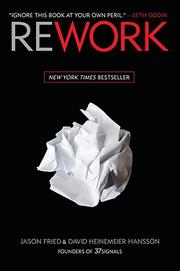 ReworkBy guest
by David Heinemeier Hansson and Jason Fried
“When writing Rework, DHH and Jason Fried submitted a 50,000-word manuscript, then cut it to 25,000 words”
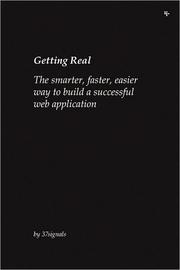 Getting RealBy guest
by 37signals
“37signals competed by publishing Getting Real, Rework, and continuous blog content — giving away insights freely to build reciprocal relationships with potential customers.”
Tools
- Ruby on RailsBy guest
by David Heinemeier Hansson
“David Heinemeier Hansson, co-founder of 37signals and creator of Ruby on Rails”
by 37signals
“Basecamp's first version was built on just 10 hours per week of development time... that still generates millions in annual profit with near-zero development cost.”
by Shopify
“Shopify built proprietary tools — including Scout for synthesizing customer feedback across all channels”
by Shopify
“Shopify built proprietary tools — including Scout for synthesizing customer feedback across all channels and River for deploying coding agents”
More from David Senra
We summarize every new episode. Want them in your inbox?
Managing $525 Billion by Rethinking Wealth Management | Kurt MacAlpine, Corient
Lessons from Napoleon, Steve Jobs, Joan of Arc & Other Leaders | Ben Wilson
Creating Muse: The Fastest-Growing AI Product Since ChatGPT | Alexandr Wang, Meta
Channeling Rage, Rolling Calls & Building an Entertainment Empire | Ari Emanuel, WME & TKO
How Mark Zuckerberg, Palmer Luckey, Josh Kushner & Scott Wu Think | Jeremy Stern
Similar Episodes
Related episodes from other podcasts

My First Million
Mar 17
DHH: $100M+ Advice That'll Piss Off Every Business Guru

The Rework Podcast
Feb 11
You've launched... now what?
The Rework Podcast
Feb 4
Product walkthroughs, the next open source product & other listener questions
The Rework Podcast
Jan 14
Making things that multiply
The Rework Podcast
Jan 7
Launch day — a little logistics, a lot of luck
Explore Related Topics
This podcast is featured in Best Business Podcasts (2026) — ranked and reviewed with AI summaries.
Read this week's Investing & Markets Podcast Insights — cross-podcast analysis updated weekly.
You're clearly into David Senra.
Every Monday, we deliver AI summaries of the latest episodes from David Senra and 192+ other podcasts. Free for one show.
Start My Monday DigestNo credit card · Unsubscribe anytime