Brian Armstrong, Coinbase
Episode
109 min
Read time
3 min
Topics
Career Growth, Personal Finance, Investing
AI-Generated Summary
Key Takeaways
- ✓Suing Your Regulator: When a regulator refuses to publish rules but issues enforcement actions, litigation can be a legitimate strategic tool. Armstrong spent roughly $50–100M in legal costs fighting the SEC, which withdrew its case without Coinbase paying a single dollar in fines or changing any business practice. Multiple judges published opinions stating the SEC acted in an "arbitrary and capricious" manner. The lesson: accumulate resources before a fight, because undercapitalized competitors who faced the same lawfare simply folded.
- ✓Mission-First Culture Policy: After 300 employees staged a remote walkout demanding Coinbase endorse Black Lives Matter, Armstrong spent 48 hours reading Jonathan Haidt's *The Coddling of the American Mind*, then published a blog post declaring the company apolitical on social issues unrelated to its core mission. He offered severance to anyone who disagreed. Only 5% of staff accepted the exit package — far below the feared 50% — and the company's cultural alignment strengthened measurably afterward.
- ✓Inverting the Innovation Veto: Most large companies require sequential approval up a management chain, meaning a single "no" kills an idea. Coinbase runs twice-yearly internal pitch sessions where any employee can present to a panel of product group leaders, the CFO, and the CEO. Securing just one "yes" from any panelist who funds it from their own budget green-lights the project. Armstrong himself voted against USDC, the stable coin that generated roughly $800M in 2025 revenue.
- ✓Picking the Right Problem Before Starting: Armstrong tested multiple ventures — a college tutoring marketplace, rental property renovation, passive-income apps — before concluding that everything is difficult regardless of domain. Reading Seth Godin's *The Dip* prompted him to list only the pursuits he would sustain for 20-plus years even with minimal success. Tech entrepreneurship was the sole answer. He then relocated to Silicon Valley, joined Airbnb to observe a functioning startup from the inside, and launched Coinbase within a few years.
- ✓Early Product-Market Fit Through Customer Calls: The first Coinbase prototype was a Bitcoin wallet with no buy function. Armstrong cold-emailed three early users who had churned, asked why they did not return, and learned they simply had no Bitcoin. Adding a single purchase button — funded by a $30,000 legal opinion that Coinbase might not be a money transmitter — unlocked ACH bank transfers. Demand immediately overwhelmed the company's $600K seed capital, forcing an emergency fundraise that closed a $25M round using only a growth chart.
What It Covers
Coinbase CEO Brian Armstrong traces the company's founding from a nights-and-weekends prototype built while working at Airbnb, through near-death banking crises, a landmark lawsuit against the SEC, and an ongoing push for U.S. crypto market-structure legislation — framing every decision through a decades-long mission to increase economic freedom worldwide.
Key Questions Answered
- •Suing Your Regulator: When a regulator refuses to publish rules but issues enforcement actions, litigation can be a legitimate strategic tool. Armstrong spent roughly $50–100M in legal costs fighting the SEC, which withdrew its case without Coinbase paying a single dollar in fines or changing any business practice. Multiple judges published opinions stating the SEC acted in an "arbitrary and capricious" manner. The lesson: accumulate resources before a fight, because undercapitalized competitors who faced the same lawfare simply folded.
- •Mission-First Culture Policy: After 300 employees staged a remote walkout demanding Coinbase endorse Black Lives Matter, Armstrong spent 48 hours reading Jonathan Haidt's *The Coddling of the American Mind*, then published a blog post declaring the company apolitical on social issues unrelated to its core mission. He offered severance to anyone who disagreed. Only 5% of staff accepted the exit package — far below the feared 50% — and the company's cultural alignment strengthened measurably afterward.
- •Inverting the Innovation Veto: Most large companies require sequential approval up a management chain, meaning a single "no" kills an idea. Coinbase runs twice-yearly internal pitch sessions where any employee can present to a panel of product group leaders, the CFO, and the CEO. Securing just one "yes" from any panelist who funds it from their own budget green-lights the project. Armstrong himself voted against USDC, the stable coin that generated roughly $800M in 2025 revenue.
- •Picking the Right Problem Before Starting: Armstrong tested multiple ventures — a college tutoring marketplace, rental property renovation, passive-income apps — before concluding that everything is difficult regardless of domain. Reading Seth Godin's *The Dip* prompted him to list only the pursuits he would sustain for 20-plus years even with minimal success. Tech entrepreneurship was the sole answer. He then relocated to Silicon Valley, joined Airbnb to observe a functioning startup from the inside, and launched Coinbase within a few years.
- •Early Product-Market Fit Through Customer Calls: The first Coinbase prototype was a Bitcoin wallet with no buy function. Armstrong cold-emailed three early users who had churned, asked why they did not return, and learned they simply had no Bitcoin. Adding a single purchase button — funded by a $30,000 legal opinion that Coinbase might not be a money transmitter — unlocked ACH bank transfers. Demand immediately overwhelmed the company's $600K seed capital, forcing an emergency fundraise that closed a $25M round using only a growth chart.
- •Hiring for Spikes, Not Credentials: Coinbase's first non-founder hire was a recent college graduate whose prior job was lumberjack, chosen over a credentialed Google AdSense manager because the energy and passion in the interview was unmistakably higher. That hire later founded a crypto venture fund and became a billionaire. The hiring filter: leave the interview with more energy than you entered, the candidate communicates efficiently, and their past work contains at least one clear statistical outlier of success.
- •Long-Term Orientation as a Decision Filter: Armstrong frames every costly or unpopular decision — suing the SEC, publishing the apolitical blog post, going public via direct listing — by asking whether the action advances economic freedom over a multi-decade horizon, not whether it protects near-term stock price. He notes that personal financial security removes the fear of short-term pain, and that founders who built a company from a single laptop can credibly threaten to rebuild it from scratch, which gives them negotiating leverage that professional managers lack.
Notable Moment
During the SEC standoff, Armstrong held roughly 30 meetings with regulators who refused to specify which rules Coinbase was violating, then served an enforcement action the following day. When Armstrong finally sued proactively — citing the Administrative Procedures Act — advisors inside and outside the company urged him not to. The SEC ultimately withdrew the case entirely, with no fines paid.
Episode Transcript
How much of your job is building political power as an advocate for, like, the crypto industry? Yeah. I mean, I don't have to go, but I I I think it's worth it for the business. I don't mind going. I like doing in some ways, I like doing it. There's some pretty interesting people there. So I go about once a quarter, maybe once or twice a quarter recently because we're right at the the crux of this this key moment for market structure legislation. But I'd say over the last few years, yeah, about once a quarter. What's the key moment for the market structure? Well, the crypto industry has been working for a long time on getting in the senate, a whole bunch of people have been trying to get this, piece of legislation passed. In the house, it was called the Clarity Act. In the senate, they're drafting their own version of it, but it's it's essentially clarifying this question about which of these crypto assets are commodities versus securities. And, you know, someone might say, well, why does it matter? It matters because in The United States, we have two different reg federal regulators, the CFTC and the SEC. The CFTC regulates commodities. The SEC regulates securities. And so it turns out in the past, this ambiguity about where crypto assets set, you know, sit between the two federal regulators, that lack of clarity was really weaponized and, by Derek Gensler, the former SEC chair, and Elizabeth Warren and some people like that who tried to, in my view, unlawfully kill the industry in The United States. So in other countries where we operate like in The UK or in Singapore, they only have one federal regulator for financial services, so they actually don't care whether these are commodities or securities. It's a totally, parochial issue in The United States that's kinda like this turf war between two federal agencies in the past. So, anyway, we just decided we need to get legislation passed by Congress to clarify once and for all which of them go in which bucket so that a future Gary Gensler couldn't come in and try to kill the industry. So what was the lawfare they were trying to do? Well okay. So it's a long story, but, you know, essentially, this was around, like, the 2020, 2021 time frame. Coinbase, we decided we wanna become become a public company. We had been operating for about nine years at that point, and we went in and went through the normal process with the SEC. You have to describe your entire company, how it works, you know, how do we decide which assets to list, which do we not list. At that time, we we wanted there to be a path to have crypto securities be traded simply to think of it as a security is like a way to raise money for a company that you wanna start. A commodity is …
Get the full transcript (24,454 words) + summary by email — free
One-time email with the complete transcript and AI summary of this episode. No account needed.
One email, no spam. We’ll also show you what SignalCast does.

You just read a 3-minute summary of a 106-minute episode.
Get David Senra summarized like this every Monday — plus up to 2 more podcasts, free.
Pick Your Podcasts — FreeKeep Reading
More from David Senra
Managing $525 Billion by Rethinking Wealth Management | Kurt MacAlpine, Corient
Oct 18 · 79 min

No Priors: Artificial Intelligence | Technology | Startups
Coinbase’s Everything Exchange: Agentic Finance, Stablecoins, and Tokenization with CEO Brian Armstrong
Sep 10
More from David Senra
Lessons from Napoleon, Steve Jobs, Joan of Arc & Other Leaders | Ben Wilson
Oct 14 · 71 min

In Good Company with Nicolai Tangen
Fortescue CEO: Breaking into Mining, Going Green and the Accident That Changed Everything
Jul 1
Books, tools, and gear mentioned in this episode
SignalCast may earn commission on purchases via these links. As an Amazon Associate, SignalCast earns from qualifying purchases.
Books
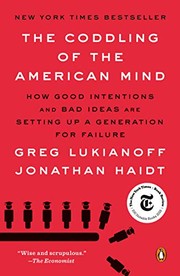 The Coddling of the American MindRecommended
by Jonathan Haidt
“Armstrong spent 48 hours reading Jonathan Haidt's *The Coddling of the American Mind*, then published a blog post declaring the company apolitical on social issues unrelated to its core mission.”
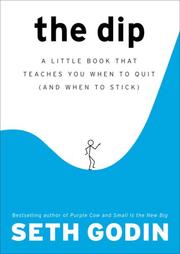 The DipRecommended
by Seth Godin
“Reading Seth Godin's *The Dip* prompted him to list only the pursuits he would sustain for 20-plus years even with minimal success.”
More from David Senra
We summarize every new episode. Want them in your inbox?
Managing $525 Billion by Rethinking Wealth Management | Kurt MacAlpine, Corient
Lessons from Napoleon, Steve Jobs, Joan of Arc & Other Leaders | Ben Wilson
Creating Muse: The Fastest-Growing AI Product Since ChatGPT | Alexandr Wang, Meta
Channeling Rage, Rolling Calls & Building an Entertainment Empire | Ari Emanuel, WME & TKO
How Mark Zuckerberg, Palmer Luckey, Josh Kushner & Scott Wu Think | Jeremy Stern
Similar Episodes
Related episodes from other podcasts

No Priors: Artificial Intelligence | Technology | Startups
Sep 10
Coinbase’s Everything Exchange: Agentic Finance, Stablecoins, and Tokenization with CEO Brian Armstrong

In Good Company with Nicolai Tangen
Jul 1
Fortescue CEO: Breaking into Mining, Going Green and the Accident That Changed Everything

Acquired
Jun 22
The Walt Disney Company

Invest Like the Best with Patrick O'Shaughnessy
May 5
Brian Chesky - AI Founder Mode - [Invest Like the Best, EP.470]
In Good Company with Nicolai Tangen
Mar 20
HIGHLIGHTS: Brian Armstrong - CEO of Coinbase
Explore Related Topics
This podcast is featured in Best Business Podcasts (2026) — ranked and reviewed with AI summaries.
Read this week's Investing & Markets Podcast Insights — cross-podcast analysis updated weekly.
You're clearly into David Senra.
Every Monday, we deliver AI summaries of the latest episodes from David Senra and 192+ other podcasts. Free for one show.
Start My Monday DigestNo credit card · Unsubscribe anytime