BA

Brian Armstrong

3episodes
3podcasts

Featured On 3 Podcasts

All Appearances

3 episodes

AI Summary

→ WHAT IT COVERS Brian Armstrong, CEO of Coinbase, explains how crypto is evolving beyond Bitcoin into a full financial system overhaul, covering stablecoins, the Everything Exchange platform, quantum computing risks, and AI adoption inside Coinbase. → KEY INSIGHTS - **Stablecoin Advantage:** Stablecoins are the only payment rail that simultaneously delivers speed (under one second), near-zero cost (less than one-tenth of a cent), and global reach. This combination drove roughly 100% year-over-year growth, making them a credible replacement for Swift and credit cards. - **Everything Exchange Strategy:** Coinbase is building a single platform consolidating crypto, equities, commodities, FX, and prediction markets. Armstrong sees all capital formation eventually moving on-chain, allowing companies to raise funds, operate privately, and go public entirely without traditional intermediaries. - **Quantum Computing Preparedness:** Quantum computing threatens all encryption — banking, passwords, and crypto equally. Coinbase formed a cryptography advisory council to lead Bitcoin and Ethereum network upgrades toward post-quantum algorithms before urgency forces rushed, error-prone transitions across the industry. - **AI Adoption Enforcement:** Armstrong mandated all engineers trial AI coding tools like Cursor and Claude within a set deadline. Rather than waiting for organic adoption to reach 100%, he scheduled a Saturday CEO meeting for holdouts, creating top-down accountability that rapidly closed the remaining adoption gap. → NOTABLE MOMENT Armstrong revealed he co-founded a longevity biotech company after identifying a gap in serious science in that space. Within three years, the company demonstrated successful reprogramming of human cells, with a first drug targeting clinical trials next year. 💼 SPONSORS None detected 🏷️ Cryptocurrency, Stablecoins, AI Adoption, Longevity Biotech

David Senra

Brian Armstrong, Coinbase

David Senra
110 minCEO of Coinbase

AI Summary

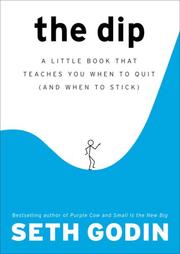
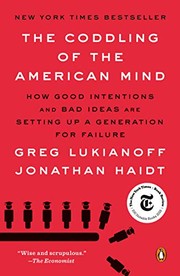
→ WHAT IT COVERS Coinbase CEO Brian Armstrong traces the company's founding from a nights-and-weekends prototype built while working at Airbnb, through near-death banking crises, a landmark lawsuit against the SEC, and an ongoing push for U.S. crypto market-structure legislation — framing every decision through a decades-long mission to increase economic freedom worldwide. → KEY INSIGHTS - **Suing Your Regulator:** When a regulator refuses to publish rules but issues enforcement actions, litigation can be a legitimate strategic tool. Armstrong spent roughly $50–100M in legal costs fighting the SEC, which withdrew its case without Coinbase paying a single dollar in fines or changing any business practice. Multiple judges published opinions stating the SEC acted in an "arbitrary and capricious" manner. The lesson: accumulate resources before a fight, because undercapitalized competitors who faced the same lawfare simply folded. - **Mission-First Culture Policy:** After 300 employees staged a remote walkout demanding Coinbase endorse Black Lives Matter, Armstrong spent 48 hours reading Jonathan Haidt's *The Coddling of the American Mind*, then published a blog post declaring the company apolitical on social issues unrelated to its core mission. He offered severance to anyone who disagreed. Only 5% of staff accepted the exit package — far below the feared 50% — and the company's cultural alignment strengthened measurably afterward. - **Inverting the Innovation Veto:** Most large companies require sequential approval up a management chain, meaning a single "no" kills an idea. Coinbase runs twice-yearly internal pitch sessions where any employee can present to a panel of product group leaders, the CFO, and the CEO. Securing just one "yes" from any panelist who funds it from their own budget green-lights the project. Armstrong himself voted against USDC, the stable coin that generated roughly $800M in 2025 revenue. - **Picking the Right Problem Before Starting:** Armstrong tested multiple ventures — a college tutoring marketplace, rental property renovation, passive-income apps — before concluding that everything is difficult regardless of domain. Reading Seth Godin's *The Dip* prompted him to list only the pursuits he would sustain for 20-plus years even with minimal success. Tech entrepreneurship was the sole answer. He then relocated to Silicon Valley, joined Airbnb to observe a functioning startup from the inside, and launched Coinbase within a few years. - **Early Product-Market Fit Through Customer Calls:** The first Coinbase prototype was a Bitcoin wallet with no buy function. Armstrong cold-emailed three early users who had churned, asked why they did not return, and learned they simply had no Bitcoin. Adding a single purchase button — funded by a $30,000 legal opinion that Coinbase might not be a money transmitter — unlocked ACH bank transfers. Demand immediately overwhelmed the company's $600K seed capital, forcing an emergency fundraise that closed a $25M round using only a growth chart. - **Hiring for Spikes, Not Credentials:** Coinbase's first non-founder hire was a recent college graduate whose prior job was lumberjack, chosen over a credentialed Google AdSense manager because the energy and passion in the interview was unmistakably higher. That hire later founded a crypto venture fund and became a billionaire. The hiring filter: leave the interview with more energy than you entered, the candidate communicates efficiently, and their past work contains at least one clear statistical outlier of success. - **Long-Term Orientation as a Decision Filter:** Armstrong frames every costly or unpopular decision — suing the SEC, publishing the apolitical blog post, going public via direct listing — by asking whether the action advances economic freedom over a multi-decade horizon, not whether it protects near-term stock price. He notes that personal financial security removes the fear of short-term pain, and that founders who built a company from a single laptop can credibly threaten to rebuild it from scratch, which gives them negotiating leverage that professional managers lack. → NOTABLE MOMENT During the SEC standoff, Armstrong held roughly 30 meetings with regulators who refused to specify which rules Coinbase was violating, then served an enforcement action the following day. When Armstrong finally sued proactively — citing the Administrative Procedures Act — advisors inside and outside the company urged him not to. The SEC ultimately withdrew the case entirely, with no fines paid. 💼 SPONSORS [{"name": "Ramp", "url": "https://ramp.com"}, {"name": "HubSpot", "url": "https://hubspot.com"}] 🏷️ Crypto Regulation, Founder Decision-Making, SEC Litigation, Company Culture, Product-Market Fit, Startup Hiring, Economic Freedom

AI Summary

→ WHAT IT COVERS The All-In podcast broadcasts from Davos 2025 with interviews featuring Coinbase CEO Brian Armstrong on crypto regulation and stablecoin legislation, Cerebras Systems CEO Andrew Feldman on AI chip architecture and data center infrastructure, and Gecko Robotics CEO Jake Loosararian on industrial robotics deployment. Topics span the Genius Act implementation, wafer-scale computing advantages, and AI-driven infrastructure inspection automation. → KEY INSIGHTS - **Stablecoin Regulation Framework:** The Genius Act mandates US-regulated stablecoins maintain 100% reserves in short-term US treasuries with maximum thirty-day maturity, creating safer alternatives to fractional reserve banking. This eliminates run-on-bank scenarios like Silicon Valley Bank's collapse while enabling rewards programs based on customer activity beyond balance holdings. Five of the top twenty global systemically important banks now use Coinbase infrastructure to integrate crypto products. - **Crypto Market Structure Transformation:** Coinbase identifies three dominant trends reshaping the industry - all asset classes moving on-chain for trading including equities, prediction markets experiencing explosive growth through partnerships like Kalshi integration, and stablecoin payments accelerating especially for business-to-business cross-border transactions. The company processes massive backlogs for Coinbase Business serving small and medium enterprises seeking faster settlement and lower foreign exchange fees. - **Wafer-Scale Computing Architecture:** Cerebras builds chips fifty-six times larger than NVIDIA's B200 containing four trillion transistors, delivering twenty to fifty times faster performance for AI workloads. Large chips process more information simultaneously and deliver results faster because memory access speed creates the primary bottleneck in GPU-based inference. Systems cost one to one-point-five million dollars on-premise or rent by token starting at fifty cents per million tokens in cloud deployments. - **AI Infrastructure Power Economics:** Data centers now measure capacity in megawatts rather than square footage because power availability represents the limiting constraint for deployment. The cheapest power sources rank as hydroelectric first, then natural gas especially from petroleum flare-off previously wasted. Cerebras secured a seven-hundred-fifty megawatt deal with OpenAI requiring multi-year buildout across locations with abundant natural gas or geothermal resources in regions like West Texas and The Nordics. - **Memory Supply Chain Dynamics:** The AI industry faces an eighteen-month memory shortage caused by demand signal confusion rather than actual production constraints. Companies escalated orders from six months to eighteen months of inventory when receiving uncertain delivery timelines, creating artificial scarcity. High-bandwidth memory consumption by GPUs particularly strains DRAM supply for consumer electronics. Manufacturing capacity remains unchanged from four months prior despite price increases and extended lead times. - **Industrial Robotics ROI Model:** Gecko Robotics generates thirty percent revenue from defense applications including submarine manufacturing and destroyer maintenance, achieving ninety percent speed improvements in production cycles. Purpose-built robots with specialized sensor arrays inspect metal fabrication quality, welds, and structural integrity to build comprehensive databases of infrastructure health. The company plans to purchase humanoid robots from Tesla, Figure, or Boston Dynamics to create an application layer rather than building general-purpose hardware. - **Job Displacement Timeline Assessment:** Current tech layoffs primarily result from delayed impacts of SaaS tools expanding management scope rather than AI automation. Middle management roles focused on information transfer and small team coordination diminish in value as leaders gain direct visibility through integrated data systems. True AI-driven displacement remains three to five years away when foundation models for specialized tasks like welding reach production readiness, requiring human supervision of multiple automated systems rather than direct field work. → NOTABLE MOMENT Armstrong reveals the Biden administration attempted to unlawfully eliminate the crypto industry in America while Trump campaigned on making the US the crypto capital of the world and delivered on promises. Bank trade groups now attempt to undo the four-month-old Genius Act despite bipartisan passage, creating a red line for the industry that views stablecoin legislation as settled law requiring acceptance from traditional financial institutions. 💼 SPONSORS [{"name": "New York Stock Exchange", "url": "https://www.nyse.com"}] 🏷️ Crypto Regulation, Stablecoin Legislation, AI Chip Architecture, Data Center Infrastructure, Industrial Robotics, Wafer-Scale Computing, Defense Manufacturing

Explore More

Never miss Brian Armstrong's insights

Subscribe to get AI-powered summaries of Brian Armstrong's podcast appearances delivered to your inbox weekly.

Start Free Today

No credit card required • Free tier available