Harvey Mansfield on Machiavelli, Straussianism, and the Character of Liberal Democracy
Episode
49 min
Read time
2 min
Topics
Leadership, Artificial Intelligence, Philosophy & Wisdom
AI-Generated Summary
Key Takeaways
- ✓Machiavelli's "effectual truth" as the origin of empirical science: Machiavelli coined the concept of "effectual truth" — the factual outcome stripped of wish or intent — which Mansfield identifies as the conceptual foundation of modern science. Before this, words like "fact" did not exist. Understanding cause-to-effect reasoning without normative overlay begins here, not with Galileo or Bacon.
- ✓Straussian close reading vs. analytic philosophy: Strauss's method, called "logographic necessity," holds that nothing in a great book is accidental — every argument is placed deliberately for a specific audience. To read correctly, identify who Socrates speaks *down* to, then raise the argument to the level the author actually intended. Analytic philosophy strips this context, missing deliberate irony entirely.
- ✓Conspiracy and secrecy as structural features of all governance: Mansfield argues that political secrecy is not pathological but structurally necessary — any executive action requires concealed planning, since revealing plans allows adversaries to foil them. This applies from heads of state to babysitters. Machiavelli's longest chapter across both major works covers conspiracy's three stages: before, during, and after execution.
- ✓Hayek's spontaneous order misses its own precondition: Mansfield contends that spontaneous order does not arise spontaneously — it requires an initial act of liberation from constraining structures. Machiavelli understood this: releasing human energies (as Rome did through noble-plebeian conflict) requires deliberate removal of prior impositions. Hayek presents the outcome without accounting for the necessary founding act that makes it possible.
- ✓**Reading Strauss: start with *Natural Right and History*, then *Persecution and the Art of Writing*:** For those without access to a Straussian teacher, Mansfield recommends this specific two-book sequence. *Natural Right and History* is the most accessible entry point; *Persecution and the Art of Writing* explains esoteric writing directly. Seek a living guide if possible — AI explanations exist but fall short of the original texts.
What It Covers
Harvey Mansfield, political philosopher and Harvard professor of 61 years, discusses Machiavelli's foundational role in modern empirical thinking, Leo Strauss's method of reading great books, the nature of conspiracy in politics, the character of liberal democracy, and how manliness and ambition shape political life.
Key Questions Answered
- •Machiavelli's "effectual truth" as the origin of empirical science: Machiavelli coined the concept of "effectual truth" — the factual outcome stripped of wish or intent — which Mansfield identifies as the conceptual foundation of modern science. Before this, words like "fact" did not exist. Understanding cause-to-effect reasoning without normative overlay begins here, not with Galileo or Bacon.
- •Straussian close reading vs. analytic philosophy: Strauss's method, called "logographic necessity," holds that nothing in a great book is accidental — every argument is placed deliberately for a specific audience. To read correctly, identify who Socrates speaks *down* to, then raise the argument to the level the author actually intended. Analytic philosophy strips this context, missing deliberate irony entirely.
- •Conspiracy and secrecy as structural features of all governance: Mansfield argues that political secrecy is not pathological but structurally necessary — any executive action requires concealed planning, since revealing plans allows adversaries to foil them. This applies from heads of state to babysitters. Machiavelli's longest chapter across both major works covers conspiracy's three stages: before, during, and after execution.
- •Hayek's spontaneous order misses its own precondition: Mansfield contends that spontaneous order does not arise spontaneously — it requires an initial act of liberation from constraining structures. Machiavelli understood this: releasing human energies (as Rome did through noble-plebeian conflict) requires deliberate removal of prior impositions. Hayek presents the outcome without accounting for the necessary founding act that makes it possible.
- •**Reading Strauss: start with *Natural Right and History*, then *Persecution and the Art of Writing*:** For those without access to a Straussian teacher, Mansfield recommends this specific two-book sequence. *Natural Right and History* is the most accessible entry point; *Persecution and the Art of Writing* explains esoteric writing directly. Seek a living guide if possible — AI explanations exist but fall short of the original texts.
Notable Moment
Mansfield recounts attending the 1953 Conservative Party Conference where Churchill, facing pressure to call an early election, deflected by comparing unnecessary elections to taking a recovering patient's temperature too frequently — a spontaneous analogy that Mansfield recalls as a model of politically precise wit.
Episode Transcript
Hey, listeners. This is Dallas, one of the producers of Conversations with Tyler. On April 14, join Tyler at the 92nd Street Y in New York City for a live taping of Conversations with Tyler featuring Craig Newmark, the founder of Craigslist and Craig Newmark Philanthropies. Tyler and Craig will discuss trust, cybersecurity, and the building blocks of resilient civic institutions in the digital age, along with plenty more, I'm sure. Tickets are selling quickly, so be sure to grab yours before they're gone. You can find the link to buy tickets at the top of the show notes. Hope to see you there. Conversations with Tyler is produced by the Mercatus Center at George Mason University, bridging the gap between academic ideas and real world problems. Learn more at mercatus.org. For a full transcript of every conversation enhanced with helpful links, visit conversationswithtyler.com. Hello, everyone, and welcome back to conversations with Tyler. Today, I'm speaking with the great Harvey Mansfield, and Harvey has a new and excellent book out called The Rise and Fall of Rational Control. Harvey, welcome. Thank you for having me. Pleasure to be here. Now given that Machiavelli had no real sense of modern science and its fruits, What ends up being missing from his political thought? Well, he didn't have no idea of modern science. In fact, I would say that his notion of effectual truth is the beginning of modern science. The effectual truth, he says, is what comes out of the truth, or what is, the effect. If you say to somebody, I love you, the effectual truth of that is I want something from you. So the effectual truth is the upshot, sometimes not necessarily the intent of the statement. So you must judge then from cause to effect. The word effectual was brand new. We're actually invented by Machiavelli. It comes from the Latin, which has to do with fact. Today, we use the word fact all the time as if it were something that always existed. But it was Machiavelli and some later thinkers who developed that notion of fact. So the fact of a thing is what it is without any wish or intent attached to it. So that means you can go from cause to effect. And that, I think, is the fundamental notion behind modern science. Modern science isn't based on wish or speech, as with Plato and Aristotle. It's based on fact. Galileo didn't go around asking people, does the Earth move or not? He looked for the fact, said it was not a matter of public opinion or philosopher's opinion, but for the effectual truth. But say when it comes to technology, Machiavelli understood gunpowder. But the idea that our lives could be so safe, nuclear weapons, modern effective birth control, modern media, don't all those things mean that modernity is in fact quite irreversible? Not so much those things, but, the first thing you mentioned, gunpowder. Gunpowder means the defense of the state. …
Get the full transcript (6,007 words) + summary by email — free
One-time email with the complete transcript and AI summary of this episode. No account needed.
One email, no spam. We’ll also show you what SignalCast does.

You just read a 3-minute summary of a 46-minute episode.
Get Conversations with Tyler summarized like this every Monday — plus up to 2 more podcasts, free.
Pick Your Podcasts — FreeKeep Reading
More from Conversations with Tyler
Jared Diamond on Leaders, Luck, and Irreplaceability
Sep 9 · 52 min

The Joe Rogan Experience
#2525 - Nick Bostrom
Jul 14
More from Conversations with Tyler
Michael Moritz on Origin Stories, Exile, and Obsessive Curiosity
Sep 2 · 41 min

The Diary of a CEO
WW3 Expert: This Could Trigger Global Starvation
May 7
Books, tools, and gear mentioned in this episode
SignalCast may earn commission on purchases via these links. As an Amazon Associate, SignalCast earns from qualifying purchases.
Books
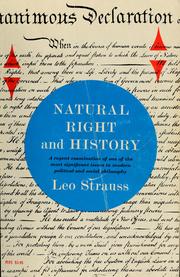 Natural Right and HistoryRecommended
by Leo Strauss
“For those without access to a Straussian teacher, Mansfield recommends this specific two-book sequence. *Natural Right and History* is the most accessible entry point”
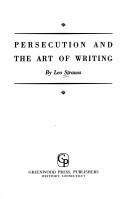 Persecution and the Art of WritingRecommended
by Leo Strauss
“*Persecution and the Art of Writing* explains esoteric writing directly. Seek a living guide if possible — AI explanations exist but fall short of the original texts.”
More from Conversations with Tyler
We summarize every new episode. Want them in your inbox?
Jared Diamond on Leaders, Luck, and Irreplaceability
Michael Moritz on Origin Stories, Exile, and Obsessive Curiosity
Luke Burgis on Mimetic Desire, Catholicism, and the Age of Social Contagion
Daron Acemoglu on Liberalism, Automation, and the Educated Elite
Julia Ioffe on Russian Women, Missing Men, and the Roots of Autocracy
Similar Episodes
Related episodes from other podcasts

The Joe Rogan Experience
Jul 14
#2525 - Nick Bostrom

The Diary of a CEO
May 7
WW3 Expert: This Could Trigger Global Starvation
The Diary of a CEO
Mar 23
David Sinclair: Can Aging Be Reversed?After 8 Weeks, Cells Appeared 75% Younger In Tests!

The School of Greatness
Feb 23
Why You're Afraid to Share (And What It's Costing You) | Leslie John

Odd Lots
Nov 27
Graham Allison on the Risks of a US-China War
Explore Related Topics
This podcast is featured in Best Finance Podcasts (2026) — ranked and reviewed with AI summaries.
Read this week's AI & Machine Learning Podcast Insights — cross-podcast analysis updated weekly.
You're clearly into Conversations with Tyler.
Every Monday, we deliver AI summaries of the latest episodes from Conversations with Tyler and 192+ other podcasts. Free for one show.
Start My Monday DigestNo credit card · Unsubscribe anytime