

AI Summary
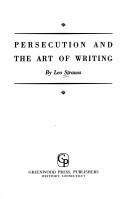
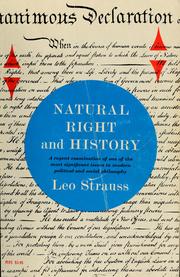
→ WHAT IT COVERS Harvey Mansfield, political philosopher and Harvard professor of 61 years, discusses Machiavelli's foundational role in modern empirical thinking, Leo Strauss's method of reading great books, the nature of conspiracy in politics, the character of liberal democracy, and how manliness and ambition shape political life. → KEY INSIGHTS - **Machiavelli's "effectual truth" as the origin of empirical science:** Machiavelli coined the concept of "effectual truth" — the factual outcome stripped of wish or intent — which Mansfield identifies as the conceptual foundation of modern science. Before this, words like "fact" did not exist. Understanding cause-to-effect reasoning without normative overlay begins here, not with Galileo or Bacon. - **Straussian close reading vs. analytic philosophy:** Strauss's method, called "logographic necessity," holds that nothing in a great book is accidental — every argument is placed deliberately for a specific audience. To read correctly, identify who Socrates speaks *down* to, then raise the argument to the level the author actually intended. Analytic philosophy strips this context, missing deliberate irony entirely. - **Conspiracy and secrecy as structural features of all governance:** Mansfield argues that political secrecy is not pathological but structurally necessary — any executive action requires concealed planning, since revealing plans allows adversaries to foil them. This applies from heads of state to babysitters. Machiavelli's longest chapter across both major works covers conspiracy's three stages: before, during, and after execution. - **Hayek's spontaneous order misses its own precondition:** Mansfield contends that spontaneous order does not arise spontaneously — it requires an initial act of liberation from constraining structures. Machiavelli understood this: releasing human energies (as Rome did through noble-plebeian conflict) requires deliberate removal of prior impositions. Hayek presents the outcome without accounting for the necessary founding act that makes it possible. - **Reading Strauss: start with *Natural Right and History*, then *Persecution and the Art of Writing*:** For those without access to a Straussian teacher, Mansfield recommends this specific two-book sequence. *Natural Right and History* is the most accessible entry point; *Persecution and the Art of Writing* explains esoteric writing directly. Seek a living guide if possible — AI explanations exist but fall short of the original texts. → NOTABLE MOMENT Mansfield recounts attending the 1953 Conservative Party Conference where Churchill, facing pressure to call an early election, deflected by comparing unnecessary elections to taking a recovering patient's temperature too frequently — a spontaneous analogy that Mansfield recalls as a model of politically precise wit. 💼 SPONSORS None detected 🏷️ Political Philosophy, Leo Strauss, Machiavelli, Liberal Democracy, Great Books