What's Missing Between LLMs and AGI - Vishal Misra & Martin Casado
Episode
47 min
Read time
2 min
Topics
Startups, Fundraising & VC, Artificial Intelligence
AI-Generated Summary
Key Takeaways
- ✓Bayesian Wind Tunnel methodology: To prove LLMs perform true Bayesian inference rather than superficial pattern matching, Misra's team created controlled experiments using blank architectures trained on tasks mathematically impossible to memorize. Transformers matched the analytically calculated Bayesian posterior to 10⁻³ bit accuracy. Mamba performed nearly as well; LSTMs partially; MLPs failed entirely. Architecture, not training data, determines this capability.
- ✓The Frozen Weights Problem: LLMs perform Bayesian updating within a conversation but reset completely when a new session begins — weights are frozen post-training. Human brains maintain synaptic plasticity throughout life, continuously updating from experience. Continual learning research must solve catastrophic forgetting: updating weights on new information without erasing previously learned knowledge before plasticity becomes viable.
- ✓Shannon Entropy vs. Kolmogorov Complexity: LLMs operate in the Shannon entropy domain — learning correlations across all available data. Human reasoning operates closer to Kolmogorov complexity — finding the shortest causal program that explains observations. Einstein's field equation (Gμν = 8πTμν) is a minimal representation explaining Mercury's orbit, gravitational lensing, and GPS simultaneously. LLMs cannot generate equivalent new representations.
- ✓The Einstein AGI Test: A concrete benchmark for AGI: train an LLM exclusively on pre-1911 physics data and determine whether it independently derives the theory of relativity. Current models would fail because they are bound to existing data manifolds and cannot construct new causal representations that reconcile anomalous observations like Michelson-Morley experiment results with Newtonian mechanics.
- ✓Causation vs. Correlation as the Core Gap: Deep learning performs association — the first tier of Judea Pearl's causal hierarchy. It does not perform intervention or counterfactual reasoning, which require internal simulation models. When a person dodges a thrown object, the brain runs a causal simulation, not a probability calculation. Building architectures capable of causal modeling, not scaling existing ones, is the necessary research direction.
What It Covers
Columbia University professor Vishal Misra presents mathematical proof that transformers perform precise Bayesian inference, matching theoretically correct posteriors to 10⁻³ bit accuracy. He argues two unsolved problems — continual learning plasticity and moving from correlation to causation — separate current LLMs from genuine artificial general intelligence.
Key Questions Answered
- •Bayesian Wind Tunnel methodology: To prove LLMs perform true Bayesian inference rather than superficial pattern matching, Misra's team created controlled experiments using blank architectures trained on tasks mathematically impossible to memorize. Transformers matched the analytically calculated Bayesian posterior to 10⁻³ bit accuracy. Mamba performed nearly as well; LSTMs partially; MLPs failed entirely. Architecture, not training data, determines this capability.
- •The Frozen Weights Problem: LLMs perform Bayesian updating within a conversation but reset completely when a new session begins — weights are frozen post-training. Human brains maintain synaptic plasticity throughout life, continuously updating from experience. Continual learning research must solve catastrophic forgetting: updating weights on new information without erasing previously learned knowledge before plasticity becomes viable.
- •Shannon Entropy vs. Kolmogorov Complexity: LLMs operate in the Shannon entropy domain — learning correlations across all available data. Human reasoning operates closer to Kolmogorov complexity — finding the shortest causal program that explains observations. Einstein's field equation (Gμν = 8πTμν) is a minimal representation explaining Mercury's orbit, gravitational lensing, and GPS simultaneously. LLMs cannot generate equivalent new representations.
- •The Einstein AGI Test: A concrete benchmark for AGI: train an LLM exclusively on pre-1911 physics data and determine whether it independently derives the theory of relativity. Current models would fail because they are bound to existing data manifolds and cannot construct new causal representations that reconcile anomalous observations like Michelson-Morley experiment results with Newtonian mechanics.
- •Causation vs. Correlation as the Core Gap: Deep learning performs association — the first tier of Judea Pearl's causal hierarchy. It does not perform intervention or counterfactual reasoning, which require internal simulation models. When a person dodges a thrown object, the brain runs a causal simulation, not a probability calculation. Building architectures capable of causal modeling, not scaling existing ones, is the necessary research direction.
Notable Moment
Misra describes Donald Knuth's viral Hamiltonian cycle result as validation of LLM limits rather than evidence of emerging generality — the models exhausted their search space and stalled, while Knuth himself constructed the novel mathematical proof, demonstrating that humans still supply the causal reasoning layer.
Episode Transcript
Adprobic makes great products. PlotCore is fantastic. Co worker is fantastic. But they are cranes of silicon doing matrix multiplication. They don't have consciousness. They don't have an inner monologue. You take an alum and train it on pre 19 '16 or 1911 physics and see if it can come up with the theory of relativity. If it does, then we have ASIA. Just today, by the way, Dario allegedly said that you can't rule out that they're conscious. You can rule out their Awesome. I think. Unconscious to get to what is called easy eye. I think there are two things that need to happen. Five years ago, Vishal Misra got GPT three to translate natural language into a domain specific language it had never seen before. It worked. He had no idea why. So he set out to build a mathematical model of how LLMs actually function. The result? A series of papers showing that transformers update their predictions in a precise, mathematically predictable way. In controlled experiments, the models match the theoretically correct answer almost perfectly. But pattern matching is not intelligence. LLMs learn correlation. They don't build models of cause and effect. To get to AGI, MISRA argues, we need the ability to keep learning after training and the move from correlation to causation. Martin Casado speaks with Vishal Misra, professor and vice dean of computing and AI at Columbia University. Michelle, it's great to have you in again. Great to be back. This is one of my favorite topics, which is how do LLMs actually work. Mhmm. And I think that and in my opinion, you've done kind of the best work on this modeling it out. Thank you. For those that did not see the original one, maybe it's probably worth doing just a quick background on kind of what led you to this point, and then we'll just go into the current work that you've been doing. Five years ago, when GPT three was first released Oh. I got early access to it. And I started playing with it. And I was trying to solve a problem related to querying a cricket database. Yeah. And I got g p d three to do in context learning, few short learning, and it was kind of the first, at least, to to me, it was the first known implementation of RAG, retrieval augmented generation, which I used to solve this problem of querying, getting GPT three to translate natural language into something that could be used to query a database that GPD three had no idea about. I had no access to GPD three's internal, but I was still able to use it to solve that problem. So it worked beautifully. We deployed that as in production at ESPN in September 21. But Wow. You did the first implementation of Frac in 2021? No. No. No. In 2020. 2020. 2020, I got it working. And by the time you talk to all the lawyers at …
Get the full transcript (8,031 words) + summary by email — free
One-time email with the complete transcript and AI summary of this episode. No account needed.
One email, no spam. We’ll also show you what SignalCast does.

You just read a 3-minute summary of a 44-minute episode.
Get a16z Podcast summarized like this every Monday — plus up to 2 more podcasts, free.
Pick Your Podcasts — FreeKeep Reading
More from a16z Podcast
World Models, Robotics, and the Future of 3D AI
Sep 13 · 23 min

Huberman Lab
Eating for Better Sleep & Foods that Improve Metabolic Health | Dr. Marie-Pierre St-Onge
Jun 8
More from a16z Podcast
Why Companies Are Becoming a Series of Loops | Anish Acharya on Lenny’s Podcast
Sep 12 · 78 min

The TWIML AI Podcast
Why Models Are AI’s Next Training Dataset with Damian Borth - #772
Jul 27
Books, tools, and gear mentioned in this episode
SignalCast may earn commission on purchases via these links. As an Amazon Associate, SignalCast earns from qualifying purchases.
Books
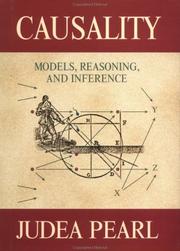
by Judea Pearl
“Deep learning performs association — the first tier of Judea Pearl's causal hierarchy. It does not perform intervention or counterfactual reasoning, which require internal simulation models.”
More from a16z Podcast
We summarize every new episode. Want them in your inbox?
World Models, Robotics, and the Future of 3D AI
Why Companies Are Becoming a Series of Loops | Anish Acharya on Lenny’s Podcast
What It Takes to Build a Startup | Andrew Chen & Matt Perault
How AI Is Rewriting the Power Law of Venture Capital
Who Grades the AI Models? | Ben Horowitz & Rayan Krishnan
Similar Episodes
Related episodes from other podcasts

Huberman Lab
Jun 8
Eating for Better Sleep & Foods that Improve Metabolic Health | Dr. Marie-Pierre St-Onge

The TWIML AI Podcast
Jul 27
Why Models Are AI’s Next Training Dataset with Damian Borth - #772

Hidden Brain
Jun 29
Waking Up Your Spiritual Brain: Part 1

Up First (NPR)
May 31
How 5 minutes of movement can change your life

10% Happier with Dan Harris
May 6
The Easy, Simple Fix for Exhaustion, Foggy Brain, and Back Pain | Manoush Zomorodi
Explore Related Topics
This podcast is featured in Best Business Podcasts (2026) — ranked and reviewed with AI summaries.
Read this week's Startups & Product Podcast Insights — cross-podcast analysis updated weekly.
You're clearly into a16z Podcast.
Every Monday, we deliver AI summaries of the latest episodes from a16z Podcast and 192+ other podcasts. Free for one show.
Start My Monday DigestNo credit card · Unsubscribe anytime