AI Startups vs. Big Chatbots — With Olivia Moore
Episode
56 min
Read time
2 min
Topics
Productivity, Health & Wellness, Remote Work
AI-Generated Summary
Key Takeaways
- ✓Startup defensibility via verticalization: AI startups competing horizontally against ChatGPT or Gemini face the highest displacement risk. The safer strategy is building deeply vertical, opinionated products with painful legacy integrations baked in. Labs are compute-constrained and won't chase every niche — a focused startup with the same model access can execute faster and more precisely for specific workflows.
- ✓Chatbot divergence creates market gaps: ChatGPT (900M users, ad-supported) targets mass-market consumer categories like fashion and retail. Claude targets premium finance, science, and medicine datasets. Gemini spikes around new model drops with creative tools. These diverging strategies leave 89% non-overlapping app ecosystems, signaling that each platform is optimizing for distinct user segments rather than competing for identical audiences.
- ✓Memory as a 100x product differentiator: Apps that build persistent, contextual memory can deliver experiences no prior software matched. ChatGPT's health product already stores medical records and autonomously routes approved diet plans to Instacart. The next unlock is cross-app authentication — login with ChatGPT — letting any new product inherit a user's full context and preferences without onboarding friction.
- ✓Agentic architecture is the 2026 inflection point: OpenClaw-style async, long-running autonomous agents represent the most significant architectural shift coming. Half of founders Moore meets cite OpenClaw as inspiration. Platforms like Pulsia already combine Claude Code for product-building with agentic layers for marketing and ad spend, reaching $3M ARR in under two weeks — signaling a new founder archetype who prompts rather than codes.
- ✓AI adoption gap compounds competitively: Power users of AI outperform average users by 8-9x in utilization. A Wharton study of 800 enterprise leaders found heavy AI adopters planned to hire more humans to handle increased demand. Companies slow to adopt face intensifying global competition as productivity gaps widen — early adoption mirrors the early-internet advantage that separated category winners from laggards.
What It Covers
Andreessen Horowitz partner Olivia Moore analyzes whether AI startups can compete with ChatGPT, Claude, and Gemini as the major labs expand capabilities. She examines the top 100 generative AI consumer apps, diverging chatbot strategies, OpenClaw's agentic architecture, and where vertical-focused startups still find defensible market positions.
Key Questions Answered
- •Startup defensibility via verticalization: AI startups competing horizontally against ChatGPT or Gemini face the highest displacement risk. The safer strategy is building deeply vertical, opinionated products with painful legacy integrations baked in. Labs are compute-constrained and won't chase every niche — a focused startup with the same model access can execute faster and more precisely for specific workflows.
- •Chatbot divergence creates market gaps: ChatGPT (900M users, ad-supported) targets mass-market consumer categories like fashion and retail. Claude targets premium finance, science, and medicine datasets. Gemini spikes around new model drops with creative tools. These diverging strategies leave 89% non-overlapping app ecosystems, signaling that each platform is optimizing for distinct user segments rather than competing for identical audiences.
- •Memory as a 100x product differentiator: Apps that build persistent, contextual memory can deliver experiences no prior software matched. ChatGPT's health product already stores medical records and autonomously routes approved diet plans to Instacart. The next unlock is cross-app authentication — login with ChatGPT — letting any new product inherit a user's full context and preferences without onboarding friction.
- •Agentic architecture is the 2026 inflection point: OpenClaw-style async, long-running autonomous agents represent the most significant architectural shift coming. Half of founders Moore meets cite OpenClaw as inspiration. Platforms like Pulsia already combine Claude Code for product-building with agentic layers for marketing and ad spend, reaching $3M ARR in under two weeks — signaling a new founder archetype who prompts rather than codes.
- •AI adoption gap compounds competitively: Power users of AI outperform average users by 8-9x in utilization. A Wharton study of 800 enterprise leaders found heavy AI adopters planned to hire more humans to handle increased demand. Companies slow to adopt face intensifying global competition as productivity gaps widen — early adoption mirrors the early-internet advantage that separated category winners from laggards.
Notable Moment
Moore ran DSM-5 mental health diagnostics on major LLMs as an experiment. Claude scored mild autism, which many users had theorized. Grok's child-facing avatar scored psychosis and bipolar disorder — likely because it interpreted a mood assessment as a happiness quiz, calling it the "happy mood test."
Episode Transcript
I think that every tech company is gonna be an AI company, and every AI company is gonna be an agent company. And so the sooner that you, as kind of an employee or a business owner, can kind of get on board and learn how to use that to your advantage, probably the better. We haven't seen anyone crack AI social yet. I think it's going to be really tricky. I would say at the highest level, kind of how we view AI is not just as a market, but as the reinvention of the whole technology industry, which means that similar to how we have many tech companies that are worth hundreds of billions, trillions of dollars now, I think that's gonna be the case for AI where, in my opinion at least, it's not winner take all. ChatGPT has 900,000,000 users. It's still growing. And yet, 57% of American voters say the risks of AI outweigh the benefits. So can anyone compete with the big AI chat box? The labs have the compute, the talent, and the distribution. They keep shipping features that wipe out entire startup categories overnight. Image generation used to be a crowded market. Now, ChatGPT and Gemini handle most of it. But the labs are constrained. Every hour spent on creative models is an hour not spent on coding agents or AGI, and the gaps between platforms are widening. ChatGPT is going mass market with with ads. Claude is building for finance and science. Gemini spikes when a new model drops. In this conversation, originally aired on Big Technology podcast, Olivia Moore, partner at a sixteen z, talks with Alex Kantrowitz about where AI startups can still win. Welcome to Big Technology Podcast, a show for cool headed and nuanced conversation of the tech world and beyond. We have a great show for you today. We're gonna talk about whether there is room for startups and maybe other companies in the economy to compete with the AI chatbots as they continue to grow and get more capable. And we're gonna do it with the perfect guest. Olivia Moore is here. She is an AI partner at the VC firm Andreessen Horowitz. Olivia, welcome to the show. Thanks for having me. Thanks for being here. Let's just begin with this because it's topical. Yeah. You are investing in AI applications Yeah. At Andreessen Horowitz. And, typically, they need a lot of people to use them to pay off. Yes. But the mood right now in The United States is very negative towards AI. Actually, surprisingly negative. Yes. This is from a new NBC News poll out this week. 57 of voters thinks the risks of AI outweigh the benefits. And then if you look at the total positive versus total negative sentiment of AI in in general. It ranks so low. It is a negative 20, in terms of the negatives, are, 20 percentage points lower, Sorry. 20 points lower than the positives. They're …
Get the full transcript (10,787 words) + summary by email — free
One-time email with the complete transcript and AI summary of this episode. No account needed.
One email, no spam. We’ll also show you what SignalCast does.

You just read a 3-minute summary of a 53-minute episode.
Get a16z Podcast summarized like this every Monday — plus up to 2 more podcasts, free.
Pick Your Podcasts — FreeKeep Reading
More from a16z Podcast
World Models, Robotics, and the Future of 3D AI
Sep 13 · 23 min

Equity
What a16z is actually funding (and what it's ignoring) when it comes to AI infra
Feb 4
More from a16z Podcast
Why Companies Are Becoming a Series of Loops | Anish Acharya on Lenny’s Podcast
Sep 12 · 78 min

The Full Ratchet
504. American Dynamism: The Future of U.S. Industrials, Backing Companies with Major Production Components, Manufacturing Sovereignty, and Why Space Dominance is Critical (David Ulevitch)
Mar 16
Books, tools, and gear mentioned in this episode
SignalCast may earn commission on purchases via these links. As an Amazon Associate, SignalCast earns from qualifying purchases.
Books
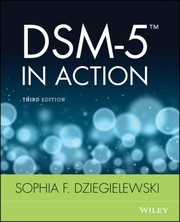
“Moore ran DSM-5 mental health diagnostics on major LLMs as an experiment.”
Tools
by Anthropic
“Platforms like Pulsia already combine Claude Code for product-building with agentic layers for marketing and ad spend, reaching $3M ARR in under two weeks.”
“ChatGPT's health product already stores medical records and autonomously routes approved diet plans to Instacart.”
“Platforms like Pulsia already combine Claude Code for product-building with agentic layers for marketing and ad spend, reaching $3M ARR in under two weeks.”
by Anthropic
“Andreessen Horowitz partner Olivia Moore analyzes whether AI startups can compete with ChatGPT, Claude, and Gemini as the major labs expand capabilities.”
by Google
“Andreessen Horowitz partner Olivia Moore analyzes whether AI startups can compete with ChatGPT, Claude, and Gemini as the major labs expand capabilities.”
“She examines the top 100 generative AI consumer apps, diverging chatbot strategies, OpenClaw's agentic architecture, and where vertical-focused startups still find defensible market positions.”
by OpenAI
“Andreessen Horowitz partner Olivia Moore analyzes whether AI startups can compete with ChatGPT, Claude, and Gemini as the major labs expand capabilities.”
“Grok's child-facing avatar scored psychosis and bipolar disorder — likely because it interpreted a mood assessment as a happiness quiz, calling it the 'happy mood test.'”
More from a16z Podcast
We summarize every new episode. Want them in your inbox?
World Models, Robotics, and the Future of 3D AI
Why Companies Are Becoming a Series of Loops | Anish Acharya on Lenny’s Podcast
What It Takes to Build a Startup | Andrew Chen & Matt Perault
How AI Is Rewriting the Power Law of Venture Capital
Who Grades the AI Models? | Ben Horowitz & Rayan Krishnan
Similar Episodes
Related episodes from other podcasts

Equity
Feb 4
What a16z is actually funding (and what it's ignoring) when it comes to AI infra

The Full Ratchet
Mar 16
504. American Dynamism: The Future of U.S. Industrials, Backing Companies with Major Production Components, Manufacturing Sovereignty, and Why Space Dominance is Critical (David Ulevitch)

Moonshots with Peter Diamandis
Jan 2
AI Investor Panel: How Will We Fund the Global AI Revolution? | EP 219

Odd Lots
Dec 25
Scott Kupor's New Plan to Bring Tech Workers Into the Federal Government

20VC (20 Minute VC)
Aug 22
20VC: The AI Bubble Will Burst: Half the Neoclouds Will Die | China: Should We Ban Chip Exports & Be Fearful of Chinese Open-Source | Mag7: Who Dies and Who Thrives: Why Meta is Meh and Microsoft is Mega
Explore Related Topics
This podcast is featured in Best Business Podcasts (2026) — ranked and reviewed with AI summaries.
Read this week's Health & Longevity Podcast Insights — cross-podcast analysis updated weekly.
You're clearly into a16z Podcast.
Every Monday, we deliver AI summaries of the latest episodes from a16z Podcast and 192+ other podcasts. Free for one show.
Start My Monday DigestNo credit card · Unsubscribe anytime