20VC: Tim Ferriss: Why I Walked Away From Angel Investing After Uber | How I Accidentally Lost $150 Million | Money Fixed My Problems—Then Made Me Miserable
Episode
91 min
Read time
2 min
Topics
Productivity, Personal Finance, Relationships
AI-Generated Summary
Key Takeaways
- ✓Identity Diversification Strategy: Maintain two to three serious pursuits simultaneously to prevent self-worth from being tied to one variable. When Ferriss trained in jiu-jitsu while writing The Four Hour Workweek, progress in one area provided psychological safety when the other struggled, creating resilience against external factors beyond his control.
- ✓Angel Investing Allocation Mistake: Ferriss allocated $50,000 of his $120,000 two-year angel budget to one early investment that went to zero, forcing him to extend runway through advising. This led to advising StumbleUpon, which failed but connected him to Garrett Camp, who later brought him into Uber as one of the first three advisors.
- ✓Public Market Exit Timing: Ferriss sold Shopify immediately after lockup expired, missing $150 million in gains, but considers it the right decision with available information at the time. He later bought back Shopify at $200 per share during COVID's market crash, reclaiming significant value by recognizing his lack of public markets expertise.
- ✓Podcast Growth Without Video: Ferriss deliberately avoided full video production and YouTube algorithm optimization to maintain privacy and prevent becoming a caricature of extreme behaviors. He focused on 1,000 true fans strategy, targeting specific influential groups like tech-savvy males aged 20-35 in San Francisco first, allowing natural ripple effects to reach millions.
- ✓Money's Psychological Amplification: Money functions as a nonspecific amplifier like alcohol or psychedelics, magnifying existing traits whether positive or negative. Ferriss observed billionaire friends experiencing amplified insecurities and damaged emotional intelligence, with transient depression of chasing wealth differing fundamentally from the hopelessness of achieving financial goals without solving underlying problems.
What It Covers
Tim Ferriss discusses why he stopped angel investing in 2015 after backing Uber, Shopify, and Facebook, losing $150 million by selling Shopify early, how money amplified his problems rather than solving them, and his evolution from productivity obsession to prioritizing relationships and play.
Key Questions Answered
- •Identity Diversification Strategy: Maintain two to three serious pursuits simultaneously to prevent self-worth from being tied to one variable. When Ferriss trained in jiu-jitsu while writing The Four Hour Workweek, progress in one area provided psychological safety when the other struggled, creating resilience against external factors beyond his control.
- •Angel Investing Allocation Mistake: Ferriss allocated $50,000 of his $120,000 two-year angel budget to one early investment that went to zero, forcing him to extend runway through advising. This led to advising StumbleUpon, which failed but connected him to Garrett Camp, who later brought him into Uber as one of the first three advisors.
- •Public Market Exit Timing: Ferriss sold Shopify immediately after lockup expired, missing $150 million in gains, but considers it the right decision with available information at the time. He later bought back Shopify at $200 per share during COVID's market crash, reclaiming significant value by recognizing his lack of public markets expertise.
- •Podcast Growth Without Video: Ferriss deliberately avoided full video production and YouTube algorithm optimization to maintain privacy and prevent becoming a caricature of extreme behaviors. He focused on 1,000 true fans strategy, targeting specific influential groups like tech-savvy males aged 20-35 in San Francisco first, allowing natural ripple effects to reach millions.
- •Money's Psychological Amplification: Money functions as a nonspecific amplifier like alcohol or psychedelics, magnifying existing traits whether positive or negative. Ferriss observed billionaire friends experiencing amplified insecurities and damaged emotional intelligence, with transient depression of chasing wealth differing fundamentally from the hopelessness of achieving financial goals without solving underlying problems.
Notable Moment
Ferriss reveals he stopped all angel investing in 2015 when valuations became bloated and venture capitalists moved downstream into angel territory. He found himself competing against Tiger Global and other large funds with unfavorable terms, dealing with entitled entrepreneurs he disliked, recognizing he had become easily replaceable as just capital rather than unique value.
Episode Transcript
This is 20 v c with me, Harry Stebbings, and this episode was about ten years in the making. No one actually knows this, but I started podcasting because I fell in love with Tim Ferriss's podcast ten years ago. I I remember listening to it for the first time and I actually used his episode with Ed Cook to study for exams at school before I dropped out. He has been a idol inspiration, mentor to me for many years. I'm so thrilled that we are able to do this show today. It's one of the most thoughtful and reflective that we've done. I'd love your feedback. Let me know what you think. Harry@20vc.com. But before we dive into the show today, Secureframe empowers businesses to build trust with customers by simplifying information security and compliance through AI and automation. Thousands of fast growing businesses, including Nasdaq, AngelList, Doodle, and Coda trust Secureframe to expedite their compliance journey for global security and privacy standards, such as SOC two and ISO 27,001, CMMC, NIST standards, and more. Backed by top tier investors and corporations like Google and Kleiner Perkins, the company is among Forbes' list of the top a 100 start up employers for 2024, g two's best software awards for highest satisfaction products, and a recipient of the 2024 cybersecurity excellence awards, something I definitely never got in school myself. Learn more today at secure frame dot com. Once Secureframe locked it all down, HMC, they hand you the keys to scale it up. Harvard management company is constantly seeking out the next generation of great investors and entrepreneurs. HMC has managed Harvard University's endowment for nearly fifty years and was one of the first institutional investors in venture capital. Their experience in long term investment is institutional investors in venture capital. Their experience and long term investment horizon makes them ideal partners to get world changing ideas on a path to viability and success. They work as a true partner, providing insightful perspectives to help managers succeed. I personally have had the pleasure of working with the HMC team and can say that they are truly exceptional partners and savvy investors. So whether you're launching your first fund or your fifth, HMC welcomes the opportunity to partner with both developing and established managers. Have an idea you wanna share with the team? Just send it over to venture@hmc.harvard.edu. Okay. HMC fuels the growth. Acuity scheduling ensures our time stays on track. This show is brought to you by Acuity scheduling, the flexible scheduling software that helps you focus on what matters most, growing your business. With Acuity, you can manage your calendar, you can accept secure payments, offer clients a seamless booking experience that reflects your brand. I've been using my complimentary subscription, and it's been a game changer for staying organized and saving time. I especially love online booking. Clients can book, reschedule, or cancel anytime, and the booking page looks fully branded with my logo and …
Get the full transcript (16,815 words) + summary by email — free
One-time email with the complete transcript and AI summary of this episode. No account needed.
One email, no spam. We’ll also show you what SignalCast does.

You just read a 3-minute summary of a 88-minute episode.
Get 20VC (20 Minute VC) summarized like this every Monday — plus up to 2 more podcasts, free.
Pick Your Podcasts — FreeKeep Reading
More from 20VC (20 Minute VC)
20VC: Trillion or Bust: The New VC Game | Coreweave Sell-Off Creates Panic | Town at $1B, Anduril at $90B: Revenue Multiples Out of Control | General Atlantic Eyes IPO & Modal Raises $750M at $15.75B
Oct 22 · 60 min

Modern Wisdom
Forgotten War Heroes Who Changed The World - The Fat Electrician - #1165
Oct 19
More from 20VC (20 Minute VC)
20VC: You Need $1BN To Do Seed Today: The Untold Truths of Venture | Who Wins and Who Loses in the Next Decade of VC | Why Margin and Price Matter Less in a World of AI with Sameer Dholakia, Bessemer
Oct 19 · 75 min

The Joe Rogan Experience
#2542 - Steve Hilton
Aug 19
Books, tools, and gear mentioned in this episode
SignalCast may earn commission on purchases via these links. As an Amazon Associate, SignalCast earns from qualifying purchases.
Books
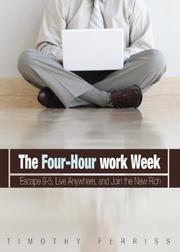 The Four Hour WorkweekBy guest
by Tim Ferriss
“When Ferriss trained in jiu-jitsu while writing The Four Hour Workweek, progress in one area provided psychological safety when the other struggled”
Tools
“💼 SPONSORS [Secureframe]”
“💼 SPONSORS [Acuity Scheduling]”
company
“backing Uber, Shopify, and Facebook, losing $150 million by selling Shopify early”
“He found himself competing against Tiger Global and other large funds with unfavorable terms”
“Tim Ferriss discusses why he stopped angel investing in 2015 after backing Uber, Shopify, and Facebook”
“This led to advising StumbleUpon, which failed but connected him to Garrett Camp”
“Tim Ferriss discusses why he stopped angel investing in 2015 after backing Uber, Shopify, and Facebook”
More from 20VC (20 Minute VC)
We summarize every new episode. Want them in your inbox?
20VC: Trillion or Bust: The New VC Game | Coreweave Sell-Off Creates Panic | Town at $1B, Anduril at $90B: Revenue Multiples Out of Control | General Atlantic Eyes IPO & Modal Raises $750M at $15.75B
20VC: You Need $1BN To Do Seed Today: The Untold Truths of Venture | Who Wins and Who Loses in the Next Decade of VC | Why Margin and Price Matter Less in a World of AI with Sameer Dholakia, Bessemer
20VC: Horizontal vs Vertical Agents: Who Wins | Model Routing: Commodity or Increasing in Value | The Future of the Inference Market | Why Founders Should Take Discounts for Tier 1 Firms with Harrison Chase, LangChain
20VC: The Pro-Rata Battle: Valar Atomics Sues Day One Ventures | Meta Returns to the AI Frontier With Muse Wonder | NVIDIA Eyes $30B Reflection Deal & Jev Raises $870M at a $7.5B Valuation
20VC: Atlassian CEO on Why Agents Won't Replace Interfaces | Why Enterprises Won't Trust Chinese Models | Why The Jury Is Still Out On The Benefits of Specialised Models with Mike Cannon-Brookes
Similar Episodes
Related episodes from other podcasts

Modern Wisdom
Oct 19
Forgotten War Heroes Who Changed The World - The Fat Electrician - #1165

The Joe Rogan Experience
Aug 19
#2542 - Steve Hilton

The Tim Ferriss Show
Jul 22
#876: Dr. Andrew Huberman — Peptides, Performance, and Protocols
The Tim Ferriss Show
Jul 7
#874: Guy Oseary — The Legendary Hollywood Power Broker on 5-Minute Decisions, 36 Years of Managing Madonna, 26 IPOs, and Spotting Magic First

This Week in Startups
May 5
Naval's GP, Ankur Nagpal, Breaks Down The Viral “USVC” Fund | E2284
Explore Related Topics
This podcast is featured in Best Investing Podcasts (2026) — ranked and reviewed with AI summaries.
You're clearly into 20VC (20 Minute VC).
Every Monday, we deliver AI summaries of the latest episodes from 20VC (20 Minute VC) and 192+ other podcasts. Free for one show.
Start My Monday DigestNo credit card · Unsubscribe anytime