How To Read People, Calm Tension, Build Trust, and Ask For What You're Worth | John Richardson
Episode
61 min
Read time
3 min
Topics
Productivity, Relationships, Fundraising & VC
AI-Generated Summary
Key Takeaways
- ✓Reciprocity as Opening Move: FBI hostage negotiators use a technique called "give them a sandwich"—offering something small and specific before making any request. The psychological principle, documented by Robert Cialdini, is that recipients feel obligated to reciprocate but are poor at calibrating how much they owe, meaning a low-cost gesture (coffee before a meeting, snacks from a trip) routinely generates disproportionately large returns in goodwill and concessions.
- ✓Emotion Labeling to Restore Rational Thinking: When someone becomes emotionally activated during negotiation, anger redirects blood and oxygen away from the prefrontal cortex, measurably reducing cognitive function by roughly 20 IQ points. FBI negotiators counter this by naming the emotion aloud—"it seems like you're really angry about this"—which activates the superior frontal gyrus, rebooting rational thinking. The phrase "seems like" is deliberate; claiming certainty about another's feelings triggers defensiveness.
- ✓Anchoring Advantage: Kahneman and Tversky's research shows the first number introduced in any distributive negotiation exerts outsized influence on the final outcome, as people adjust insufficiently from that starting point. Richardson recommends going first when both parties have comparable market knowledge, since the anchoring advantage outweighs the risk of revealing your position. Only defer to the other side when you lack sufficient information about realistic market value.
- ✓Know Your Alternative Before Sitting Down: Before any negotiation, identify your Best Alternative to a Negotiated Agreement (BATNA)—what you will actually do if no deal is reached. Without this, there is no rational basis for accepting or rejecting an offer. Richardson uses the Iran nuclear talks as a case study in BATNA failure: the U.S. lacked a viable fallback plan, which undermined its leverage when Iran declined to agree.
- ✓Lying Is Tactically Unsound: Richardson avoids the moral argument against lying in negotiation and focuses on strategy: people detect deception more often than liars realize, but rarely say so, causing deceivers to overestimate their success rate. Maintaining lies also consumes cognitive bandwidth that could be used more productively. Even FBI hostage negotiators avoid lying to anyone they expect to encounter again, reserving deception only for life-threatening situations with no future relationship at stake.
What It Covers
Harvard Law and MIT negotiation professor John Richardson breaks down negotiation as a daily performance skill—not just a business tool—covering reciprocity tactics drawn from FBI hostage protocols, emotion regulation under pressure, anchoring strategy, how to identify both sides' interests, and why lying consistently undermines negotiating outcomes more than it helps.
Key Questions Answered
- •Reciprocity as Opening Move: FBI hostage negotiators use a technique called "give them a sandwich"—offering something small and specific before making any request. The psychological principle, documented by Robert Cialdini, is that recipients feel obligated to reciprocate but are poor at calibrating how much they owe, meaning a low-cost gesture (coffee before a meeting, snacks from a trip) routinely generates disproportionately large returns in goodwill and concessions.
- •Emotion Labeling to Restore Rational Thinking: When someone becomes emotionally activated during negotiation, anger redirects blood and oxygen away from the prefrontal cortex, measurably reducing cognitive function by roughly 20 IQ points. FBI negotiators counter this by naming the emotion aloud—"it seems like you're really angry about this"—which activates the superior frontal gyrus, rebooting rational thinking. The phrase "seems like" is deliberate; claiming certainty about another's feelings triggers defensiveness.
- •Anchoring Advantage: Kahneman and Tversky's research shows the first number introduced in any distributive negotiation exerts outsized influence on the final outcome, as people adjust insufficiently from that starting point. Richardson recommends going first when both parties have comparable market knowledge, since the anchoring advantage outweighs the risk of revealing your position. Only defer to the other side when you lack sufficient information about realistic market value.
- •Know Your Alternative Before Sitting Down: Before any negotiation, identify your Best Alternative to a Negotiated Agreement (BATNA)—what you will actually do if no deal is reached. Without this, there is no rational basis for accepting or rejecting an offer. Richardson uses the Iran nuclear talks as a case study in BATNA failure: the U.S. lacked a viable fallback plan, which undermined its leverage when Iran declined to agree.
- •Lying Is Tactically Unsound: Richardson avoids the moral argument against lying in negotiation and focuses on strategy: people detect deception more often than liars realize, but rarely say so, causing deceivers to overestimate their success rate. Maintaining lies also consumes cognitive bandwidth that could be used more productively. Even FBI hostage negotiators avoid lying to anyone they expect to encounter again, reserving deception only for life-threatening situations with no future relationship at stake.
- •Negotiating for Others Unlocks Toughness: Research by Babcock and Laschever found women express more discomfort with distributive negotiation and ask less frequently than men. Richardson's classroom observation suggests reframing the ask as advocacy—negotiating on behalf of family, dependents, or a future self—reduces the social discomfort that suppresses assertiveness. He also found that providing external benchmarks (Kelley Blue Book, industry salary data) as justification for requests significantly improved outcomes for female subjects in controlled experiments.
Notable Moment
Richardson recounts how NYPD hostage negotiator Dominic Messino opened every lecture by asking the value of a human life—audiences answered "infinite"—then revealed that in practice, three cigarettes typically secured a hostage's release. The story illustrates how accounting insensitivity makes people wildly miscalibrate what they owe in exchange for a favor.

You just read a 3-minute summary of a 58-minute episode.
Get 10% Happier with Dan Harris summarized like this every Monday — plus up to 2 more podcasts, free.
Pick Your Podcasts — FreeKeep Reading
More from 10% Happier with Dan Harris
That Feeling of "Always-Behind and Never-Enough"—Here's the Antidote | Ellen Hendriksen
Jul 24 · 65 min

The School of Greatness
Why You're Afraid to Share (And What It's Costing You) | Leslie John
Feb 23
More from 10% Happier with Dan Harris
Secrets From the Therapist's Couch: How Boundaries Actually Work, How To Come To Peace With Your Parents, and Why It's Not Too Late To Change | Lori Gottlieb
Jul 22 · 75 min

Invest Like the Best with Patrick O'Shaughnessy
John Kim - How to Raise a Few Billion Dollars - [Invest Like the Best, EP.482]
Jul 14
Books, tools, and gear mentioned in this episode
SignalCast may earn commission on purchases via these links. As an Amazon Associate, SignalCast earns from qualifying purchases.
Books
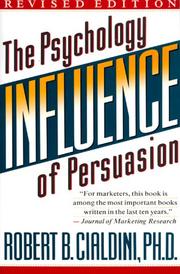
by Robert Cialdini
“The psychological principle, documented by Robert Cialdini, is that recipients feel obligated to reciprocate”

by Daniel Kahneman
“Kahneman and Tversky's research shows the first number introduced in any distributive negotiation exerts outsized influence on the final outcome”
Tools
“providing external benchmarks (Kelley Blue Book, industry salary data) as justification for requests significantly improved outcomes for female subjects in controlled experiments”
More from 10% Happier with Dan Harris
We summarize every new episode. Want them in your inbox?
That Feeling of "Always-Behind and Never-Enough"—Here's the Antidote | Ellen Hendriksen
Secrets From the Therapist's Couch: How Boundaries Actually Work, How To Come To Peace With Your Parents, and Why It's Not Too Late To Change | Lori Gottlieb
Joyful Anyway: Surviving the Sh*t Show of Regular Life | Kate Bowler
Why We Crave Gurus: A Skeptic's Reckoning With Belief, Bitcoin, and Burning Man | Vikram Gandhi
Anxiety, Overthinking, and Overwhelm: Buddhist Hacks For Changing Your Mind | Joseph Goldstein
Similar Episodes
Related episodes from other podcasts

The School of Greatness
Feb 23
Why You're Afraid to Share (And What It's Costing You) | Leslie John

Invest Like the Best with Patrick O'Shaughnessy
Jul 14
John Kim - How to Raise a Few Billion Dollars - [Invest Like the Best, EP.482]

The Diary of a CEO
Jun 15
Creatine Expert: Creatine Is The Secret To Weight Loss

Huberman Lab
Jun 11
Essentials: Sleep Toolkit for Optimizing Sleep & Sleep-Wake Timing
The School of Greatness
May 13
The Real Reason You're Broke (It Has Nothing to Do With Lattes) | Mrs. Dow Jones
Explore Related Topics
This podcast is featured in Best Health Podcasts (2026) — ranked and reviewed with AI summaries.
You're clearly into 10% Happier with Dan Harris.
Every Monday, we deliver AI summaries of the latest episodes from 10% Happier with Dan Harris and 192+ other podcasts. Free for one show.
Start My Monday DigestNo credit card · Unsubscribe anytime