How To Handle the Feeling of Never-Enough, Quiet the Comparing Mind, and Reduce Financial Anxiety | Morgan Housel
Episode
71 min
Read time
3 min
Topics
Personal Finance, Investing, Leadership
AI-Generated Summary
Key Takeaways
- ✓The Wealth-Contentment Formula: Calculate financial satisfaction as what you have minus what you want. Growing income without actively managing expectations guarantees perpetual dissatisfaction. Research shows people consistently identify their contentment threshold at roughly 2x their current net worth, meaning the goalpost moves automatically unless you treat expectation management with the same rigor as income growth.
- ✓Status Purchases Deliver No Audience: A Cornell-style study placed people in ugly sweaters at crowded parties. Wearers estimated 80% of attendees noticed them; in reality, almost nobody did. Strangers bypass the owner entirely and imagine themselves possessing the item. This means spending on visible status signals produces near-zero social return, making independence-building a higher-yield use of the same dollars.
- ✓Scarcity Engineering Maximizes Pleasure: A wealthy acquaintance with a private chef eating Michelin-quality meals three times daily derives negligible pleasure from each meal. Occasional luxury produces disproportionate enjoyment precisely because contrast exists. Deliberately maintaining a simple baseline — modest regular spending — means infrequent upgrades generate the dopamine hit that constant luxury permanently eliminates through hedonic adaptation.
- ✓New Happiness Research Reframes the Income Question: Recent studies resolve decades of conflicting data: additional income amplifies whoever you already are. Chronically unhappy people gain little from higher earnings; already-content people gain substantially. This means psychological baseline, not income level, determines whether money improves life — making contentment practices a prerequisite investment before financial accumulation produces meaningful well-being returns.
- ✓Regret Minimization as a Financial Framework: Daniel Kahneman's framework, later applied by Jeff Bezos when founding Amazon, requires calibrating which present decisions will generate future regret. Jerry Seinfeld's formulation is useful: self-control equals empathy toward your future self. Practically, most regrettable financial decisions feel pleasurable in the moment because they front-load future satisfaction into the present, depleting it from later years.
What It Covers
Morgan Housel, author of *The Psychology of Money* and new book *The Art of Spending Money*, joins Dan Harris to examine why money produces anxiety at every income level, how envy and status-chasing undermine well-being, and how reframing money as an independence tool rather than a scorecard produces measurable gains in contentment and life satisfaction.
Key Questions Answered
- •The Wealth-Contentment Formula: Calculate financial satisfaction as what you have minus what you want. Growing income without actively managing expectations guarantees perpetual dissatisfaction. Research shows people consistently identify their contentment threshold at roughly 2x their current net worth, meaning the goalpost moves automatically unless you treat expectation management with the same rigor as income growth.
- •Status Purchases Deliver No Audience: A Cornell-style study placed people in ugly sweaters at crowded parties. Wearers estimated 80% of attendees noticed them; in reality, almost nobody did. Strangers bypass the owner entirely and imagine themselves possessing the item. This means spending on visible status signals produces near-zero social return, making independence-building a higher-yield use of the same dollars.
- •Scarcity Engineering Maximizes Pleasure: A wealthy acquaintance with a private chef eating Michelin-quality meals three times daily derives negligible pleasure from each meal. Occasional luxury produces disproportionate enjoyment precisely because contrast exists. Deliberately maintaining a simple baseline — modest regular spending — means infrequent upgrades generate the dopamine hit that constant luxury permanently eliminates through hedonic adaptation.
- •New Happiness Research Reframes the Income Question: Recent studies resolve decades of conflicting data: additional income amplifies whoever you already are. Chronically unhappy people gain little from higher earnings; already-content people gain substantially. This means psychological baseline, not income level, determines whether money improves life — making contentment practices a prerequisite investment before financial accumulation produces meaningful well-being returns.
- •Regret Minimization as a Financial Framework: Daniel Kahneman's framework, later applied by Jeff Bezos when founding Amazon, requires calibrating which present decisions will generate future regret. Jerry Seinfeld's formulation is useful: self-control equals empathy toward your future self. Practically, most regrettable financial decisions feel pleasurable in the moment because they front-load future satisfaction into the present, depleting it from later years.
- •Check Bank Accounts Daily, Especially When Young: Most poor financial outcomes stem from lack of awareness rather than lack of intelligence or willpower. The majority of people cannot accurately state their monthly income, monthly spending, or net worth. A daily ten-second bank account review builds the financial cognition equivalent of calorie tracking — the baseline awareness that makes intentional decision-making possible before behavioral change can occur.
Notable Moment
Housel recounts how Kevin Costner repeatedly refused to read a homeless friend's screenplay, eventually relenting out of frustration. That script turned out to be *Dances with Wolves*. The story anchors his argument that talent is distributed across all income levels, and conflating net worth with human worth causes people to systematically exclude valuable relationships.
Episode Transcript
This is the 10% Happier podcast. I'm Dan Harris. Hey, hey, everybody. How we doing? We are coming back today to a subject that I personally find inexhaustibly interesting and that I will never want to stop talking about, or at least I don't think I will. And that subject is money anxiety. Money is just such a powerful source of suffering and neuroses in my life and in so many of our lives. And so today, I'm gonna talk to one of the smartest people I know on this subject about how to use money in ways that can actually boost and bolster your happiness instead of sapping your well-being. Just to say, and you're gonna hear me address this right at the top of the interview, this is not just a conversation for people who have a lot of money. This is for everyone. We all have to interact with money unless we're Buddhist monks or something like that. And so how can we do this with a level of sanity? And even, and this is the tantalizing proposition my guest holds out, even interact with money as a neutral tool that can actually make us happier. Said guest is Morgan Housel. This is, Morgan Housel's second appearance on the show. You may have heard of him. He's, the author of the huge New York Times best selling book, Psychology of Money. He's now back with a new book called The Art of Spending Money. In this conversation, we talk about what our seemingly irrational spending habits really tell us, how to manage your money ambition with some degree of sanity, how to use scarcity to your advantage, a useful equation for finding contentment, the key defense against envy, how to minimize future regret, why young people should check their bank accounts more often, how to talk to your children about money, how to separate your self worth from your financial worth, and much more. I mentioned the word sanity. If you're interested in sanity, I've got a meditation app for you. It's called 10 with Dan Harris. You can sign up at danharris.com. There's a free fourteen day trial if you wanna check it out before you spend any money. I'm loving what we're doing over on the app. We are continuously adding new guided meditations from some of the greatest teachers in the world, including Joseph Goldstein and seven a. And on and on. We also do live video meditation and Q and A sessions, so you can get your questions answered, and you can get a sense of community, not only from meditating with other people, but right there in the app, there are opportunities to connect with me and my team and one another. So come check it out, danharris.com. Okay. Enough out of me. We'll get started with Morgan Housel right after this. Most people think their heart health is fine because their cholesterol looks normal, but critical markers like lipoprotein a rarely …
Get the full transcript (16,032 words) + summary by email — free
One-time email with the complete transcript and AI summary of this episode. No account needed.
One email, no spam. We’ll also show you what SignalCast does.

You just read a 3-minute summary of a 68-minute episode.
Get 10% Happier with Dan Harris summarized like this every Monday — plus up to 2 more podcasts, free.
Pick Your Podcasts — FreeKeep Reading
More from 10% Happier with Dan Harris
Terry Bradshaw On: Clinical Depression, Crying on the Field, and the Mother He Could Never Please
Oct 23 · 51 min

We Study Billionaires
TIP759: The Art of Spending Money w/ Morgan Housel
Oct 10
More from 10% Happier with Dan Harris
Live Without Regrets: Buddhist Strategies for Facing Aging, Illness, and Loss | Sister Dang Nghiem
Oct 21 · 51 min

Modern Wisdom
#1055 - Morgan Housel - Mastering the Art of Spending Money
Feb 5
Books, tools, and gear mentioned in this episode
SignalCast may earn commission on purchases via these links. As an Amazon Associate, SignalCast earns from qualifying purchases.
Books
 The Art of Spending MoneyBy guest
by Morgan Housel
“Morgan Housel, author of *The Psychology of Money* and new book *The Art of Spending Money*”
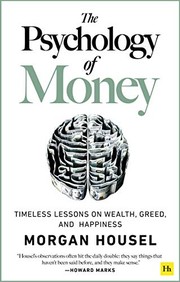 The Psychology of MoneyBy guest
by Morgan Housel
“Morgan Housel, author of *The Psychology of Money* and new book *The Art of Spending Money*”
More from 10% Happier with Dan Harris
We summarize every new episode. Want them in your inbox?
Terry Bradshaw On: Clinical Depression, Crying on the Field, and the Mother He Could Never Please
Live Without Regrets: Buddhist Strategies for Facing Aging, Illness, and Loss | Sister Dang Nghiem
A Stoic Mantra For Your Sh*ttiest Moments (And Other Ancient Wisdom That Holds Up) | Jonathan Haidt
How To Feel Safer In A Chaotic World | Dr. Raj Panjabi
Adam Grant Says You're Doing Relationships Wrong
Similar Episodes
Related episodes from other podcasts

We Study Billionaires
Oct 10
TIP759: The Art of Spending Money w/ Morgan Housel

Modern Wisdom
Feb 5
#1055 - Morgan Housel - Mastering the Art of Spending Money

My First Million
Jan 21
10 Years of Money Wisdom in 51 Minutes | Morgan Housel

The Meb Faber Show
Oct 6
Morgan Housel on The Illusion of Wealth and Happiness | #599

The Mel Robbins Podcast
Apr 13
The Best Money Advice You Will Ever Receive: 4 Rules From the Top Financial Minds In The World
Explore Related Topics
This podcast is featured in Best Health Podcasts (2026) — ranked and reviewed with AI summaries.
Read this week's Investing & Markets Podcast Insights — cross-podcast analysis updated weekly.
You're clearly into 10% Happier with Dan Harris.
Every Monday, we deliver AI summaries of the latest episodes from 10% Happier with Dan Harris and 192+ other podcasts. Free for one show.
Start My Monday DigestNo credit card · Unsubscribe anytime