AR

Andrew Ross Sorkin

Andrew Ross Sorkin is a renowned financial journalist, New York Times columnist, and author who has become one of the most respected voices in business reporting and financial analysis. As the founder and editor-at-large of DealBook at The New York Times, he has built a reputation for deep investigative reporting on complex financial systems, market dynamics, and economic history. His work explores critical intersections between finance, technology, and regulatory policy, with particular expertise in analyzing historical financial crises and their modern parallels, as demonstrated in his in-depth research on events like the 1929 stock market crash. Sorkin is also an accomplished interviewer and media personality, known for his ability to extract nuanced insights from business leaders and financial experts across high-profile platforms. His multifaceted approach to understanding economic trends has made him a sought-after commentator on the intricate world of finance and corporate strategy.

6episodes
6podcasts

Featured On 6 Podcasts

All Appearances

6 episodes

AI Summary

→ WHAT IT COVERS Following the Supreme Court's invalidation of Trump's tariffs under the International Emergency Economic Powers Act, White House correspondent Tyler Pager and colleagues examine the administration's chaotic 10%-then-15% tariff response, corporate refund battles involving billions of dollars, fractured international trade deals, and Trump's diminished but not eliminated tariff leverage globally. → KEY INSIGHTS - **Corporate refund risk:** Companies like Toyota ($8B in losses), Ford ($2B in 2025), and General Motors face a strategic dilemma when seeking tariff refunds: filing publicly signals confrontation with the administration, which has previously used regulatory powers against non-compliant firms. Legal proceedings could delay actual refund payments by months or years, making the calculus complex. - **Administration's Plan B tariff toolkit:** When IEEPA was struck down, the administration shifted to Section 301 (unfair trade practice investigations, previously used against China in Trump's first term), Section 232 (national security-based tariffs), and Section 122 (the current 15% flat rate). The 15% tariff expires in five months and requires Congressional approval to extend, which appears unlikely given approaching midterms. - **Deliberate design of tariff chaos:** The administration reportedly anticipated a potential court loss and structured tariffs knowing refunds would be difficult to recover. By forcing companies and countries into supply chain commitments and signed trade deals during the tariff period, the policy effectively functioned as a one-year corporate and consumer tax regardless of its ultimate legal fate. - **International deal fragility:** Countries that accepted trade concessions under the previous variable tariff structure — including Britain and Australia, previously at 10% — now face a flat 15% rate alongside nations like Vietnam and India that made no concessions. The EU has signaled potential pause on ratifying its deal, while countries risk retaliatory tariffs if they formally withdraw from existing agreements. - **China's strategic patience paid off:** China, the only major economy that refused a trade deal with the US, avoided locking in high tariff rates by slow-rolling negotiations. Now facing a lower flat rate rather than the threatened 125% tariff, China's approach offers a case study in negotiating leverage through delay. A Trump-Xi meeting in Beijing is expected in early April. → NOTABLE MOMENT One analyst described Trump's previous tariff authority as "lightning bolt powers" — a Zeus-like ability to strike any country with any rate on any given day. That unilateral flexibility, which underpinned both trade negotiations and broader foreign policy goals including peace deal leverage, is now constitutionally constrained for the first time in Trump's presidency. 💼 SPONSORS None detected 🏷️ US Tariff Policy, Supreme Court Trade Ruling, Global Trade Deals, Corporate Tariff Refunds, Trump Foreign Policy

AI Summary

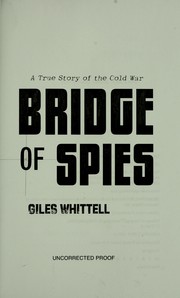
→ WHAT IT COVERS Financial journalist Andrew Ross Sorkin discusses his book on the 1929 stock market crash, revealing how human nature drives financial bubbles and busts. The conversation covers managing money anxiety, avoiding emotional investment decisions, protecting against financial ruin through debt management, and Sorkin's productivity systems including meditation, calendar blocking, and the mantra "would it help?" → KEY INSIGHTS - **Debt Management Protection:** The primary danger in financial downturns comes from borrowed money, not market volatility itself. People who leverage investments by borrowing ten dollars for every one dollar invested face catastrophic risk during crashes. Avoid taking on debt beyond serviceable monthly payments, maintain emergency savings covering six to twelve months of expenses, and never invest money needed within five to ten years in volatile markets. - **Anti-FOMO Investment Strategy:** Warren Buffett's approach demonstrates successful detachment from market trends by investing only in understood sectors, buying when markets drop ten percent rather than selling, and viewing declining stock prices as sales opportunities for long-term holdings. Index fund investing with consistent contributions over thirty to forty years historically outperforms active trading and eliminates emotional decision-making that destroys wealth during market swings. - **Anxiety Interruption Technique:** The question "would it help?" from the film Bridge of Spies serves as a mental circuit breaker during spiraling thoughts. When facing financial anxiety or repetitive worry loops, pause and ask whether continued rumination will change outcomes. This mindfulness practice distinguishes productive problem-solving from unproductive mental churning, allowing redirection of energy toward actionable solutions rather than paralytic fear about uncontrollable future events. - **Calendar Blocking Productivity:** Time-blocking every task on a calendar, including fifteen-minute phone calls and sleep schedules, prevents overestimation of daily capacity and eliminates procrastination. Set timers for writing sessions, schedule meetings shorter than requested, and physically block time for rest. This system sacrifices serendipity but dramatically increases output during high-demand periods, with intentional relationship investment cycles compensating for heads-down work phases. - **Transcendental Meditation Practice:** Twenty minutes of TM twice daily using a personal mantra creates a submerged mental state below everyday thinking. Regular practice develops the ability to reach this calm state within one to two minutes rather than five to ten, and the skill transfers to high-pressure moments like public speaking. Even inconsistent practice maintains benefits, with shallow meditation sessions still providing stress reduction and mental clarity throughout demanding workdays. → NOTABLE MOMENT Sorkin reveals his grandfather witnessed a suicide after the 1929 crash and never bought stocks again, while Harris shares his great-grandfather became a crook, lost the family fortune, and killed himself by putting his head in the oven. Both men recognize this generational trauma still influences their financial anxiety and risk aversion decades later. 💼 SPONSORS [{"name": "Quince", "url": "quince.com/happier"}, {"name": "Dell", "url": "dell.com/deals"}] 🏷️ Financial Anxiety, Investment Strategy, Transcendental Meditation, Productivity Systems, Market Bubbles

AI Summary

→ WHAT IT COVERS Tyler Cowen interviews Andrew Ross Sorkin about his book examining the 1929 stock market crash. They debate whether pre-crash prices represented rational speculation on America's future prosperity, discuss Federal Reserve independence, banking regulation evolution, and draw parallels between 1929 financial dynamics and modern challenges including private credit markets and cryptocurrency regulation. → KEY INSIGHTS - **Pre-crash valuations debate:** Stock prices before 1929 crash may have been rational bets on America's century of growth, with thirty-year returns from 1929-1959 delivering approximately 6% real returns despite the Depression. The crash severity resulted from policy mistakes and unlucky events like World War Two rather than fundamental overvaluation, suggesting speculators were more correct than contemporary critics like Irving Fisher. - **Leverage amplification mechanics:** Individual investors in 1929 used 10-to-1 margin loans from proliferating brokerage houses, meaning a 50% stock decline triggered forced liquidations of not just equities but homes and other assets. This leverage dynamic, not just price levels, created the cascading crisis—a pattern repeated in 2008 with subprime mortgages where underwater homeowners couldn't meet payment obligations. - **Federal Reserve political constraints:** Fed board members' diaries from the 1920s reveal they feared Congressional backlash after raising rates in 1920-1921, viewing themselves as an experimental institution. They recognized speculation was excessive but believed tamping it down required rate increases so dramatic they would guarantee recession, lacking courage to act preemptively—a political calculation that persists in modern central banking. - **Banking system fragmentation risk:** United States banned interstate branch banking while Canada allowed it, resulting in zero Canadian bank failures during the Great Depression versus 9,000 American bank failures by 1933. Deposit insurance and faster abandonment of the gold standard would have prevented money supply collapse more effectively than interest rate manipulation, addressing liquidity rather than solvency concerns. - **Shadow banking expansion threat:** Private credit markets now constitute 80% of lending versus 20% from formal banks, a proportion that grows as capital requirements and regulations push activity outside traditional banking. This shadow system connects to insurance companies and has unclear leverage and liquidity lines back to banks, creating potential systemic risk without clear regulatory framework or understanding of contagion mechanisms. → NOTABLE MOMENT Sorkin reveals his grandfather worked as a messenger boy in October 1929, witnessed someone jump from a window during the crash, and consequently refused to buy a single share of stock during his entire 91-year life. This personal anecdote illustrates how the crash created generational trauma that fundamentally altered American investment behavior and risk tolerance for decades. 💼 SPONSORS [{"name": "Mercatus Center at George Mason University", "url": "https://mercatus.org"}] 🏷️ Stock Market Crashes, Banking Regulation, Federal Reserve Policy, Private Credit Markets, Financial History

AI Summary

→ WHAT IT COVERS Acquired releases full video production of their Radio City Music Hall live show featuring Jamie Dimon, Meredith Kopit Levien, Barry Diller, and Andrew Ross Sorkin on Spotify. → KEY INSIGHTS - **Video Production Strategy:** Acquired elevated their live show format beyond standard podcast recording, creating a concert film-style special production to match the venue's grandeur and audience expectations for premium content. - **Platform Distribution:** Spotify now enables full video podcast releases directly in podcast feeds across all devices, allowing creators to distribute video content alongside audio episodes without requiring separate channels or platforms. - **Guest Curation:** The episode assembles CEOs from iconic New York companies including JPMorgan, The New York Times, and IAC, creating a concentrated showcase of business leadership perspectives in one production. → NOTABLE MOMENT The hosts describe the production as embodying the acquired cinematic universe, featuring recognizable faces from their community appearing as audience members throughout the Radio City venue. 💼 SPONSORS [{"name": "J.P. Morgan", "url": ""}] 🏷️ Podcast Production, Video Distribution, Business Leadership

AI Summary

→ WHAT IT COVERS Andrew Ross Sorkin discusses his book on the 1929 stock market crash, examining how margin lending, technological limitations, and lack of regulation created the greatest financial collapse in Wall Street history and its parallels to modern markets. → KEY INSIGHTS - **Margin lending danger:** The 1929 crash devastated investors because brokerages offered 10-to-1 leverage on stock purchases. When markets fell 50 percent, borrowers owed ten times their equity losses, forcing them to mortgage homes and liquidate assets, demonstrating how excessive debt amplifies financial catastrophe beyond simple market declines. - **Technology amplified panic:** Stock prices inside the New York Stock Exchange lagged five to six hours behind actual trading, while remote investors faced two-day delays. Thousands gathered outside the exchange desperately seeking information about their holdings, as outdated pricing data caused traders to make decisions on fundamentally incorrect information, worsening the crash. - **Regulatory vacuum enabled manipulation:** Before 1933, no SEC, insider trading laws, or bank capital requirements existed. Investment pools operated as legal pump-and-dump schemes, and National City Bank invented consumer margin lending without oversight. The complete absence of financial regulation allowed systemic risks to accumulate unchecked until collapse. - **Market psychology matters more than participation:** Despite only 2-3 percent of Americans owning stock in 1929, the crash devastated the entire economy through psychological scarring and wealth effects. President Hoover wrongly believed the stock market was separate from the real economy, but the crash led to 25 percent unemployment by 1932 and 9,000 bank failures. - **Debt concentration predicts crashes:** Historical crashes share a common pattern of excessive leverage ratios. Debt-to-equity ratios of 2-to-1 or 3-to-1 remain manageable, but ratios reaching 10-to-1 or 20-to-1 consistently precede financial disasters. Current AI boom concentration in GDP growth mirrors 1920s speculation patterns, warranting caution about overconcentration. → NOTABLE MOMENT Winston Churchill visited New York during October 1929, lost money speculating in stocks, yet wrote admiringly about American optimism on his return voyage. He viewed this cultural trait as a defining strength and source of resilience, not a flaw, even after witnessing the crash firsthand. 💼 SPONSORS [{"name": "Charles Schwab", "url": "https://schwab.com/washingtonwise"}, {"name": "Amazon Ads", "url": "https://advertising.amazon.com"}, {"name": "Quince", "url": "https://quince.com/preet"}] 🏷️ Stock Market History, Financial Regulation, Economic Crashes, Debt Leverage, Market Psychology

AI Summary

→ WHAT IT COVERS Andrew Ross Sorkin, New York Times DealBook founder and CNBC Squawk Box co-anchor, reveals his interviewing methodology with Adam Grant. Sorkin shares techniques for handling difficult guests, preparing for interviews, and creating productive conversations. He discusses his new book 1929 about the stock market crash and explains psychological patterns among powerful leaders. → KEY INSIGHTS - **Tennis match framework:** Structure interviews as long rallies where both participants hit the ball hard but ensure the other can return it. Place shots strategically to test capabilities without acing opponents repeatedly. This approach serves the audience rather than pleasing the guest, creating more valuable exchanges than one-sided interrogations where learning opportunities disappear. - **Four walls technique:** Corner evasive subjects by asking sequential questions that each create boundaries, limiting escape routes. Start with foundational questions that establish positions, then build additional constraints through follow-up queries. This boxing-in method works for investigative contexts where direct answers prove difficult to obtain, forcing engagement with uncomfortable topics through logical progression. - **Speed bump identification:** Search the guest's name plus "controversy" in Google before interviews to map potential difficult areas. Share critical quotes from others rather than personal critiques, which removes the interviewer from attack position and acknowledges the guest likely already knows and has considered the criticism, making them more willing to engage substantively. - **Insecurity drives success:** Leaders with extraordinary achievements consistently demonstrate underlying insecurity propelling them forward, whether proving themselves to family members, former doubters, or internal standards. Even those appearing supremely confident at career peaks still ask "Was it good?" after conversations. This pattern persists regardless of accomplishment level, fueling continued mountain-climbing rather than satisfaction. - **Curiosity decline with power:** Successful people often become less curious as they rise, partly because they shift into answer-giving mode as constant question targets. This represents not curiosity loss but suppressed expression. The most admired leaders maintain curiosity about mundane details despite success, while others create bubbles of yes-people or focus inward, losing the questioning habit that initially drove achievement. → NOTABLE MOMENT Sorkin reveals his grandfather worked as a messenger boy during the October 1929 crash and never purchased a single stock for the remaining 63 years of his life, convinced the market was too dangerous for common people. This psychological scarring affected an entire generation, demonstrating how financial trauma creates lasting behavioral changes that persist decades beyond the triggering event. 💼 SPONSORS [{"name": "Harvard Business School Executive Education", "url": "hbs.me/learn"}, {"name": "Apple Card", "url": "applecard.com"}, {"name": "Gabb", "url": "gabb.com/worklife"}, {"name": "Perform Yard", "url": "performyard.com"}, {"name": "Intuit QuickBooks Payroll", "url": "quickbooks.com/payroll"}, {"name": "Framer", "url": "framer.com/worklife"}, {"name": "Range Rover Sport", "url": "rangerover.com/us/sport"}, {"name": "Rula", "url": "rula.com/adam"}, {"name": "LinkedIn Jobs", "url": "linkedin.com/worklife"}] 🏷️ Interview Techniques, Financial History, Leadership Psychology, 1929 Stock Market Crash, Curiosity Research

Explore More

Never miss Andrew Ross Sorkin's insights

Subscribe to get AI-powered summaries of Andrew Ross Sorkin's podcast appearances delivered to your inbox weekly.

Start Free Today

No credit card required • Free tier available