#152 - Balaji Srinivasan - Western Civilisation Is Over: Liquidate, Emigrate, Accelerate
Episode
151 min
Read time
3 min
Topics
Personal Finance, Investing, Startups
AI-Generated Summary
Key Takeaways
- ✓Sovereign Debt Math: The U.S. government's actual debt burden, disclosed on page 270-something of its own financial report, stands at $175.3 trillion — not the commonly cited $30 trillion figure. With tax revenue at only a few trillion annually, the gap is mathematically unresolvable without sovereign bankruptcy. Treating this like a startup portfolio analysis — dispassionately running the numbers — leads to one conclusion: write it to zero and plan accordingly rather than throwing capital at a lost cause.
- ✓Liquidate, Emigrate, Accelerate Framework: The strategic response to civilizational decline is a three-step personal protocol: liquidate assets tied to depreciating jurisdictions, relocate to lower-cost or higher-opportunity locations (Dubai, Poland, Singapore, and Latin American cities are cited), and accelerate participation in Internet-native economies. This mirrors historical emigration patterns — Irish fleeing famine, Jews fleeing persecution, Vietnamese fleeing communism — reframing relocation not as retreat but as the founding act of new civilizations.
- ✓California Wealth Tax as Weapon: California's proposed billionaire tax — 5% on net assets above $1 billion, escalating to 50% for founders with 10x voting rights — was deliberately designed to strip founders of majority stock control, not raise revenue. It successfully drove out the founders of Facebook, Google, Amazon, Tesla, and PayPal before passing. The political logic: once tech founders leave, Democrats achieve one-party control of a collapsed economy, replicating the Cuba model of total state capture.
- ✓State as Startup Model: Democrats operate the government as a revenue-compounding vehicle, not a public service. The $100 billion California high-speed rail project, the $1 billion annual San Francisco homeless industrial complex, and the $370 billion Podesta climate fund all follow the same pattern: route public money to allied NGOs and unions, grow dependent constituencies, increase budgets. Left-wing philanthropists like Soros "go public" by seeding NGOs that eventually tap permanent government funding streams, turning a $1 million investment into $5 million annual flows.
- ✓China vs. Internet as the Core Geopolitical Frame: Superimposing Ray Dalio's U.S. empire decline thesis onto the Sovereign Individual thesis produces one conclusion: the 21st century contest is China versus the Internet — total surveillance versus total encryption, centralized AI versus zero-knowledge cryptography. Democrats are now explicitly aligning with China (Canada's Carney, California's Newsom, Minnesota's Walz), accepting Chinese EV supply chains and infrastructure investment as a bailout for blue-state economies that cannot build independently.
What It Covers
Balaji Srinivasan argues that Western civilization and America are structurally terminal due to $175 trillion in compounding sovereign debt, political fragmentation into irreconcilable factions, China's manufacturing dominance in physical AI and robotics, and the deliberate exodus of tech founders from California. He frames the Internet as a successor civilization and outlines a strategic response: liquidate, emigrate, and accelerate toward network-first rebuilding.
Key Questions Answered
- •Sovereign Debt Math: The U.S. government's actual debt burden, disclosed on page 270-something of its own financial report, stands at $175.3 trillion — not the commonly cited $30 trillion figure. With tax revenue at only a few trillion annually, the gap is mathematically unresolvable without sovereign bankruptcy. Treating this like a startup portfolio analysis — dispassionately running the numbers — leads to one conclusion: write it to zero and plan accordingly rather than throwing capital at a lost cause.
- •Liquidate, Emigrate, Accelerate Framework: The strategic response to civilizational decline is a three-step personal protocol: liquidate assets tied to depreciating jurisdictions, relocate to lower-cost or higher-opportunity locations (Dubai, Poland, Singapore, and Latin American cities are cited), and accelerate participation in Internet-native economies. This mirrors historical emigration patterns — Irish fleeing famine, Jews fleeing persecution, Vietnamese fleeing communism — reframing relocation not as retreat but as the founding act of new civilizations.
- •California Wealth Tax as Weapon: California's proposed billionaire tax — 5% on net assets above $1 billion, escalating to 50% for founders with 10x voting rights — was deliberately designed to strip founders of majority stock control, not raise revenue. It successfully drove out the founders of Facebook, Google, Amazon, Tesla, and PayPal before passing. The political logic: once tech founders leave, Democrats achieve one-party control of a collapsed economy, replicating the Cuba model of total state capture.
- •State as Startup Model: Democrats operate the government as a revenue-compounding vehicle, not a public service. The $100 billion California high-speed rail project, the $1 billion annual San Francisco homeless industrial complex, and the $370 billion Podesta climate fund all follow the same pattern: route public money to allied NGOs and unions, grow dependent constituencies, increase budgets. Left-wing philanthropists like Soros "go public" by seeding NGOs that eventually tap permanent government funding streams, turning a $1 million investment into $5 million annual flows.
- •China vs. Internet as the Core Geopolitical Frame: Superimposing Ray Dalio's U.S. empire decline thesis onto the Sovereign Individual thesis produces one conclusion: the 21st century contest is China versus the Internet — total surveillance versus total encryption, centralized AI versus zero-knowledge cryptography. Democrats are now explicitly aligning with China (Canada's Carney, California's Newsom, Minnesota's Walz), accepting Chinese EV supply chains and infrastructure investment as a bailout for blue-state economies that cannot build independently.
- •Physical AI Decentralization to China: China's robotics advantage stems from manufacturing cluster density — entire cities specializing in single component categories (actuators, rotors, heating elements) within one-mile radii, built through decades of natural selection among suppliers. This mirrors Silicon Valley's software density but in hardware. The 2026 Chinese harvest festival robot demonstration showed functional humanoid robots at scale. The U.S. cannot replicate this supply chain in any near-term timeframe, making Chinese physical AI dominance structurally durable.
- •Internet as Successor Civilization: The transition from Western civilization to Internet civilization parallels the shift from Christendom to the West: a geographical shift (Europe
Notable Moment
Srinivasan points out that Elon Musk — described as the single most capable operator alive, simultaneously running SpaceX, Tesla, Neuralink, xAI, and a presidential campaign — publicly stated he had done his best and could not fix the U.S. government. Srinivasan uses this as definitive evidence that the system is structurally beyond repair by any individual, regardless of capability.
Episode Transcript
Western civilization's over. America's over. Western Europe, as we know, is over. But the Internet is just beginning. If tax revenue is a few trillion a year, but compounding debt is at a 175,000,000,000,000 a year, obviously, it's unsustainable. It's going to go to zero. But is taking the l then admitting this and and allowing the separation to happen? Taking the l is admitting that that you you can't throw good money after bad. You can't also throw your spiritual energy behind a lost cause. Instead, when you write it off and write it to zero, the West is going to zero, America is going to zero as we know it. Right? Then you say, what can we rebuild? Much more important than allocation is location. Choose your location. Just like the Pole came to The UK, maybe the Brit goes to Poland or to Dubai, which a lot have done. One of the best things you can do is liquidate, emigrate, accelerate, and reduce your cost structure. AI isn't taking your job. AI is turning you into the CEO. This show is brought to you by my lead sponsor, Ayran, the AI cloud for the next big thing. Ayran builds and operates next generation data centers and delivers cutting edge GPU infrastructure, all powered by renewable energy. Now if you need access to scalable GPU clusters or are simply curious about who is powering the future of AI, check out iron.com to learn more, which is iren.com. Balaji, good to see you. How are you? Good. Good to see you too, Peter. These are very interesting times. I'm trying to understand at once this collapse in trust, which has been accelerated with everything that we're seeing around Epstein, the rise of AI, which feels like it's accelerating right now, and the potential bankruptcy or insolvency of the state. I messaged you the other day, and you said there's a a potential for Silicon Valley to go to zero. How what's your mental model for the world over the next ten years? Well, it's hard to model out ten years because a lot of things happen. I mean, you know, the Earth will go around the sun, and the moons will go around the Earth. I know that sounds trivial, but you can plan things like space, you know, like space launches and, you know, or like rocket launches behavior, I think, are gonna change. Just on the points you just mentioned, why do I say it's possible that Silicon Valley goes to zero? So it's an important graph. I will actually, I will share it with you. Zero Hedge tweeted it and sort of shows the, cash flow of free cash flow of the Magnificent Seven. And because they're spending so much on these AI data centers, like these, which are some of the most profitable businesses in existence, you see a huge hit visible in their in their cash flow because they feel that AI is so …
Get the full transcript (28,375 words) + summary by email — free
One-time email with the complete transcript and AI summary of this episode. No account needed.
One email, no spam. We’ll also show you what SignalCast does.

You just read a 3-minute summary of a 148-minute episode.
Get What Bitcoin Did summarized like this every Monday — plus up to 2 more podcasts, free.
Pick Your Podcasts — FreeKeep Reading
More from What Bitcoin Did
#223 - Sir David Spiegelhalter - "I Immediately Distrust Every Number In The News"
Oct 22 · 85 min

The Diary of a CEO
Leading Cancer Researcher: They’re Ignoring My Research, Cancer Patients Must Know This!
Jul 16
More from What Bitcoin Did
#222 - David Wood - We are The Last Generation Of Normal Humans
Oct 19 · 77 min

a16z Podcast
Balaji and Dan Wang: The Engineering State vs Lawyerly State
Feb 13
Books, tools, and gear mentioned in this episode
SignalCast may earn commission on purchases via these links. As an Amazon Associate, SignalCast earns from qualifying purchases.
Books
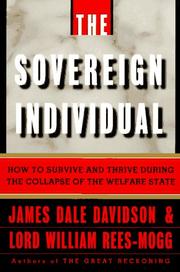
“Superimposing Ray Dalio's U.S. empire decline thesis onto the Sovereign Individual thesis produces one conclusion: the 21st century contest is China versus the Internet”
More from What Bitcoin Did
We summarize every new episode. Want them in your inbox?
#223 - Sir David Spiegelhalter - "I Immediately Distrust Every Number In The News"
#222 - David Wood - We are The Last Generation Of Normal Humans
#221 - Prof Lewis Dartnell - How To Rebuild Human Society After An Apocalypse
#220 - Roko Mijic - We’re Training AI to be More Dangerous Than Nuclear Weapons
#219 - Paul Morland - Why The Next Global Financial Crisis Is Mathematically Inevitable
Similar Episodes
Related episodes from other podcasts

The Diary of a CEO
Jul 16
Leading Cancer Researcher: They’re Ignoring My Research, Cancer Patients Must Know This!

a16z Podcast
Feb 13
Balaji and Dan Wang: The Engineering State vs Lawyerly State

Everything Everywhere Daily
Oct 23
The World in the Year 1

The Jordan Harbinger Show
Sep 17
1383: Christopher Ryan | The Dark Side of Civilization and Progress
The Jordan Harbinger Show
Sep 8
1379: Joseph Moore | Why Getting Ahead Has Never Been Easier
Explore Related Topics
This podcast is featured in Best Crypto Podcasts (2026) — ranked and reviewed with AI summaries.
Read this week's Investing & Markets Podcast Insights — cross-podcast analysis updated weekly.
You're clearly into What Bitcoin Did.
Every Monday, we deliver AI summaries of the latest episodes from What Bitcoin Did and 192+ other podcasts. Free for one show.
Start My Monday DigestNo credit card · Unsubscribe anytime