Episode 316: A Four-Letter Man (Hemingway's "The Short Happy Life of Francis Macomber")
Episode
93 min
Read time
2 min
Topics
Health & Wellness, Personal Finance, Relationships
AI-Generated Summary
Key Takeaways
- ✓Cowardice as Identity Crisis: When Francis Macomber flees from a wounded lion during a safari hunt, his act of cowardice shatters his self-conception completely. The story presents cowardice not as a momentary lapse but as an existential threat that unmans him, creating what Hemingway describes as a cold, hollow fear that replaces his confidence and makes him physically sick.
- ✓Cultural Codes of Masculinity: The British safari guide Wilson embodies a stoic code where discussing fear or failure violates proper form, while American Francis compulsively talks through his shame. This cultural clash reveals different approaches to masculine honor: the British suppress and endure silently, while Americans process verbally, creating tension between authenticity and dignity in confronting personal failure.
- ✓Power Dynamics Through Fear: Margo Macomber maintains control over her wealthy husband through beauty and contempt, sleeping with Wilson immediately after Francis's cowardice. The marriage functions as mutual hostage-taking: she's too beautiful for him to divorce, he's too rich for her to leave. Fear determines who holds power, and when Francis loses fear, Margo immediately recognizes her control evaporating.
- ✓Transformation Through Bottoming Out: Francis achieves fearlessness not from successfully shooting buffalo, but from surviving complete humiliation the night before when his wife cuckolded him publicly. The buffalo hunt provides opportunity to demonstrate courage, but the actual transformation occurs when he faces existential shame and realizes he survived it, embodying the Shakespearean principle that one can only die once.
- ✓Ambiguous Violence as Narrative Device: The story's ending leaves deliberately unclear whether Margo shoots Francis intentionally or accidentally while aiming at a charging buffalo. The omniscient narrator states she "shot at the buffalo" but hit her husband two inches above the skull base. This ambiguity matters less than what it reveals about fear, control, and the impossibility of sustaining transcendent courage.
What It Covers
Tamler Sommers and Dave Pizarro analyze Ernest Hemingway's 1936 short story "The Short Happy Life of Francis Macomber," exploring themes of courage, cowardice, masculinity, and transformation through the lens of a wealthy American couple's African safari gone wrong.
Key Questions Answered
- •Cowardice as Identity Crisis: When Francis Macomber flees from a wounded lion during a safari hunt, his act of cowardice shatters his self-conception completely. The story presents cowardice not as a momentary lapse but as an existential threat that unmans him, creating what Hemingway describes as a cold, hollow fear that replaces his confidence and makes him physically sick.
- •Cultural Codes of Masculinity: The British safari guide Wilson embodies a stoic code where discussing fear or failure violates proper form, while American Francis compulsively talks through his shame. This cultural clash reveals different approaches to masculine honor: the British suppress and endure silently, while Americans process verbally, creating tension between authenticity and dignity in confronting personal failure.
- •Power Dynamics Through Fear: Margo Macomber maintains control over her wealthy husband through beauty and contempt, sleeping with Wilson immediately after Francis's cowardice. The marriage functions as mutual hostage-taking: she's too beautiful for him to divorce, he's too rich for her to leave. Fear determines who holds power, and when Francis loses fear, Margo immediately recognizes her control evaporating.
- •Transformation Through Bottoming Out: Francis achieves fearlessness not from successfully shooting buffalo, but from surviving complete humiliation the night before when his wife cuckolded him publicly. The buffalo hunt provides opportunity to demonstrate courage, but the actual transformation occurs when he faces existential shame and realizes he survived it, embodying the Shakespearean principle that one can only die once.
- •Ambiguous Violence as Narrative Device: The story's ending leaves deliberately unclear whether Margo shoots Francis intentionally or accidentally while aiming at a charging buffalo. The omniscient narrator states she "shot at the buffalo" but hit her husband two inches above the skull base. This ambiguity matters less than what it reveals about fear, control, and the impossibility of sustaining transcendent courage.
Notable Moment
The hosts debate whether Margo's final shot represents murder or panic, noting Hemingway never enters her perspective despite accessing the wounded lion's consciousness. Wilson's cruel demand that she say "please" after Francis dies suggests he believes she killed intentionally, yet her reaction mirrors genuine distress rather than calculated violence, leaving readers perpetually uncertain.
Episode Transcript
Very Bad Wizards is a podcast with a philosopher, my dad, and psychologist Dave Fesaro having an informal discussion about issues in science and ethics. Please note that the discussion contains bad words that I'm not allowed to say and knowing my dad, some very inappropriate jokes. I am not an evil man. No. The The green and hot has fallen. Pay no attention to that man behind the curtain. Who are you? Who are you? A very bad man. I'm a very good man. Good man. They think they've lost, and with no more brains than you apps. Pay no attention to that bitch. Anybody can have a brain. You're a very bad man. I'm a very good man. Just a very bad wizard. Welcome to Very Bad Wizards. I'm Tamara Summers from the University of Houston. Dave, because of our scheduling, we deprived ourselves and more importantly our listeners of a deep dive into the massive Cracker Barrel logo change controversy. As you know, I think a couple weeks ago, Cracker Barrel has gone back to the old logo with good old uncle Herschel after all that backlash. Where did you stand on Logogate? I'm glad you're asking this. You know? This is I do feel like this was a topic that we should have discussed. I am genuinely annoyed at the changing of logos to be more modern. I'm like, why? You just want attention. I'm a minimalist generally. Like, I like my shit, like, tidy and nice and neat. But these logos, these modern corporate logos take they strip all of the life away and, like, make it so generic. Like, I like the old man. I don't know what was wrong with the old man. I'm with Trump on this. Yeah. You were with MAGA on all of this. Did you see the the, like, the AI thing that Trump posted of, like, him shaking the hand of the Cracker Barrel guy? Yeah. It was so bad. So you were really, like, you I mean, it was just a terrible, like, shitty ass corporate logo just streamlined out of some, like, probably, like, 18 consultants that came up with this, like, streamlined thing based on, like, all this data they've been getting from focus groups or whatever the fuck. But why it did get politicized in a way that is actually quite baffling. It is weird. I was like, why do they care? Is is the old guy, like, a a represent, like, the good old racist days? And, like, we're trying to erase that? Like, that's what it felt like. That's what it felt like. And, of course, like, that was the farthest thing from anybody's mind, I think. It really is just some corporate, like, you know so one of the things that I saw like, I came to this, like, five or six days late. But this woman tweeted, I don't care how much this angers the left. I will never eat …
Get the full transcript (16,960 words) + summary by email — free
One-time email with the complete transcript and AI summary of this episode. No account needed.
One email, no spam. We’ll also show you what SignalCast does.

You just read a 3-minute summary of a 90-minute episode.
Get Very Bad Wizards summarized like this every Monday — plus up to 2 more podcasts, free.
Pick Your Podcasts — FreeKeep Reading
More from Very Bad Wizards
Episode 329: Why We Suffer
Mar 31 · 80 min

20VC (20 Minute VC)
20VC: Cognition vs Factory: Vinod Khosla Creates a Storm | OpenAI Nears $70B Run Rate: Anthropic Under Threat | ElevenLabs Doubles Its Valuation to $22B & Salesforce Buys Listen Labs for $2B
Oct 8
More from Very Bad Wizards
Episode 328: Weapons Free
Mar 17 · 102 min

Dwarkesh Podcast
Si Sheppard – How did a few hundred Spanish soldiers topple two empires?
Oct 1
Books, tools, and gear mentioned in this episode
SignalCast may earn commission on purchases via these links. As an Amazon Associate, SignalCast earns from qualifying purchases.
Books
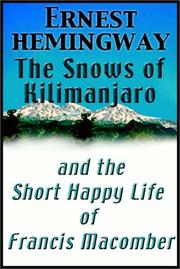
by Ernest Hemingway
“Tamler Sommers and Dave Pizarro analyze Ernest Hemingway's 1936 short story 'The Short Happy Life of Francis Macomber,' exploring themes of courage, cowardice, masculinity, and transformation through the lens of a wealthy American couple's African safari gone wrong.”
More from Very Bad Wizards
We summarize every new episode. Want them in your inbox?
Episode 329: Why We Suffer
Episode 328: Weapons Free
Episode 327: You Ain't So Smart (Flannery O'Connor's "Good Country People")
Episode 326: The Most Important Episode of Your (Academic) Life
Episode 325: It Is Happening Again
Similar Episodes
Related episodes from other podcasts

20VC (20 Minute VC)
Oct 8
20VC: Cognition vs Factory: Vinod Khosla Creates a Storm | OpenAI Nears $70B Run Rate: Anthropic Under Threat | ElevenLabs Doubles Its Valuation to $22B & Salesforce Buys Listen Labs for $2B

Dwarkesh Podcast
Oct 1
Si Sheppard – How did a few hundred Spanish soldiers topple two empires?

Everything Everywhere Daily
Aug 23
The Doctor's Riot of 1788

The Peter Attia Drive
Aug 3
#402 ‒ NMR blood analysis: how heart disease risk, insulin resistance, inflammation, and mortality risk can be assessed from a single blood sample | Jim Otvos, Ph.D.

Odd Lots
Jul 23
Why Apple Is Heading Into a Pivotal Moment
Explore Related Topics
This podcast is featured in Best Philosophy Podcasts (2026) — ranked and reviewed with AI summaries.
Read this week's Health & Longevity Podcast Insights — cross-podcast analysis updated weekly.
You're clearly into Very Bad Wizards.
Every Monday, we deliver AI summaries of the latest episodes from Very Bad Wizards and 192+ other podcasts. Free for one show.
Start My Monday DigestNo credit card · Unsubscribe anytime