We the People: Cruel and Unusual Punishment
Episode
47 min
Read time
2 min
Topics
Health & Wellness, Startups, Crypto & Web3
AI-Generated Summary
Key Takeaways
- ✓Constitutional Evolution: The Supreme Court established in Weems v. United States (1910) and Trop v. Dulles (1958) that Eighth Amendment protections must reflect "evolving standards of decency," allowing interpretations to change as society progresses rather than remaining fixed to 1791 meanings.
- ✓Death Penalty Arbitrariness: Furman v. Georgia (1972) temporarily abolished capital punishment nationwide because Justice Potter Stewart found executions "wanton and freakish" like being struck by lightning, with no consistent standards determining who received death sentences versus life imprisonment across identical crimes.
- ✓Mandatory Sentencing Limits: The Supreme Court ruled in 1976 that mandatory death sentences violate the Eighth Amendment because juries must consider "diverse frailties of humankind" including mental health, abuse history, and remorse before imposing execution, making death fundamentally different from other punishments.
- ✓Proportionality Principle: Cesare Beccaria's 1764 treatise influenced founders by establishing that any punishment exceeding absolute necessity constitutes tyranny, a standard courts have applied to ban executing juveniles, intellectually disabled individuals, and those convicted of rape without murder since 1958.
What It Covers
The Eighth Amendment's prohibition on cruel and unusual punishment evolved from English law through Enlightenment philosophy to modern debates over execution methods, solitary confinement, and homelessness laws, with standards continuously redefined by courts.
Key Questions Answered
- •Constitutional Evolution: The Supreme Court established in Weems v. United States (1910) and Trop v. Dulles (1958) that Eighth Amendment protections must reflect "evolving standards of decency," allowing interpretations to change as society progresses rather than remaining fixed to 1791 meanings.
- •Death Penalty Arbitrariness: Furman v. Georgia (1972) temporarily abolished capital punishment nationwide because Justice Potter Stewart found executions "wanton and freakish" like being struck by lightning, with no consistent standards determining who received death sentences versus life imprisonment across identical crimes.
- •Mandatory Sentencing Limits: The Supreme Court ruled in 1976 that mandatory death sentences violate the Eighth Amendment because juries must consider "diverse frailties of humankind" including mental health, abuse history, and remorse before imposing execution, making death fundamentally different from other punishments.
- •Proportionality Principle: Cesare Beccaria's 1764 treatise influenced founders by establishing that any punishment exceeding absolute necessity constitutes tyranny, a standard courts have applied to ban executing juveniles, intellectually disabled individuals, and those convicted of rape without murder since 1958.
Notable Moment
After Furman abolished the death penalty in 1972, 35 states rewrote their laws within four years to restore executions, with California voters immediately amending their state constitution by referendum to keep Charles Manson and Sirhan Sirhan on death row.
Episode Transcript
This message comes from Progressive Insurance and the name your price tool. It helps you find car insurance options in your budget. Try it today at progressive.com. Progressive Casualty Insurance Company and affiliates. Price and coverage match limited by state law. Not available in all states. A note before we get started. This episode includes descriptions and discussion of violent acts, including murder and execution. Utah 1877. A man named Wallace Wilkerson stops by a saloon. He starts by playing a game of cards with another man named William Baxter. An argument starts. Wilkerson takes out a gun, shoots Baxter in the head, killing him, and then he flees. Wilkerson is captured. A few months later, he's convicted of murder and sentenced to be executed the next month. Utah was not yet a state. It was a federal territory, and it was settled then, as now, by Mormons. And Brigham Young, who was the leader of the Mormons, preached that blood atonement was necessary for murders. So he didn't want to use hanging because you don't bleed when you're hanged, but you do bleed when you're shot. And so Mormon territory used the firing squad as a form of execution. Wilkerson was sentenced to be executed by a firing squad, a sentence that was challenged all the way up to the US Supreme Court, which had to decide whether a firing squad violated Wallace Wilkerson's eighth amendment rights. Alright. Here's the original text of the eighth amendment. Excessive bail shall not be required nor excessive fines imposed nor cruel and unusual punishments inflicted. Cruel and unusual punishments, a term that was adopted from England and meant to protect the people from a tyrannical government. But what was cruel and unusual punishment? So what's interesting, the court first says, very hard to know what this means. But then they go on to say, the one thing we can say with some certainty is that it had something to do with torture, that torture's not good. And they reference things that they were would be pretty sure would be cruel and unusual punishment. Drawing and quartering, disemboweling, burning at the stake. My name is Carol Steiker. I am a professor at Harvard Law School. I'm the author of Courting Death, the Supreme Court and Capital Punishment. In 1878, the question was whether firing squads were cruel and unusual punishment. Court says that's not torturous. It's not unnecessary cruelty. And we know that because, you know, we've used it a lot as a punishment for deserters in wartime. So the court says, we don't have a problem with the firing squad as cool and unusual punishment. But they also said, we're not entirely sure what its contours are. It just doesn't reach this far. On the day of his execution, Wallace Wilkerson sat in a chair facing three guns about 30 feet away. He made a short speech and said he hoped God would forgive him. Then three concealed gunmen fired. He continued …
Get the full transcript (6,663 words) + summary by email — free
One-time email with the complete transcript and AI summary of this episode. No account needed.
One email, no spam. We’ll also show you what SignalCast does.

You just read a 3-minute summary of a 44-minute episode.
Get Throughline summarized like this every Monday — plus up to 2 more podcasts, free.
Pick Your Podcasts — FreeKeep Reading


Books, tools, and gear mentioned in this episode
SignalCast may earn commission on purchases via these links. As an Amazon Associate, SignalCast earns from qualifying purchases.
Books
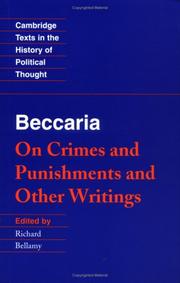
by Cesare Beccaria
“Cesare Beccaria's 1764 treatise influenced founders by establishing that any punishment exceeding absolute necessity constitutes tyranny, a standard courts have applied to ban executing juveniles, intellectually disabled individuals, and those convicted of rape without murder since 1958.”
More from Throughline
We summarize every new episode. Want them in your inbox?
Similar Episodes
Related episodes from other podcasts

Everything Everywhere Daily
Aug 7
Deterrence and The Spectacle of Punishment

Modern Wisdom
Mar 19
#1073 - Gurwinder Bhogal - 19 Uncomfortable Truths About Human Nature

The Joe Rogan Experience
Feb 4
#2448 - Andrew Doyle

Venture Stories
Feb 3
[Highlight] The Future of Coding and Work in the Age of AI with Henry Shi
Explore Related Topics
This podcast is featured in Best History Podcasts (2026) — ranked and reviewed with AI summaries.
Read this week's Health & Longevity Podcast Insights — cross-podcast analysis updated weekly.
You're clearly into Throughline.
Every Monday, we deliver AI summaries of the latest episodes from Throughline and 192+ other podcasts. Free for one show.
Start My Monday DigestNo credit card · Unsubscribe anytime