#805: Philip Goff — Exploring Consciousness and Non-Ordinary Religion, Galileo's Error, Panpsychism, Heretical Ideas, and Therapeutic Belief
Episode
136 min
Read time
2 min
Topics
Productivity, Software Development, Crypto & Web3
AI-Generated Summary
Key Takeaways
- ✓Panpsychism Definition: Consciousness extends to fundamental building blocks of reality, with electrons and quarks having incredibly simple conscious experiences that reflect their simple nature, not human-like thoughts or emotions. This avoids anthropomorphic projections while explaining how complex human consciousness emerges from simpler forms.
- ✓Integrated Information Theory: Consciousness corresponds to integration in physical systems, measured mathematically as phi. When information storage depends on integration between parts rather than isolated components, consciousness emerges. This explains why brains with trillions of neural connections generate consciousness while current computers with less integrated architecture do not.
- ✓Galileo's Error Framework: Physical science since 1600s deliberately excluded consciousness to enable mathematical description of reality, only capturing quantitative structure not qualitative experience. Russell and Eddington showed physics describes mathematical patterns but not what matter fundamentally is, suggesting consciousness could be that fundamental substrate generating physical reality.
- ✓Fine-Tuning Evidence: Physics constants fall within incredibly narrow ranges necessary for life, discovered since 1970s-1990s. This cosmological evidence suggests cosmic purpose without requiring traditional omnipotent God, opening middle ground positions like teleological laws with built-in purposes or limited-power cosmic consciousness that avoids problem of suffering.
- ✓Religious Engagement Model: Historical Christianity emphasized commitment and trust over propositional belief, with Greek pistis meaning engagement not intellectual assent. Mystical traditions in Eastern Orthodox Christianity, Sufism, and Kabbalah focus on unity experiences rather than sin-punishment frameworks, allowing uncertain, metaphorical engagement with religious community and ritual without dogmatic certainty.
What It Covers
Philip Goff explains panpsychism, the view that consciousness exists in fundamental particles like electrons and quarks, and explores how this framework solves mysteries of consciousness that materialist neuroscience cannot address, while discussing his return to Christianity.
Key Questions Answered
- •Panpsychism Definition: Consciousness extends to fundamental building blocks of reality, with electrons and quarks having incredibly simple conscious experiences that reflect their simple nature, not human-like thoughts or emotions. This avoids anthropomorphic projections while explaining how complex human consciousness emerges from simpler forms.
- •Integrated Information Theory: Consciousness corresponds to integration in physical systems, measured mathematically as phi. When information storage depends on integration between parts rather than isolated components, consciousness emerges. This explains why brains with trillions of neural connections generate consciousness while current computers with less integrated architecture do not.
- •Galileo's Error Framework: Physical science since 1600s deliberately excluded consciousness to enable mathematical description of reality, only capturing quantitative structure not qualitative experience. Russell and Eddington showed physics describes mathematical patterns but not what matter fundamentally is, suggesting consciousness could be that fundamental substrate generating physical reality.
- •Fine-Tuning Evidence: Physics constants fall within incredibly narrow ranges necessary for life, discovered since 1970s-1990s. This cosmological evidence suggests cosmic purpose without requiring traditional omnipotent God, opening middle ground positions like teleological laws with built-in purposes or limited-power cosmic consciousness that avoids problem of suffering.
- •Religious Engagement Model: Historical Christianity emphasized commitment and trust over propositional belief, with Greek pistis meaning engagement not intellectual assent. Mystical traditions in Eastern Orthodox Christianity, Sufism, and Kabbalah focus on unity experiences rather than sin-punishment frameworks, allowing uncertain, metaphorical engagement with religious community and ritual without dogmatic certainty.
Notable Moment
Goff describes realizing ordinary reality contains richer conscious experience than virtual reality goggles, with subtle sensations like touching leaves or breathing air offering profound depth when restless boredom calms. He applies this insight to playing with his children, finding meditation in absorbing their unusual expressions and thinking patterns.
No transcript yet — request it by email, free
We'll transcribe this episode on request and email you the full transcript and AI summary — usually within a day. No account needed.
One email, no spam. We’ll also show you what SignalCast does.

You just read a 3-minute summary of a 133-minute episode.
Get The Tim Ferriss Show summarized like this every Monday — plus up to 2 more podcasts, free.
Pick Your Podcasts — FreeKeep Reading
More from The Tim Ferriss Show
#882: Why Kids Can Learn 10x Faster Than We Think — Niels Hoven of Mentava (Tim Coaching Session)
Sep 10 · 133 min

Eye on AI
How Modern Science Got Consciousness Wrong From the Start | Philip Goff
Jun 29
More from The Tim Ferriss Show
#881: Tales of Overcoming The Odds, and How to Turn Losses Into Wins — Tim McGraw, Terry Crews, Dax Shepard, and More
Sep 4 · 65 min

Sean Carroll's Mindscape
311 | Annaka Harris on Whether Consciousness is Fundamental
Apr 14
Books, tools, and gear mentioned in this episode
SignalCast may earn commission on purchases via these links. As an Amazon Associate, SignalCast earns from qualifying purchases.
Books
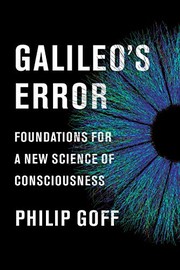 Galileo's ErrorBy guest
by Philip Goff
“Galileo's Error Framework: Physical science since 1600s deliberately excluded consciousness to enable mathematical description of reality, only capturing quantitative structure not qualitative experience.”
More from The Tim Ferriss Show
We summarize every new episode. Want them in your inbox?
#882: Why Kids Can Learn 10x Faster Than We Think — Niels Hoven of Mentava (Tim Coaching Session)
#881: Tales of Overcoming The Odds, and How to Turn Losses Into Wins — Tim McGraw, Terry Crews, Dax Shepard, and More
#880: Relationship Tools That Work — Esther Perel, Brené Brown, Dr. Sue Johnson, Terry Real, and More on Conflict, Repair, and Lasting Love
#879: How to Reinvent Yourself and Make Bold Moves — Decisive Stories from Matthew McConaughey, Steve Young, Samin Nosrat, and More
#878: How to Start When You're Stuck, Finish What You Begin, and Stop Waiting for Inspiration — Creative Advice from Elizabeth Gilbert, Seth Godin, Joyce Carol Oates, Anne Lamott and More
Similar Episodes
Related episodes from other podcasts

Eye on AI
Jun 29
How Modern Science Got Consciousness Wrong From the Start | Philip Goff

Sean Carroll's Mindscape
Apr 14
311 | Annaka Harris on Whether Consciousness is Fundamental

In Our Time
Feb 22
Panpsychism

The Joe Rogan Experience
Jun 11
#2513 - Dean Radin

On Purpose with Jay Shetty
Feb 16
Michael Pollan: The Hidden Cost Of Constant Distraction (Use THIS Practice To Reclaim Your Attention, Clarity, And Inner Freedom)
Explore Related Topics
This podcast is featured in Best Business Podcasts (2026) — ranked and reviewed with AI summaries.
Read this week's Software Engineering Podcast Insights — cross-podcast analysis updated weekly.
You're clearly into The Tim Ferriss Show.
Every Monday, we deliver AI summaries of the latest episodes from The Tim Ferriss Show and 192+ other podcasts. Free for one show.
Start My Monday DigestNo credit card · Unsubscribe anytime