Stop Attracting The Wrong Relationships. Do This To Find Lasting Love! | Lewis Howes
Episode
57 min
Read time
2 min
Topics
Relationships, Software Development, Psychology & Behavior
AI-Generated Summary
Key Takeaways
- ✓Post-breakup accountability: Esther Perel identifies a critical blind spot: people who frame breakups as entirely the other person's fault miss half the story. Asking "who were you in this relationship?" and "what did you contribute to the dynamic?" — without self-blame — reveals the figure-eight pattern where each partner's behavior continuously shapes the other's responses.
- ✓Self-knowledge as partner selection: Jillian Turecki frames partner selection as a function of radical self-honesty. Understanding your trauma, vulnerabilities, and non-negotiable lifestyle preferences — not aspirational versions of yourself — determines compatibility. Entering a relationship from a baseline of personal wholeness prevents codependency and stops you from tolerating consistently unacceptable behavior due to low self-worth.
- ✓Relationship eroticism framework: Esther Perel, drawing on researcher Eli Finkel's work, identifies three drivers of thriving relationships: calibrating expectations, diversifying deep social connections, and regularly doing novel activities outside your comfort zone. Play and humor function as diagnostic indicators — their complete absence in a couple signals relational rigidity and an inability to shift perspective.
- ✓Nervous system compatibility: Bea Voce reframes partner selection as choosing someone's nervous system, not just their personality. Partners enter relationships carrying unhealed wounds and unconsciously ask each other for healing. Recognizing your dysregulation signals — chest tightening, rapid speech, building a mental case against your partner — allows you to consciously shift from reactive child-state to regulated adult-state before conflict escalates.
- ✓Emotional regulation as the core skill: Mel Robbins, reflecting on 26 years of marriage, identifies the inability to tolerate uncomfortable feelings as the root cause of interpersonal conflict. Her pattern of expelling stress outward and her husband's withdrawal created a reinforcing cycle. Learning to self-regulate — sitting with discomfort rather than directing it at a partner — produced the single largest shift in her marriage.
What It Covers
Lewis Howes compiles five conversations with relationship experts — Esther Perel, Jillian Turecki, Matthew Hussey, Bea Voce, and Mel Robbins — examining how to break destructive relationship patterns, understand personal psychology, and build lasting love through self-awareness, nervous system regulation, and intentional partnership.
Key Questions Answered
- •Post-breakup accountability: Esther Perel identifies a critical blind spot: people who frame breakups as entirely the other person's fault miss half the story. Asking "who were you in this relationship?" and "what did you contribute to the dynamic?" — without self-blame — reveals the figure-eight pattern where each partner's behavior continuously shapes the other's responses.
- •Self-knowledge as partner selection: Jillian Turecki frames partner selection as a function of radical self-honesty. Understanding your trauma, vulnerabilities, and non-negotiable lifestyle preferences — not aspirational versions of yourself — determines compatibility. Entering a relationship from a baseline of personal wholeness prevents codependency and stops you from tolerating consistently unacceptable behavior due to low self-worth.
- •Relationship eroticism framework: Esther Perel, drawing on researcher Eli Finkel's work, identifies three drivers of thriving relationships: calibrating expectations, diversifying deep social connections, and regularly doing novel activities outside your comfort zone. Play and humor function as diagnostic indicators — their complete absence in a couple signals relational rigidity and an inability to shift perspective.
- •Nervous system compatibility: Bea Voce reframes partner selection as choosing someone's nervous system, not just their personality. Partners enter relationships carrying unhealed wounds and unconsciously ask each other for healing. Recognizing your dysregulation signals — chest tightening, rapid speech, building a mental case against your partner — allows you to consciously shift from reactive child-state to regulated adult-state before conflict escalates.
- •Emotional regulation as the core skill: Mel Robbins, reflecting on 26 years of marriage, identifies the inability to tolerate uncomfortable feelings as the root cause of interpersonal conflict. Her pattern of expelling stress outward and her husband's withdrawal created a reinforcing cycle. Learning to self-regulate — sitting with discomfort rather than directing it at a partner — produced the single largest shift in her marriage.
Notable Moment
Matthew Hussey describes nearly sabotaging his eventual marriage by going cold after admitting jealousy early in the relationship. A previous partner had called the same vulnerability unattractive, conditioning him to suppress it. His wife's opposite response — expressing curiosity rather than judgment — turned a historically relationship-ending moment into a healing one.
Episode Transcript
If you wanna stop being in relationships that you feel like you're failing in and they aren't making you happy, then you need to stop repeating the same patterns that you've always repeated. And you need to learn how to become the best partner for someone and also learn how to attract the right type of partner for yourself. But how do you do that? Well, today, I put together a master class with the five most impactful conversations with relationship experts that we've had here on The School of Greatness to help you understand how to create lasting love in your life. In this first section, I'm speaking with the one and only Esther Perel, who is a psychotherapist known for her expertise in modern relationships, erotic intelligence, and infidelity. And on the most important internal work that you need to do to improve your future relationships. What is the main thing you would recommend people work on themselves, whether in transition of relationships or in a relationship? Is there one thing that they could always be working on to improve themselves, to be better for other relationships? If their entire story about the relationship that just ended is about what the other person did wrong to them, something is missing in the story. Yeah. That doesn't mean that the other person may not have done things that were hurtful to them. But add to it, who were you in this relationship? Absolutely. What role did you play? What did you see that you didn't wanna pay attention to? Mhmm. What things do you wish you had done differently? What pieces do you wish that your partner had seen and accepted from you differently? Mhmm. Where did you wish you would have said less, and where did you wish you would have said more? What do you learn from this relationship? And if when you say what you learn is just that I wanna make sure that the next person is Right. Gives me what I need. You know, or is less of this or more of that, you know, who do you want to be in the next relationship? How are you gonna add value? A relationship is a story of many people. It's not even a story just of two. Who was too involved in your relationship? Mhmm. Who was not involved enough? So it's the it's there's a cast of characters in the relationship. And, and it's all those questions that you wanna ask when you are in transition. What what I think that's it. I mean, you can Yeah. But they are both directions. If you find yourself with a a spotlight only on the other person and you in a passive receptive, stance, you're missing Yeah. A whole pan of the story. Yeah. And you're probably more of the problem than the of the relationship than them if you're just focusing on them probably. A relationship is not about this person and that person. …
Get the full transcript (9,675 words) + summary by email — free
One-time email with the complete transcript and AI summary of this episode. No account needed.
One email, no spam. We’ll also show you what SignalCast does.

You just read a 3-minute summary of a 54-minute episode.
Get The School of Greatness summarized like this every Monday — plus up to 2 more podcasts, free.
Pick Your Podcasts — FreeKeep Reading
More from The School of Greatness
How to Know You’re on the Right Path | Katt Williams
Oct 21 · 56 min

The Tim Ferriss Show
#880: Relationship Tools That Work — Esther Perel, Brené Brown, Dr. Sue Johnson, Terry Real, and More on Conflict, Repair, and Lasting Love
Aug 19
More from The School of Greatness
What Sociopaths Really Feel | Dr. Patric Gagne
Oct 19 · 107 min

10% Happier with Dan Harris
The Science of Happiness: Five Simple Strategies for Reducing Anxiety and Increasing Connection | Sonja Lyubomirsky and Harry Reis
Feb 16
Books, tools, and gear mentioned in this episode
SignalCast may earn commission on purchases via these links. As an Amazon Associate, SignalCast earns from qualifying purchases.
Books
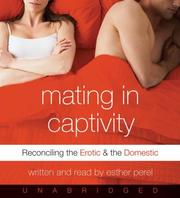
by Esther Perel
“Esther Perel, drawing on researcher Eli Finkel's work, identifies three drivers of thriving relationships: calibrating expectations, diversifying deep social connections, and regularly doing novel activities outside your comfort zone.”
More from The School of Greatness
We summarize every new episode. Want them in your inbox?
How to Know You’re on the Right Path | Katt Williams
What Sociopaths Really Feel | Dr. Patric Gagne
Your Anxiety Is a Smoke Alarm, Not a Broken Brain | Dr. John Delony
The Ancient 4-Step Method to Clear Your Mind | Shaolin Master Shi Heng Yi
How Stress Can Cause a Heart Attack (And How to Heal) | Dr. Tara Narula
Similar Episodes
Related episodes from other podcasts

The Tim Ferriss Show
Aug 19
#880: Relationship Tools That Work — Esther Perel, Brené Brown, Dr. Sue Johnson, Terry Real, and More on Conflict, Repair, and Lasting Love

10% Happier with Dan Harris
Feb 16
The Science of Happiness: Five Simple Strategies for Reducing Anxiety and Increasing Connection | Sonja Lyubomirsky and Harry Reis

Where Should We Begin? with Esther Perel
Feb 2
Our Sex Life is a Disaster

On Purpose with Jay Shetty
Dec 10
Jay Must-Listens: 3 Easy Money Habits That Will Change How You Save, Spend & Grow Your Money

The Jordan Harbinger Show
Aug 25
1373: Sonja Lyubomirsky | Five Mindsets to Get You More of What Matters
Explore Related Topics
This podcast is featured in Best Mindset Podcasts (2026) — ranked and reviewed with AI summaries.
Read this week's Software Engineering Podcast Insights — cross-podcast analysis updated weekly.
You're clearly into The School of Greatness.
Every Monday, we deliver AI summaries of the latest episodes from The School of Greatness and 192+ other podcasts. Free for one show.
Start My Monday DigestNo credit card · Unsubscribe anytime